Shoji screen wooden
1344×768 · AVIF · CC BY 4.0

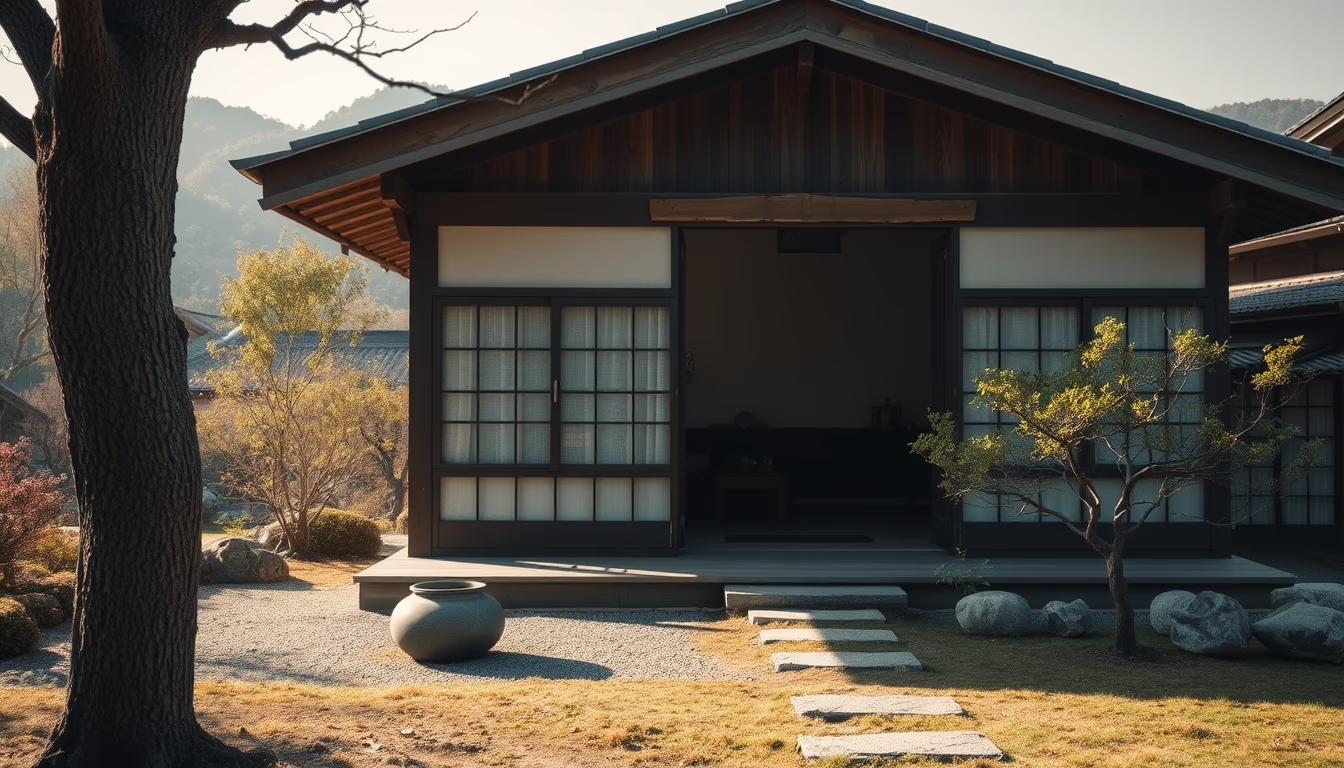
Wooden shoji screen, a traditional Japanese sliding door made of wooden lattice and washi paper, offering soft light diffusion and elegant room division.
About this subject
The shoji is a type of sliding door or partition originating from Japan, widely used in traditional homes (minka) in temples and in tea houses (sukiya-zukuri). Its structure consists of a lightweight wooden frame, typically made from Japanese cypress (hinoki), filled with a fine wooden lattice (kumiko) and covered with translucent washi paper. This combination allows natural light to diffuse softly and evenly, creating serene environments connected to nature, a key feature of Zen aesthetics.
Historically, the shoji evolved from Chinese antecedents and became established during the Heian period (794, 1185), when aristocratic residences began using removable panels to integrate spaces. In the Muromachi period (1336, 1573), tea master Sen no Rikyu refined the design for tea houses, emphasizing rustic simplicity (wabi-sabi) and the play of light and shadow (shibui). Unlike fusuma doors, which are opaque and decorated with paintings, shoji prioritize transparency and lightness, acting as a visual filter between interior and exterior.
Handcrafting a shoji requires high skill. Lattice patterns vary: the most common is asa-no-ha (hemp leaf) but there are dozens of others, such as yotsuba (four leaves) and kagome (basket). Traditional paper, called hon-mino, is made from kōzo (mulberry) fibers and treated with persimmon tannin (kaki) for moisture resistance. Each piece is assembled without nails using wooden joinery, allowing disassembly for repairs. Durability is notable, with shoji lasting centuries in historic temples.
Today, shoji have transcended Japan and are used in contemporary interiors worldwide as room dividers closet doors or decorative panels. Modern versions use aluminum or PVC but authentic wood and paper remain valued for sustainability and timeless aesthetics. Despite modernization, the craft tradition faces decline with few active kumiko masters. Organizations like the Japan Traditional Crafts Association promote its preservation as Intangible Cultural Heritage.
Frequently Asked Questions
What is a shoji screen?
A shoji screen is a traditional Japanese sliding door or room divider made of a wooden frame with a lattice and translucent washi paper, used to separate spaces and softly diffuse natural light.
What is the difference between shoji and fusuma?
Shoji uses translucent paper that allows light to pass through, while fusuma is opaque, made of thick paper or fabric, providing full privacy and often decorated with paintings.
Are shoji screens still handmade?
Yes, although increasingly rare. Authentic shoji are crafted by specialized artisans (kumiko-shi) using traditional joinery without nails. Mass-produced modern versions use synthetic materials, but the handcraft tradition is preserved by masters in Japan.
Direct URL
https://pub-c7d6a6ea828543ac903a74a341ccb2e1.r2.dev/imagens/shoji-screen-wooden-documentary-nature-style-fresh17.avifHow to credit
Include a visible link back to UtilizAí. Copy one of the snippets below:
<a href="https://xn--utiliza-eza.com/en/midia/imagens/shoji-screen-wooden-documentary-nature-style-fresh17">Shoji screen wooden</a> by <a href="https://xn--utiliza-eza.com">UtilizAí</a>, licensed under <a href="https://creativecommons.org/licenses/by/4.0/">CC BY 4.0</a>.
[Shoji screen wooden](https://xn--utiliza-eza.com/en/midia/imagens/shoji-screen-wooden-documentary-nature-style-fresh17) by [UtilizAí](https://xn--utiliza-eza.com), CC BY 4.0
License: CC-BY-4.0