Rock garden raked patterns
1344×768 · AVIF · CC BY 4.0
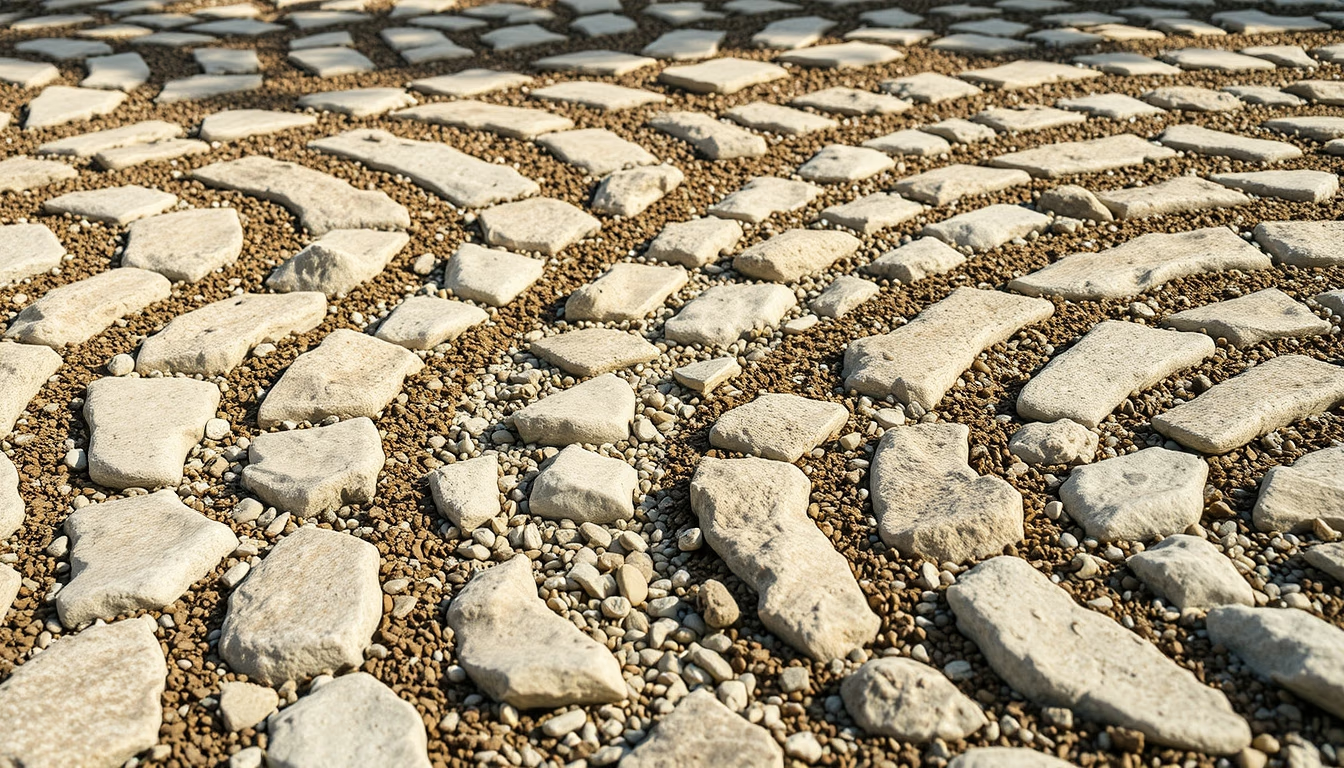
Raked patterns in rock gardens, known as suhama, are an ancient Japanese technique that symbolizes water and Zen meditation.
About this subject
Japanese rock gardens, or karesansui, originated during the Muromachi period (1336, 1573) as an expression of Zen aesthetics. The most famous example is the garden of Ryoanji Temple in Kyoto, featuring 15 stones placed on meticulously raked white gravel. The practice of creating patterns with a rake on gravel or sand is called suhama, and each design carries symbolic meaning. Concentric patterns around stones represent waves or islands in a sea, while parallel straight lines suggest rivers or flowing water. The absence of real water is intentional: the emptiness invites the observer to complete the scene mentally, a core Zen principle.
Maintaining the patterns is a meditative activity performed by monks or gardeners. The raking process requires full concentration and patience, considered a form of spiritual practice. The patterns are not permanent; wind or rain erases them, and the act of recreating them reflects impermanence (mujo) and the concept of wabi-sabi, which values beauty in the incomplete. Each raking session is an opportunity for renewal and present-moment awareness.
The technique has spread worldwide, inspiring contemporary landscape designers. Modern Zen gardens may use different gravel shades for contrast, and patterns are often incorporated into plazas and meditation spaces. However, the original Japanese tradition emphasizes simplicity and naturalness, with gravel smoothed to a uniform texture before receiving designs. Interestingly, at Tofukuji Temple in Kyoto, gardens use checkerboard and stripe patterns to represent rice paddies and hills, showcasing the technique's versatility.
Frequently Asked Questions
What do the raked patterns in Zen gardens mean?
The patterns symbolize natural elements like water, waves, rivers, or islands. They represent the flow of life and invite meditation.
How are the patterns in the gravel made?
They are made with special wooden rakes, pulling the gravel in circular or straight motions. Maintenance is daily and requires precision.
What is the purpose of rock gardens?
To aid Zen meditation, represent nature in miniature, and teach lessons of impermanence and simplicity.
Direct URL
https://pub-c7d6a6ea828543ac903a74a341ccb2e1.r2.dev/imagens/rock-garden-raked-patterns-magazine-editorial-fresh16.avifHow to credit
Include a visible link back to UtilizAí. Copy one of the snippets below:
<a href="https://xn--utiliza-eza.com/en/midia/imagens/rock-garden-raked-patterns-magazine-editorial-fresh16">Rock garden raked patterns</a> by <a href="https://xn--utiliza-eza.com">UtilizAí</a>, licensed under <a href="https://creativecommons.org/licenses/by/4.0/">CC BY 4.0</a>.
[Rock garden raked patterns](https://xn--utiliza-eza.com/en/midia/imagens/rock-garden-raked-patterns-magazine-editorial-fresh16) by [UtilizAí](https://xn--utiliza-eza.com), CC BY 4.0
License: CC-BY-4.0