Pagoda multiple stories
1344×768 · AVIF · CC BY 4.0
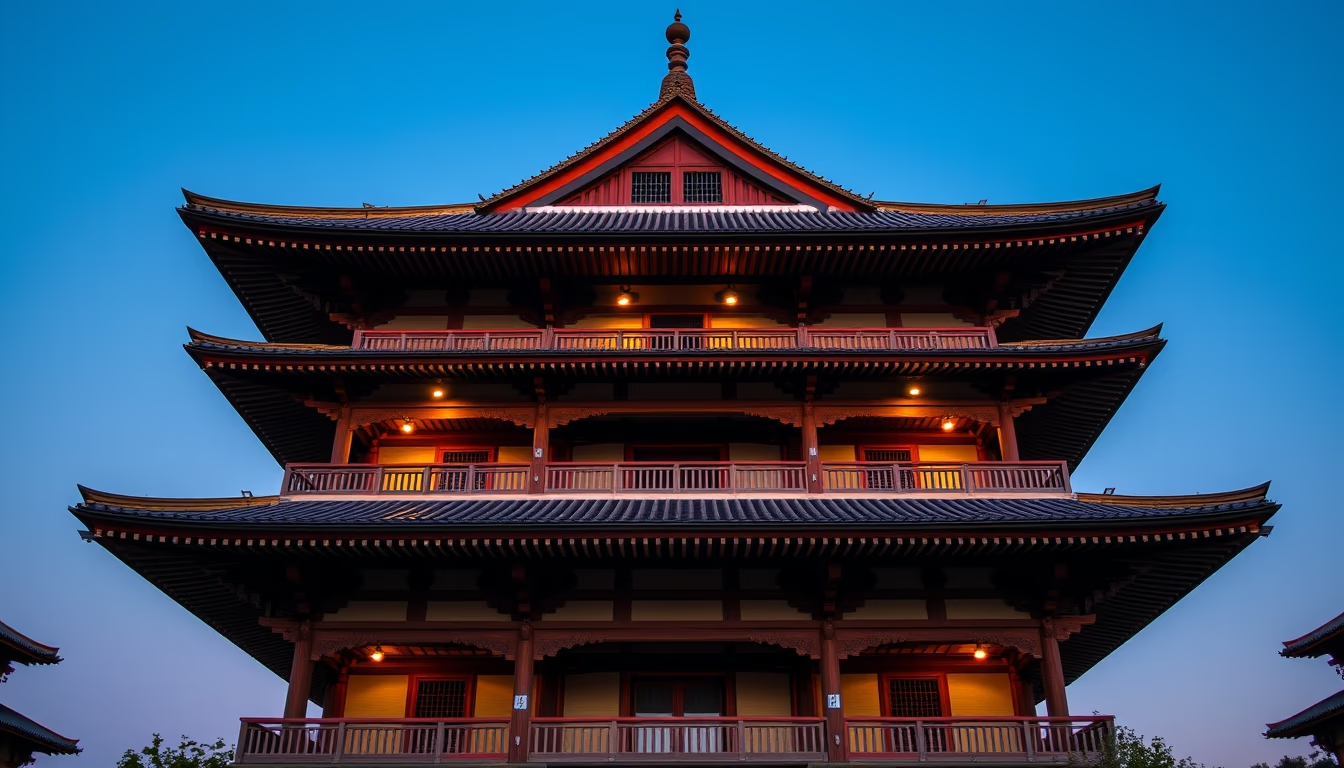
Multi-story pagoda, an architectural structure typical of East Asia with origins in Indian stupas and strong Buddhist symbolism.
About this subject
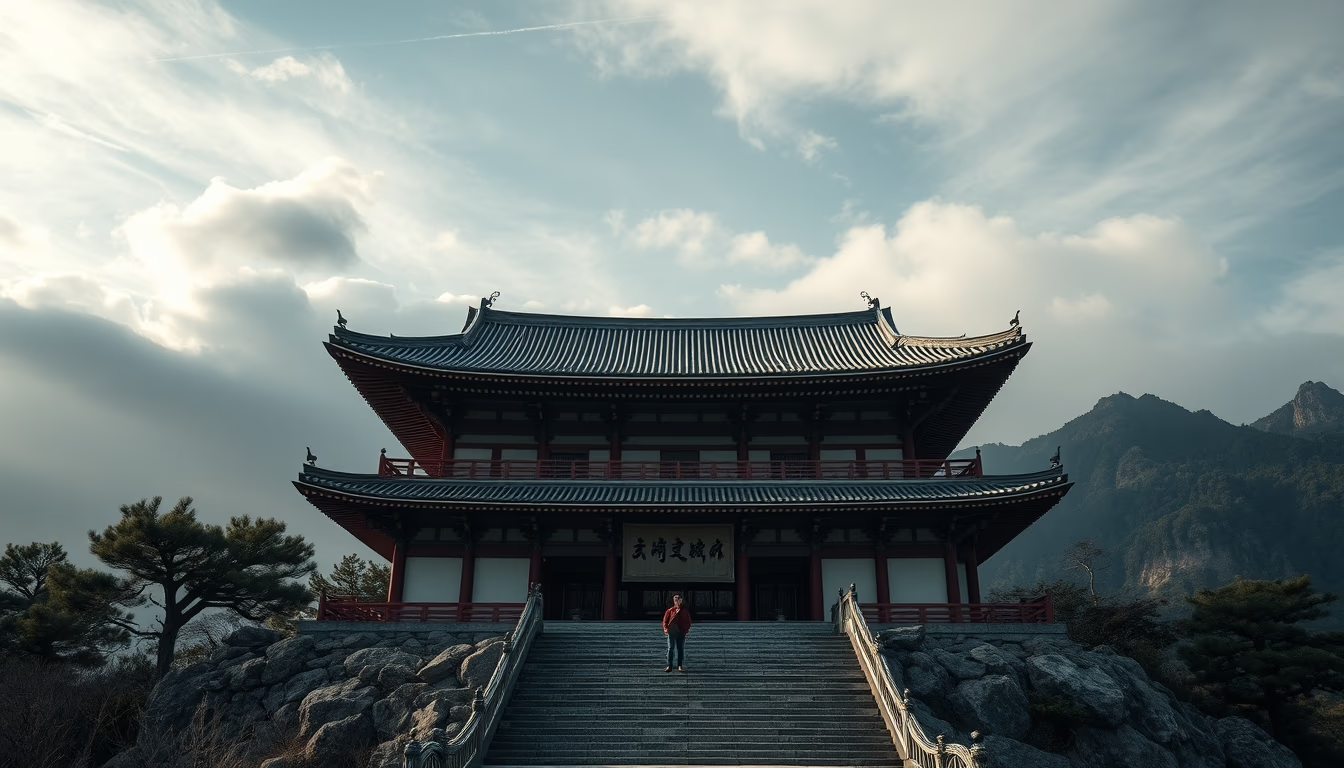
The pagoda is a tiered tower with multiple stories and curved eaves, originating from Indian stupas. Spread along trade and missionary routes, it became an icon of Buddhist architecture in China, Japan, Korea, and Vietnam. Originally built to house sacred relics, it also served as a meditation and astronomical observation site. The term 'pagoda' derives from the Persian 'butkada' (temple of idols) and was adopted by Portuguese traders in the 16th century.
Architecturally, pagodas have an odd number of stories, typically between three and thirteen, each with balconies and curved roofs that facilitate rainwater drainage. Materials vary: wood in China and Japan, brick and stone in India and Southeast Asia. A classic example is the Giant Wild Goose Pagoda in Xi'an, with seven stories and 64 meters in height, built in the 7th century. Seismic stability is an engineering feat, especially in Japan, where wooden pagodas like the one at Horyu-ji Temple have withstood earthquakes for centuries.
The symbolism of the pagoda reflects Buddhist cosmology. Each story represents a stage of enlightenment or the five elements: earth, water, fire, air, and ether (or void). The central pillar (shinbashira) in Japan acts as a seismic damper and symbolizes the axis of the world. Regional variations include Chinese pagodas with glazed ceramic roofs, Korean pagodas with minimal decoration and simple lines, and Japanese pagodas with deep eaves and dark wood. In Thailand and Myanmar, pagodas often take the form of golden stupas, such as the Shwedagon in Yangon.
Beyond religious significance, pagodas have become tourist landmarks and cultural icons. The Chureito Pagoda in Japan offers an iconic view of Mount Fuji with cherry blossoms. Others, like the Porcelain Pagoda of Nanjing, have been rebuilt after centuries. The design even influenced Western architecture, as seen in the Pagoda Garden at Kew, London. Today, many are protected as world heritage sites, preserving ancient construction techniques and continuing to inspire travelers and scholars.
Frequently Asked Questions
What is a pagoda?
A pagoda is a multi-story tower with curved eaves, originating from Indian stupas and widespread in East Asia as a Buddhist religious structure. It housed relics and served as a meditation site.
What is the difference between a pagoda and a stupa?
A stupa is a solid hemispherical mound containing relics, typical of ancient India. The pagoda evolved from stupas by adding multiple stories and curved roofs, adapting to the wooden architecture of East Asia.
How many stories does a typical pagoda have?
The number of stories is usually odd, ranging from 3 to 13. Common numbers are 5, 7, and 9, each symbolizing stages of enlightenment or natural elements.
Direct URL
https://pub-c7d6a6ea828543ac903a74a341ccb2e1.r2.dev/imagens/pagoda-multiple-stories-architectural-photography-fresh17.avifHow to credit
Include a visible link back to UtilizAí. Copy one of the snippets below:
<a href="https://xn--utiliza-eza.com/en/midia/imagens/pagoda-multiple-stories-architectural-photography-fresh17">Pagoda multiple stories</a> by <a href="https://xn--utiliza-eza.com">UtilizAí</a>, licensed under <a href="https://creativecommons.org/licenses/by/4.0/">CC BY 4.0</a>.
[Pagoda multiple stories](https://xn--utiliza-eza.com/en/midia/imagens/pagoda-multiple-stories-architectural-photography-fresh17) by [UtilizAí](https://xn--utiliza-eza.com), CC BY 4.0
License: CC-BY-4.0