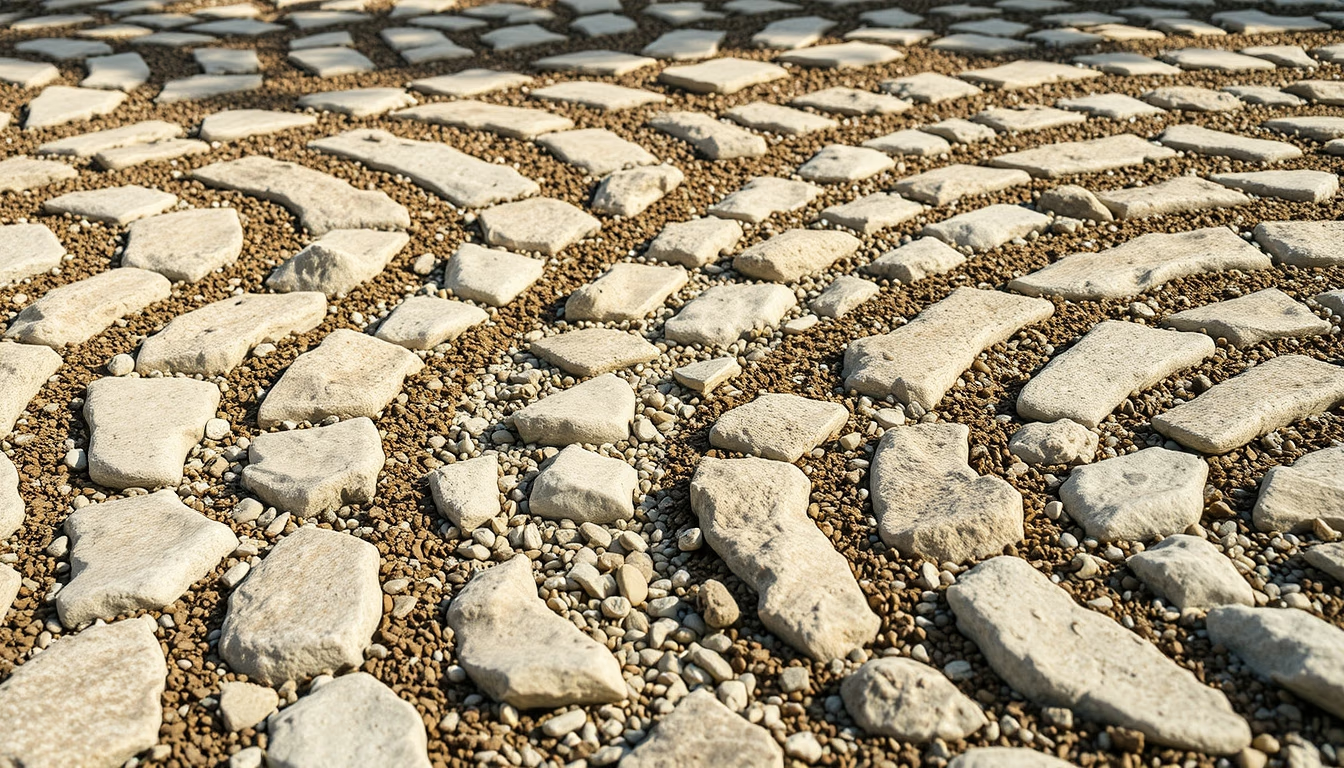
Rock garden raked patterns
1344×768 · AVIF · CC BY 4.0

Raked patterns in zen rock gardens (karesansui) create concentric waves and parallel lines that symbolize water, flow, and meditation.
About this subject
Dry landscape gardens, known as karesansui, are a Japanese art form that originated during the Muromachi period (1336, 1573). Deeply influenced by Zen Buddhism, these abstract gardens use gravel, sand, rocks, and occasionally moss to represent natural elements in a stylized manner. The marks left by the rake are not merely decorative: each stroke carries profound symbolic meaning.
The act of raking the sand or gravel into specific patterns is a meditative practice that demands concentration and precision. Concentric waves around larger rocks symbolize the ocean or flowing rivers, while straight parallel lines may represent rice fields or the calm surface of water. The choice of pattern varies by season or the gardener's intention, and daily maintenance is an essential part of Zen discipline.
Ryoan-ji temple in Kyoto is one of the most famous examples of karesansui. With only 15 rocks arranged on meticulously raked white gravel, it challenges the observer to find harmony in apparent chaos. Studies show that contemplating these patterns can induce relaxation and mental clarity, even being used in stress reduction therapies.
Creating these patterns at home requires simple tools: a wooden rake, fine sand, and stones. The practice does not demand complex artistic skills, but rather patience and mindfulness. Each stroke should be made with intention, replicating the ancestral movements that transform a simple patch of ground into an invitation for introspection.
Frequently Asked Questions
What do the raked patterns in a zen garden mean?
The patterns represent natural elements such as flowing water, ocean waves, rivers, or rice fields. Straight lines symbolize calmness, while curves indicate movement and flow.
What is the origin of dry landscape gardens (karesansui)?
They originated in Japan during the Muromachi period, influenced by Zen Buddhism. Monks created these spaces for meditation, using rocks and sand to represent miniature landscapes.
How do you create rake patterns in a home zen garden?
Use a wooden or metal rake with wide tines. Start by raking the sand in straight lines or circles around the stones. Practice with smooth, continuous movements to achieve even grooves.
Direct URL
https://pub-c7d6a6ea828543ac903a74a341ccb2e1.r2.dev/imagens/rock-garden-raked-patterns-commercial-product-photography-fresh17.avifHow to credit
Include a visible link back to UtilizAí. Copy one of the snippets below:
<a href="https://xn--utiliza-eza.com/en/midia/imagens/rock-garden-raked-patterns-commercial-product-photography-fresh17">Rock garden raked patterns</a> by <a href="https://xn--utiliza-eza.com">UtilizAí</a>, licensed under <a href="https://creativecommons.org/licenses/by/4.0/">CC BY 4.0</a>.
[Rock garden raked patterns](https://xn--utiliza-eza.com/en/midia/imagens/rock-garden-raked-patterns-commercial-product-photography-fresh17) by [UtilizAí](https://xn--utiliza-eza.com), CC BY 4.0
License: CC-BY-4.0