Science lab equipment glassware
1344×768 · AVIF · CC BY 4.0
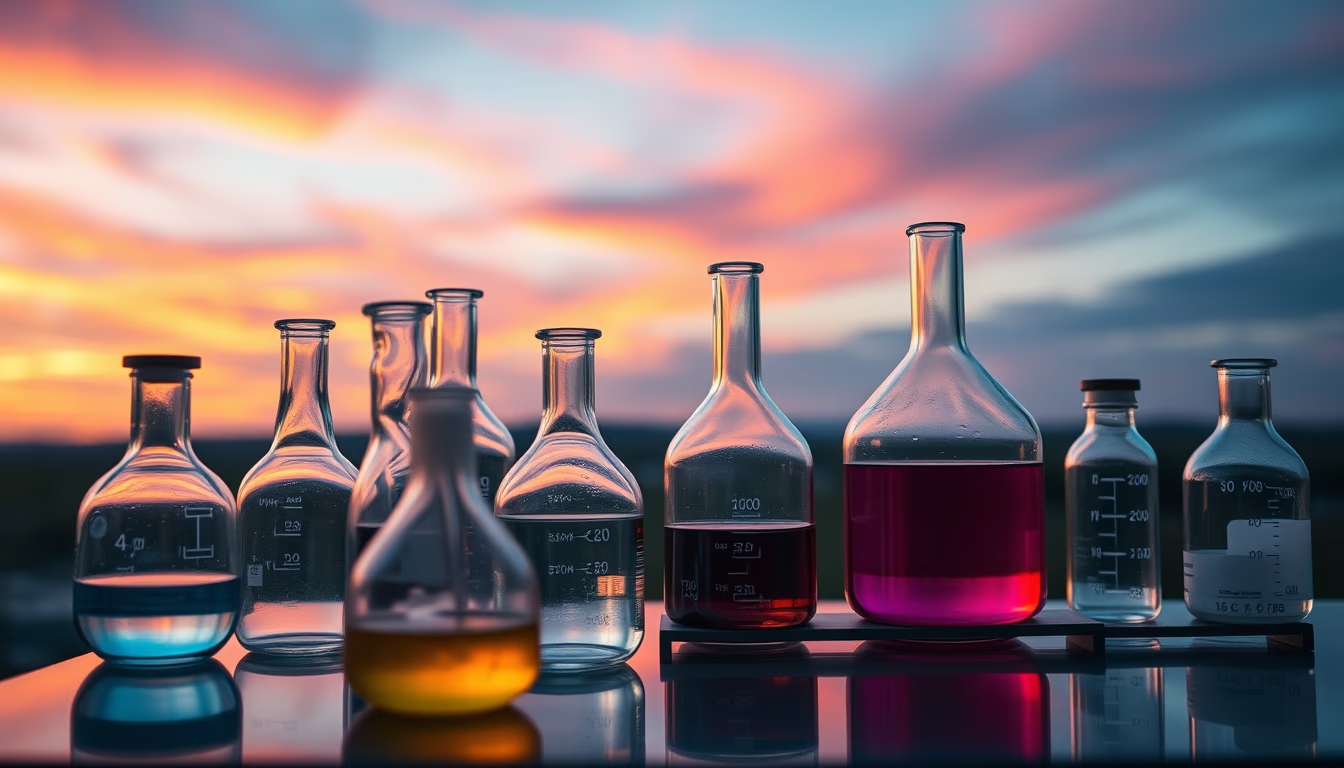
Scientific laboratory equipment, such as glassware, is essential for precise and safe experiments in chemistry and biology.
About this subject
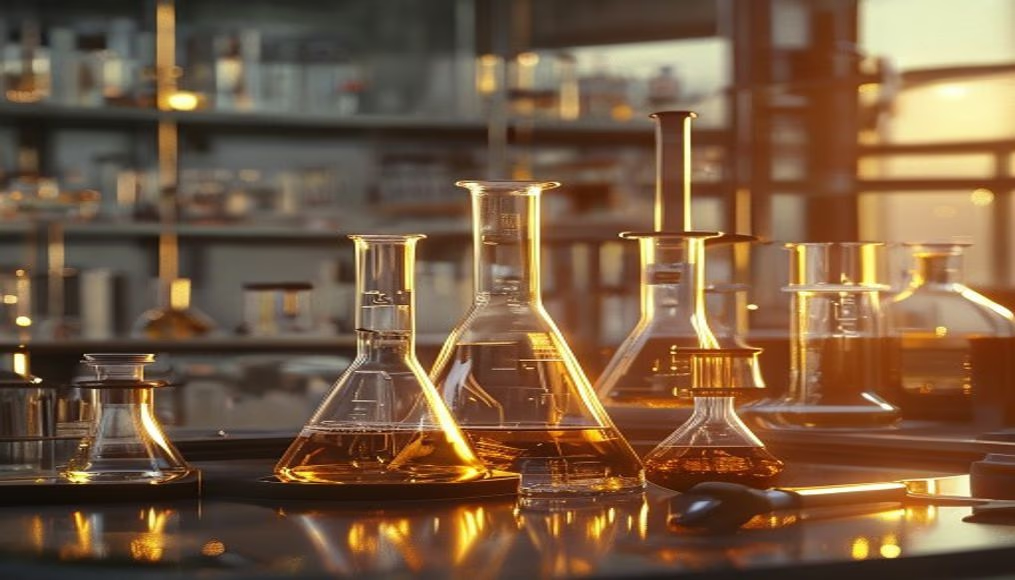
Laboratory glassware is a set of instruments mainly made of borosilicate glass, a material resistant to thermal shock and chemical attack. Common items include beakers, Erlenmeyer flasks, graduated cylinders, pipettes, burettes, and volumetric flasks. Each has a specific function: beakers for mixing and heating liquids, Erlenmeyer flasks for titrations, graduated cylinders for measuring volumes with moderate precision, and volumetric flasks for preparing solutions with exact concentration. The transparency of glass allows visualization of reactions and liquid levels, while chemical inertness prevents contamination.
The development of modern glassware is linked to the history of chemistry. In the 19th century, German chemist Justus von Liebig popularized the use of glass in laboratories, and the invention of borosilicate glass by the Schott company in 1891 revolutionized the field, allowing direct heating without cracking. Today, international standards such as ISO 3585 and ASTM E438 regulate manufacturing, ensuring standardization and safety. Calibration of volumetric glassware is performed at 20°C, the reference temperature for precise measurements.
In educational contexts, glassware is introduced in the early years of science teaching. Students learn to handle pipettes with rubber bulbs, read the meniscus in graduated cylinders, and assemble distillation apparatus. Familiarity with these instruments develops manual skills and understanding of scientific principles. Proper maintenance, such as washing with neutral detergent and rinsing with distilled water, extends lifespan and prevents experimental errors.
Interestingly, the production of laboratory glassware is an art combining craftsmanship and technology. Specialized glassblowers shape complex pieces like condensers and desiccators using gas torches. Although plastics like polypropylene and polytetrafluoroethylene (PTFE) have replaced glass in some applications, glassware remains irreplaceable for reactions requiring high temperature or purity. Sustainability is also gaining ground, with recycling programs for laboratory glass to reduce waste.
Frequently Asked Questions
What is the difference between common glass and borosilicate glass?
Borosilicate glass contains boron oxide, which gives it a low coefficient of thermal expansion. This allows it to withstand sudden temperature changes without cracking, unlike common glass, which can break easily under intense heat.
How is volumetric glassware calibrated?
Calibration is done by weighing the amount of distilled water the container holds or delivers at a standard temperature (usually 20°C). The mass is converted to volume using the density of water at that temperature. This process ensures measurement accuracy.
Why is laboratory glassware transparent?
Transparency allows the user to observe the contents during experiments, such as color changes, precipitate formation, or liquid levels. This is crucial for visual monitoring of reactions and for accurate volume readings.
Direct URL
https://pub-c7d6a6ea828543ac903a74a341ccb2e1.r2.dev/imagens/science-lab-equipment-glassware-landscape-photography.avifHow to credit
Include a visible link back to UtilizAí. Copy one of the snippets below:
<a href="https://xn--utiliza-eza.com/en/midia/imagens/science-lab-equipment-glassware-landscape-photography">Science lab equipment glassware</a> by <a href="https://xn--utiliza-eza.com">UtilizAí</a>, licensed under <a href="https://creativecommons.org/licenses/by/4.0/">CC BY 4.0</a>.
[Science lab equipment glassware](https://xn--utiliza-eza.com/en/midia/imagens/science-lab-equipment-glassware-landscape-photography) by [UtilizAí](https://xn--utiliza-eza.com), CC BY 4.0
License: CC-BY-4.0