Rogue planet darkness
1344×768 · AVIF · CC BY 4.0

Rogue planets are solitary worlds drifting through space without orbiting a star. Discover these fascinating celestial objects and their significance to astronomy.
About this subject
Rogue planets, also known as interstellar or free-floating planets, are planetary-mass objects not gravitationally bound to any star. Unlike traditional planets, they wander freely through the Milky Way, often in complete darkness due to the lack of direct starlight. Billions of such worlds are estimated to exist in our galaxy alone, potentially outnumbering stars. Most formed within planetary systems and were ejected by gravitational interactions, while others may be sub-stellar objects that never became stars.
Detecting rogue planets is extremely challenging due to their faintness. Astronomers use techniques like gravitational microlensing (when a planet passes in front of a distant star and bends its light) and infrared observations to capture residual heat from formation. NASA's Roman Space Telescope, set to launch in 2027, is expected to revolutionize the search for these objects. As of 2023, fewer than 20 candidates have been confirmed, but theoretical models suggest millions exist in our galactic neighborhood.
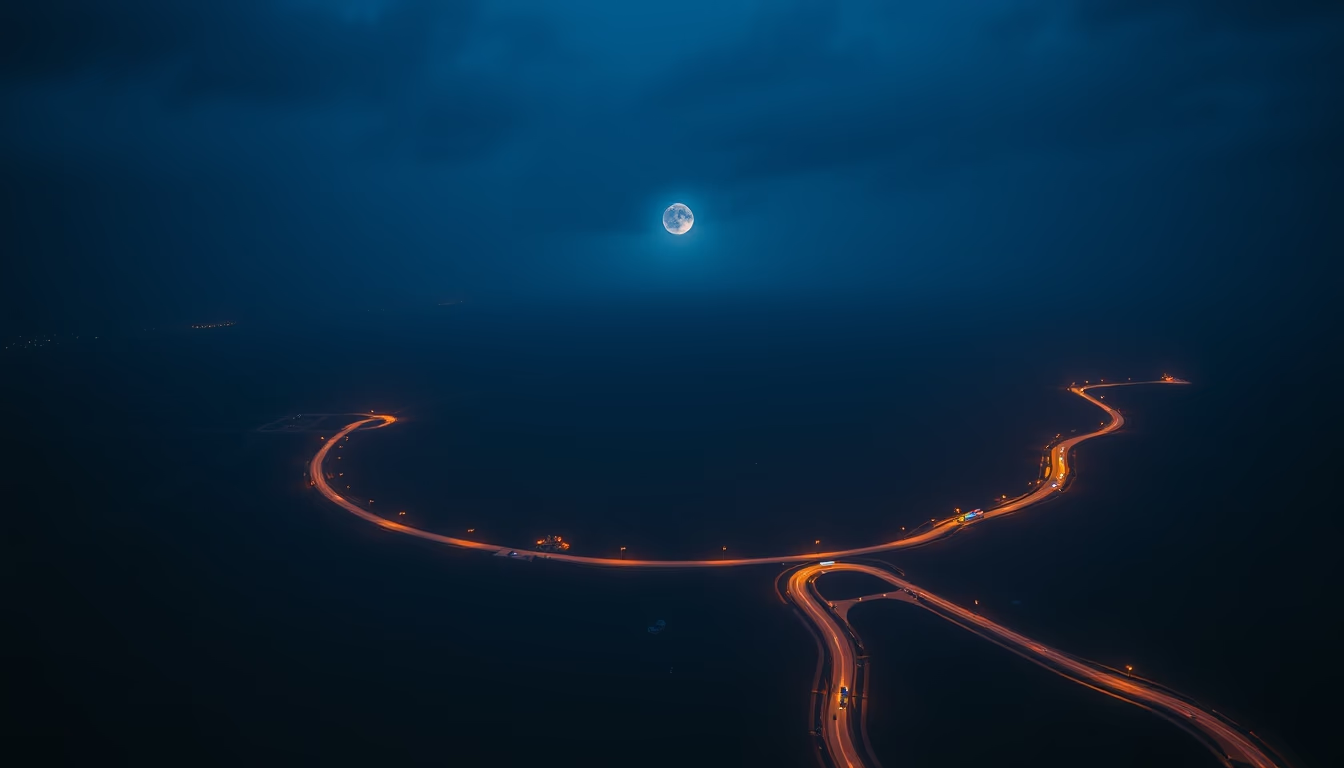
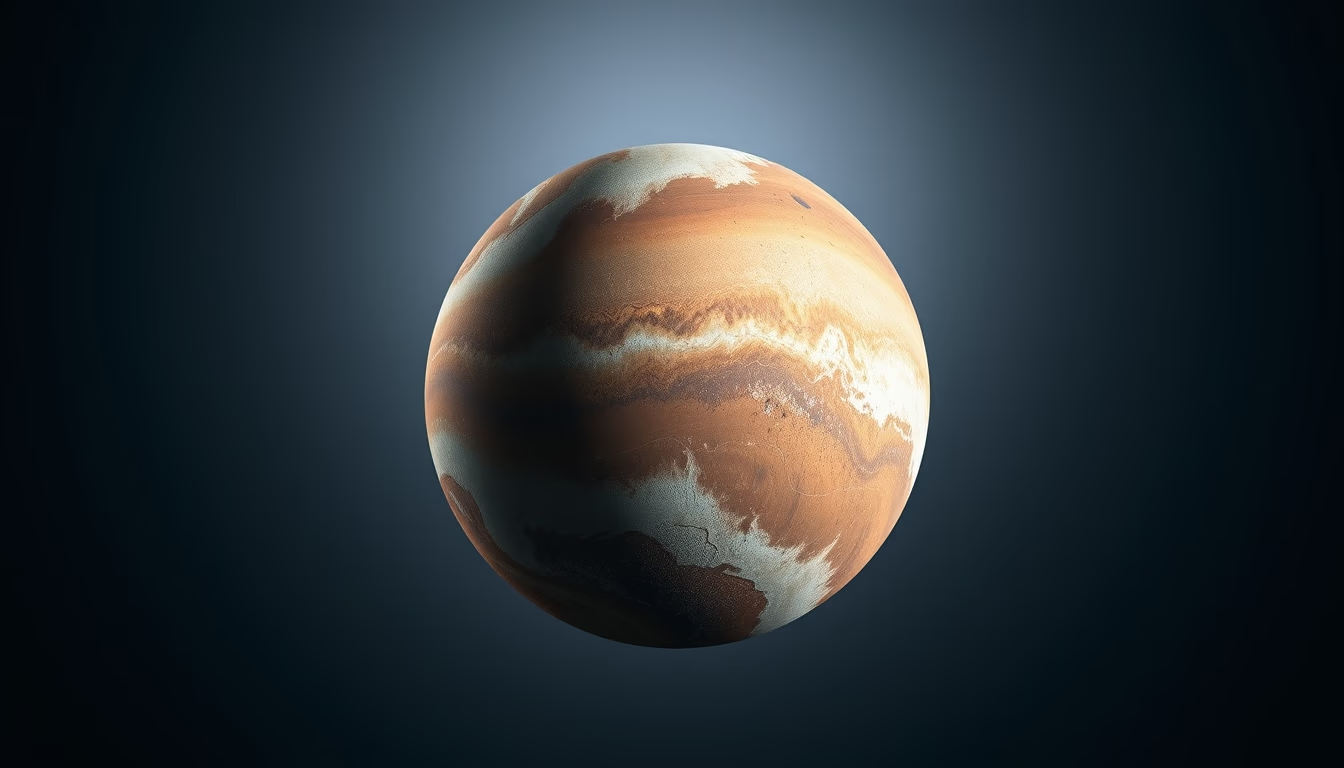
Despite darkness and extreme cold, some scientists speculate that rogue planets could harbor life. If they possess thick atmospheres and internal geological activity, subsurface oceans of liquid water could be maintained by tidal heating or radioactive decay. Such scenarios inspire artistic depictions showing these worlds shrouded in mystery, with dark horizons and possible auroras generated by interactions with the interstellar medium. The tilt-shift miniature style of this image aims to convey the solitude and scale of these fascinating objects.
Frequently Asked Questions
How does a planet become a rogue?
Most rogue planets were ejected from their original planetary system due to strong gravitational interactions with other planets or the star itself. Some may form directly from gas and dust clouds without ever orbiting a star.
How many interstellar planets exist in the Milky Way?
Estimates suggest there could be between 100 billion and 1 trillion rogue planets in the Milky Way, outnumbering stars. However, only a few have been confirmed due to detection challenges.
Could they harbor life?
It is possible, though unlikely. If a rogue planet has a thick atmosphere and internal geological activity, subsurface oceans of liquid water could exist, shielded from cosmic radiation. Life would depend on energy sources such as the planet's internal heat.
Direct URL
https://pub-c7d6a6ea828543ac903a74a341ccb2e1.r2.dev/imagens/rogue-planet-darkness-tilt-shift-miniature-fresh12.avifHow to credit
Include a visible link back to UtilizAí. Copy one of the snippets below:
<a href="https://xn--utiliza-eza.com/en/midia/imagens/rogue-planet-darkness-tilt-shift-miniature-fresh12">Rogue planet darkness</a> by <a href="https://xn--utiliza-eza.com">UtilizAí</a>, licensed under <a href="https://creativecommons.org/licenses/by/4.0/">CC BY 4.0</a>.
[Rogue planet darkness](https://xn--utiliza-eza.com/en/midia/imagens/rogue-planet-darkness-tilt-shift-miniature-fresh12) by [UtilizAí](https://xn--utiliza-eza.com), CC BY 4.0
License: CC-BY-4.0