Rogue planet darkness
1344×768 · AVIF · CC BY 4.0
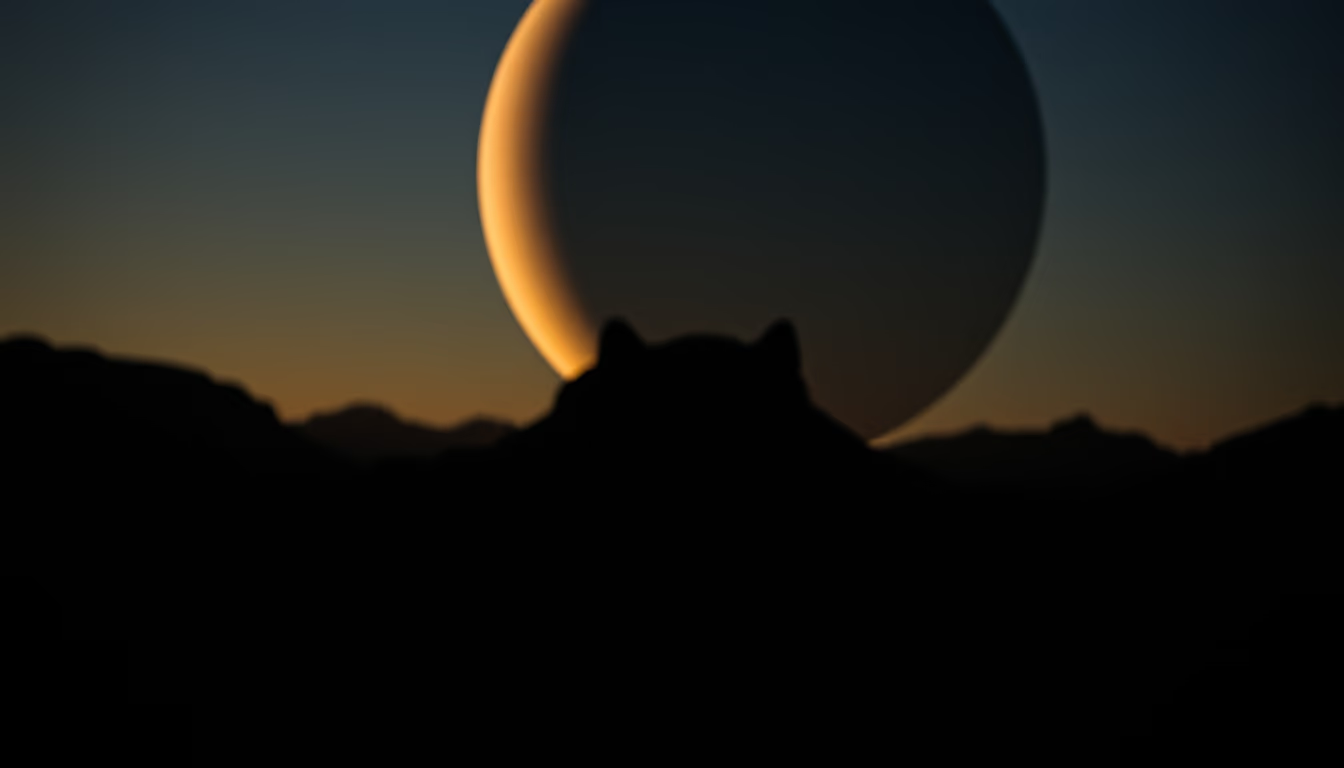
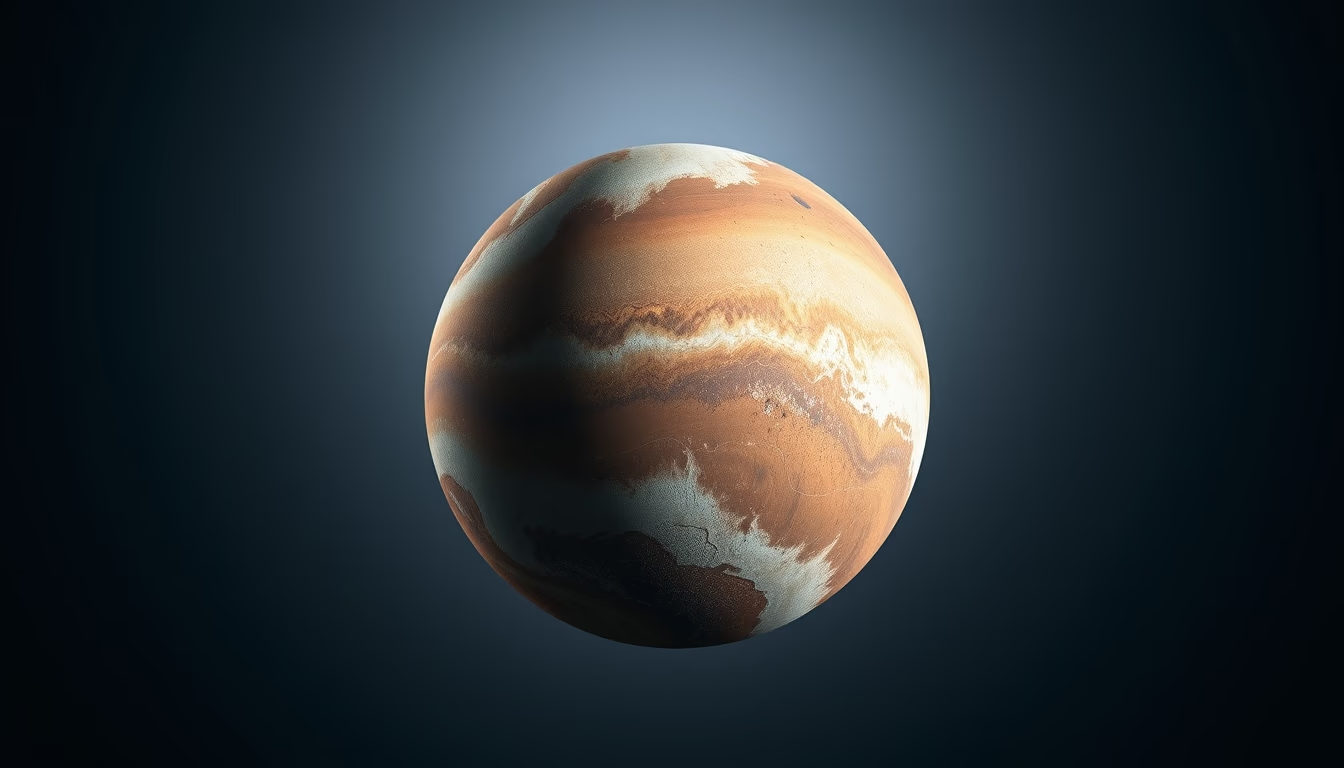
Rogue planets, also known as free-floating planets, are planetary-mass objects that drift through interstellar space without being gravitationally bound to any star, presenting unique challenges for detection and understanding planetary formation.
About this subject
Rogue planets are captivating objects that wander the cosmos without a stellar home. Unlike traditional planets, they do not orbit any star but drift freely through interstellar space. It is estimated that billions of them exist in the Milky Way alone, possibly outnumbering stars. Detection relies primarily on gravitational microlensing, where the planet's gravity bends light from a distant star, or on infrared emissions captured by space telescopes like WISE. A notable example is OGLE-2016-BLG-1928, an Earth-sized rogue planet discovered in 2020.
The origin of these solitary worlds is diverse. Many are ejected from their planetary systems during formation due to gravitational interactions with other planets or their host star. Others may form directly from the collapse of gas and dust clouds, a process similar to star formation but lacking sufficient mass to ignite nuclear fusion. This conceptually blurs the line between rogue planets and brown dwarfs, though the boundary remains a subject of debate.
Studying rogue planets provides valuable insights into the formation and evolution of planetary systems. They represent the fraction of planets that did not survive the chaotic dynamics of solar system birth. Furthermore, there is speculation about the potential for life on these worlds: even without starlight, internal geothermal heat could sustain warm subsurface oceans, creating potentially habitable environments. Future missions, such as the Nancy Grace Roman Space Telescope, promise to detect thousands of these objects, revolutionizing our understanding of planetary diversity across the galaxy.
Frequently Asked Questions
What is a rogue planet?
A rogue planet is a planetary-mass object that does not orbit any star, wandering freely through interstellar space.
How are rogue planets detected?
They are primarily detected through gravitational microlensing and infrared emissions, as they do not reflect starlight.
How many rogue planets are there in the Milky Way?
Estimates suggest there could be billions, possibly even trillions, outnumbering stars.
Direct URL
https://pub-c7d6a6ea828543ac903a74a341ccb2e1.r2.dev/imagens/rogue-planet-darkness-magazine-editorial-fresh1.avifHow to credit
Include a visible link back to UtilizAí. Copy one of the snippets below:
<a href="https://xn--utiliza-eza.com/en/midia/imagens/rogue-planet-darkness-magazine-editorial-fresh1">Rogue planet darkness</a> by <a href="https://xn--utiliza-eza.com">UtilizAí</a>, licensed under <a href="https://creativecommons.org/licenses/by/4.0/">CC BY 4.0</a>.
[Rogue planet darkness](https://xn--utiliza-eza.com/en/midia/imagens/rogue-planet-darkness-magazine-editorial-fresh1) by [UtilizAí](https://xn--utiliza-eza.com), CC BY 4.0
License: CC-BY-4.0