Rogue planet darkness
1344×768 · AVIF · CC BY 4.0

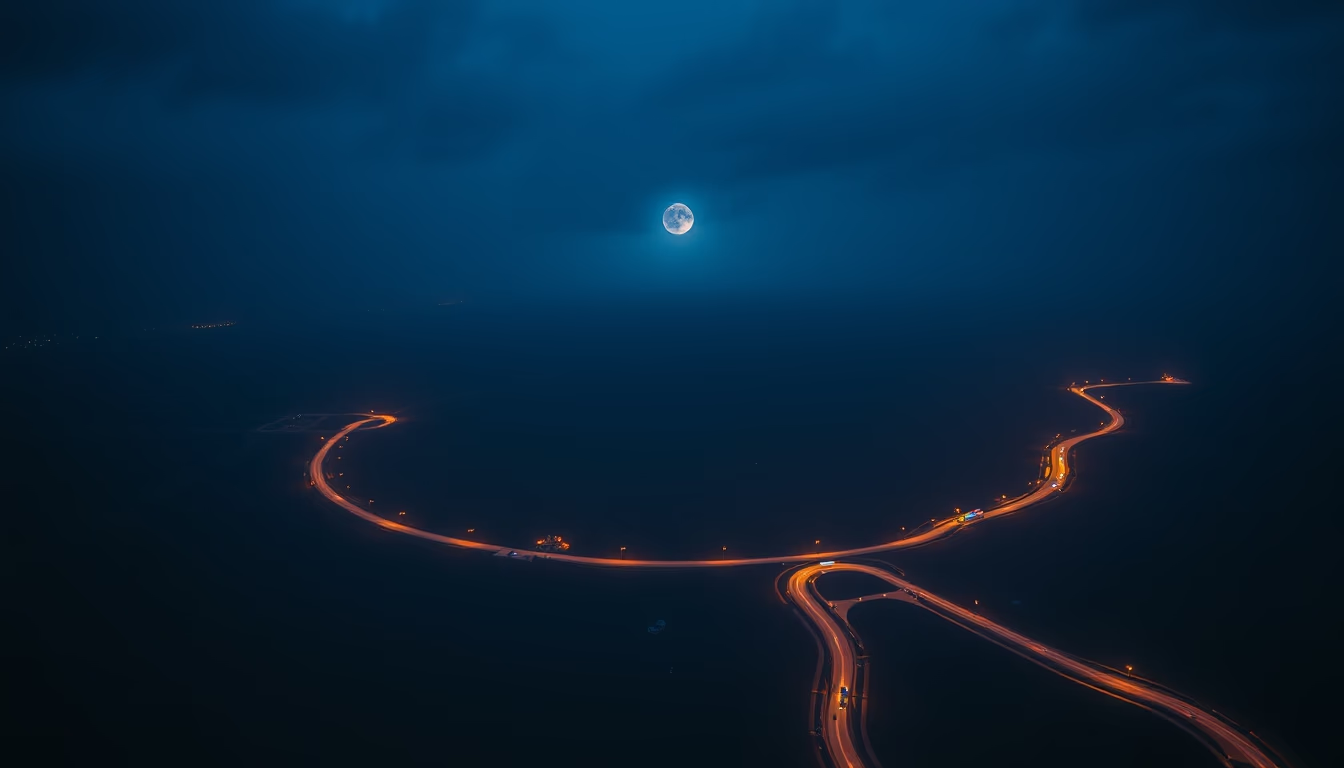
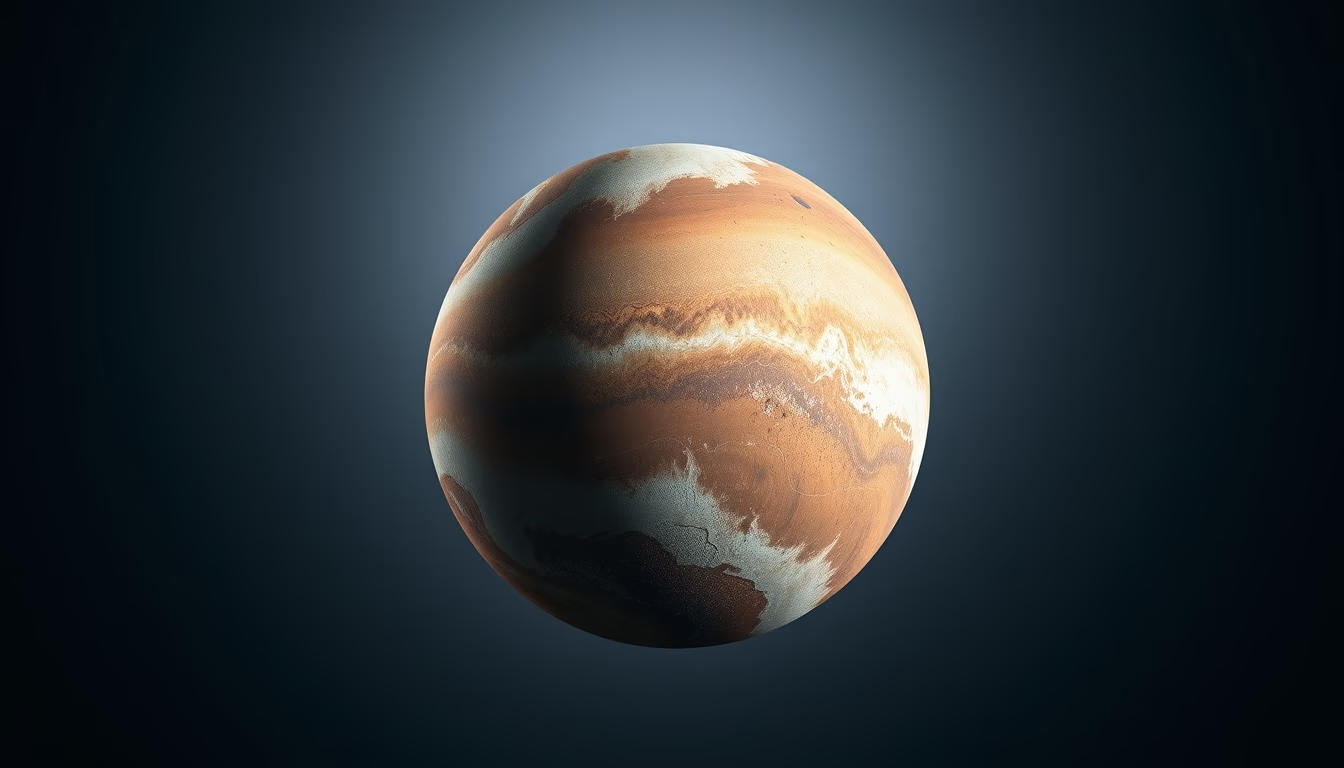
Rogue planets are celestial bodies that drift through space without a fixed orbit around a star, challenging traditional definitions of planets.
About this subject
Rogue planets, also known as interstellar planets, are planetary-mass objects that are not gravitationally bound to any star. They may have been ejected from their original systems during planetary formation or dynamical interactions, or they may have formed directly from the collapse of gas clouds, like low-mass brown dwarfs. Estimates suggest that the Milky Way could contain billions of these solitary worlds, possibly outnumbering stars in the galaxy.
The existence of rogue planets has been confirmed through observations such as gravitational microlensing, where the passage of such an object magnifies the light of distant stars. NASA's WISE space telescope detected hundreds of candidates, and the James Webb Telescope is helping to characterize them. These planets are extremely cold, with surface temperatures near absolute zero, as they receive no starlight. However, some may retain internal heat from formation or possess thick hydrogen-rich atmospheres that could keep them partially warm.
Studying rogue planets offers insights into planetary formation and the evolution of solar systems. They may be more common than previously thought, with some estimates suggesting there could be more rogue planets than stars. The possibility that some could harbor life, heated by geothermal processes or radioactive decay, is a fascinating topic for astrobiology, though highly speculative.
Frequently Asked Questions
How are rogue planets detected?
They are mainly detected via gravitational microlensing, where the planet passes in front of a distant star and bends its light. Infrared observatories like WISE and James Webb also identify them through their faint thermal emission.
What is the temperature of a rogue planet?
The surface temperature is extremely low, near absolute zero (about -270°C), as they receive no starlight. Some may be slightly warmer due to residual heat from formation or internal processes.
Are there rogue planets in the Milky Way?
Yes, billions are estimated to exist in the Milky Way. Studies suggest they may outnumber stars, with some candidates already confirmed through microlensing observations.
Direct URL
https://pub-c7d6a6ea828543ac903a74a341ccb2e1.r2.dev/imagens/rogue-planet-darkness-long-exposure-fresh9.avifHow to credit
Include a visible link back to UtilizAí. Copy one of the snippets below:
<a href="https://xn--utiliza-eza.com/en/midia/imagens/rogue-planet-darkness-long-exposure-fresh9">Rogue planet darkness</a> by <a href="https://xn--utiliza-eza.com">UtilizAí</a>, licensed under <a href="https://creativecommons.org/licenses/by/4.0/">CC BY 4.0</a>.
[Rogue planet darkness](https://xn--utiliza-eza.com/en/midia/imagens/rogue-planet-darkness-long-exposure-fresh9) by [UtilizAí](https://xn--utiliza-eza.com), CC BY 4.0
License: CC-BY-4.0