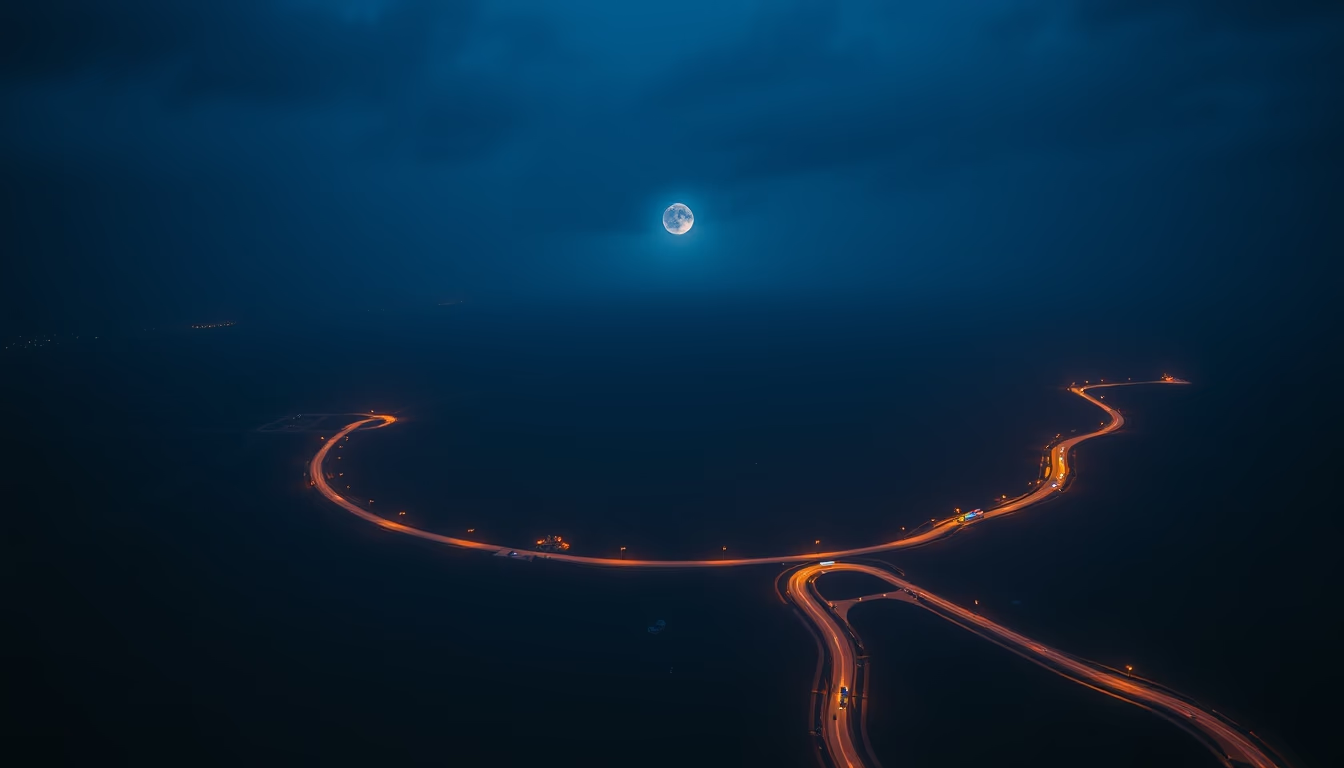
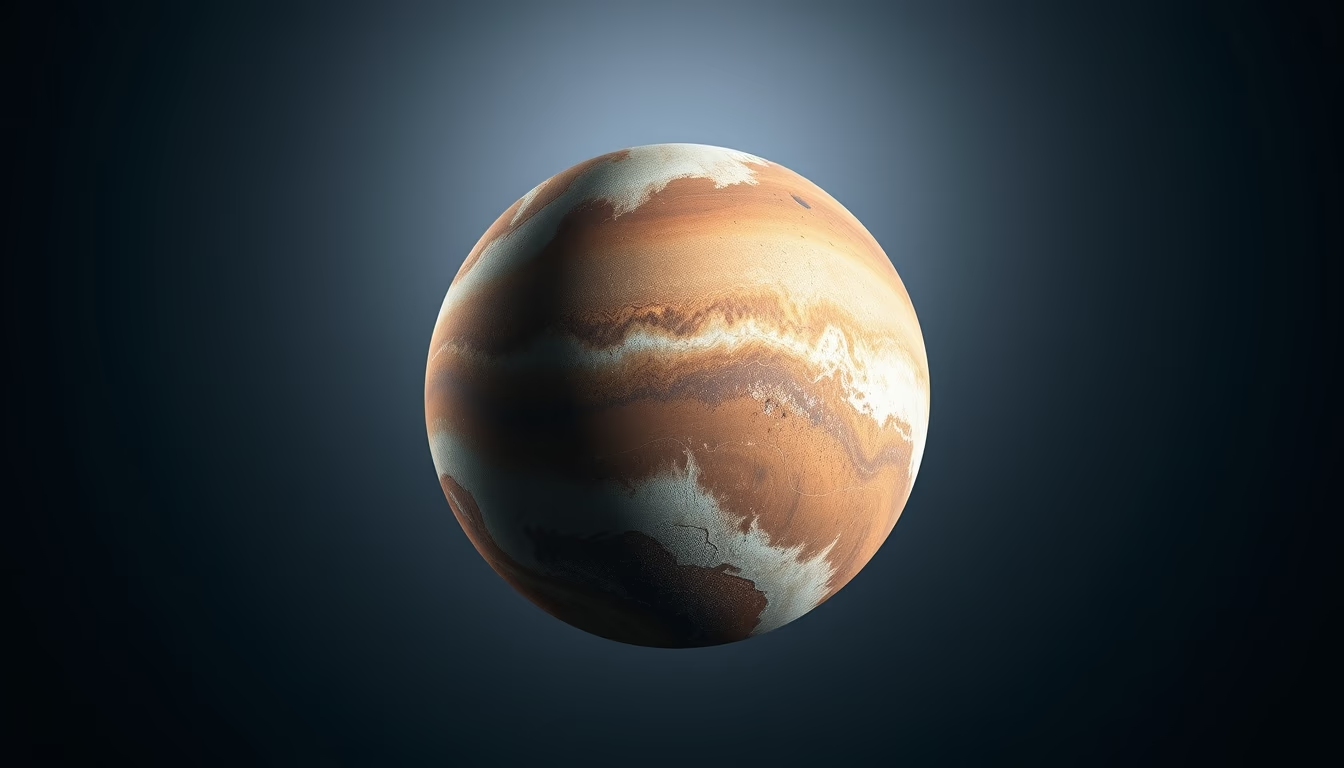
Rogue planet darkness
1344×768 · AVIF · CC BY 4.0

Rogue planets are solitary worlds drifting through space without orbiting any star. Learn about their origins, detection, and mysteries.
About this subject
Rogue planets, also known as interstellar or orphan planets, are celestial bodies with planetary mass that are not gravitationally bound to any star. They drift freely through the galaxy, often ejected from their original systems during planetary formation or by violent gravitational interactions. Estimates suggest billions of such solitary worlds may exist in the Milky Way alone, outnumbering stars.
Detecting rogue planets is extremely challenging because they emit no light and are cold. Astronomers use techniques like gravitational microlensing, which exploits the bending of light from distant stars by the planet's gravitational field, or infrared observations to capture residual heat from formation. In 2020, the MOA-2016-BLG-192Lb study confirmed a low-mass rogue planet candidate.
The origin of rogue planets is diverse. They can form as normal planets in protoplanetary disks and later be ejected by interactions with hot Jupiters or nearby stars. Another hypothesis suggests some form directly in the interstellar medium, within collapsing molecular clouds, never orbiting a star. These worlds may have thick atmospheres and even subsurface oceans heated by radioactive decay, raising speculation about the possibility of life.
Culturally, rogue planets inspire science fiction and reflections on the vastness of the cosmos. The concept of a sunless world, where darkness is permanent, challenges our understanding of habitability. Moreover, studying these objects refines models of planetary formation and orbital dynamics, offering clues about the evolution of planetary systems over time.
Frequently Asked Questions
How are rogue planets detected if they emit no light?
Rogue planets are primarily detected via gravitational microlensing, which measures the bending of light from background stars. They can also be observed in infrared, capturing residual heat from formation, or through variations in the brightness of distant stars.
How many rogue planets are there in the Milky Way?
Estimates suggest billions of rogue planets in the Milky Way, possibly outnumbering stars. Recent studies indicate there could be up to 50 billion such solitary worlds.
Could a rogue planet harbor life?
It is possible but unlikely. Life would need an energy source, such as geothermal heat from radioactive decay or heated subsurface oceans. Although they receive no sunlight, some models suggest thick atmospheres could retain heat and allow liquid environments.
Direct URL
https://pub-c7d6a6ea828543ac903a74a341ccb2e1.r2.dev/imagens/rogue-planet-darkness-lo-fi-disposable-camera-fresh7.avifHow to credit
Include a visible link back to UtilizAí. Copy one of the snippets below:
<a href="https://xn--utiliza-eza.com/en/midia/imagens/rogue-planet-darkness-lo-fi-disposable-camera-fresh7">Rogue planet darkness</a> by <a href="https://xn--utiliza-eza.com">UtilizAí</a>, licensed under <a href="https://creativecommons.org/licenses/by/4.0/">CC BY 4.0</a>.
[Rogue planet darkness](https://xn--utiliza-eza.com/en/midia/imagens/rogue-planet-darkness-lo-fi-disposable-camera-fresh7) by [UtilizAí](https://xn--utiliza-eza.com), CC BY 4.0
License: CC-BY-4.0