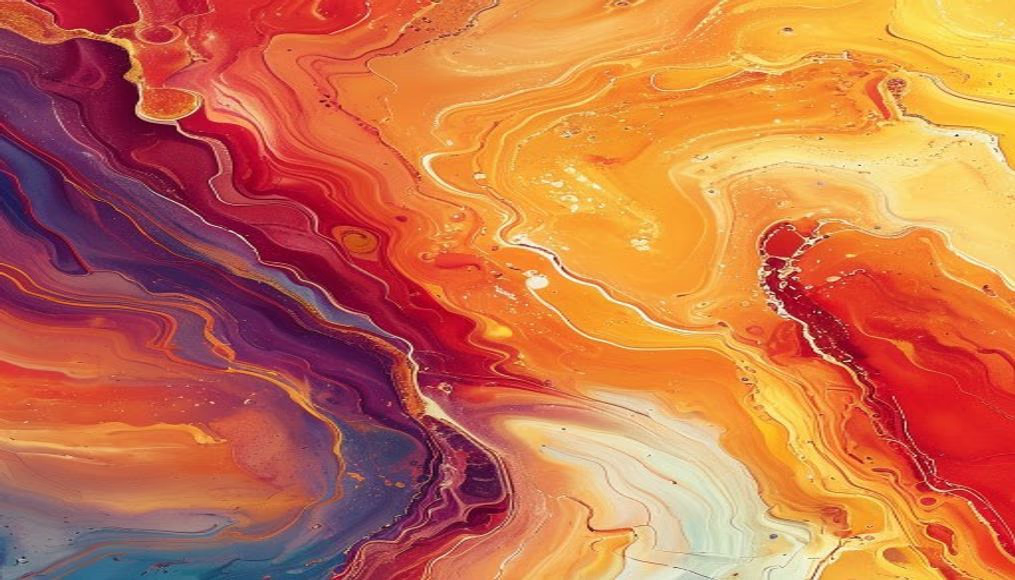
Paint splash macro
1344×768 · AVIF · CC BY 4.0
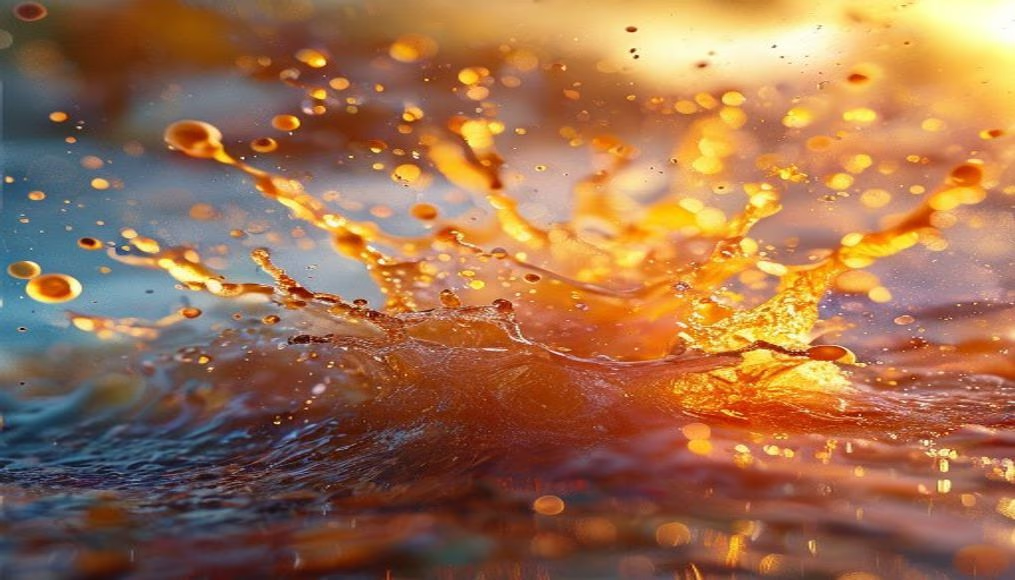
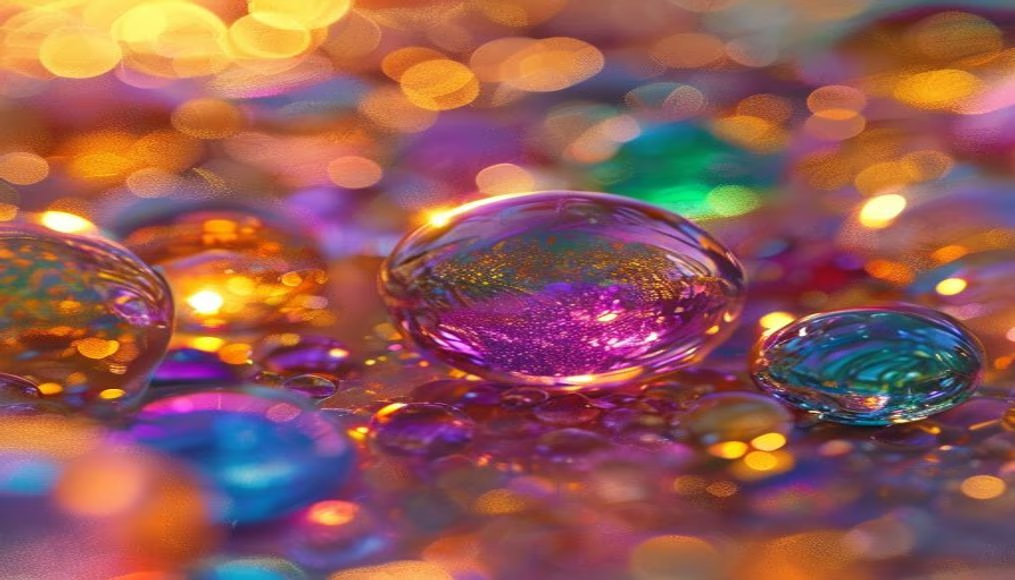
Macro photograph of a paint splash reveals impressive details of fluid dynamics and color mixing.
About this subject
Macro paint splash photography is a technique that combines high speed, precise lighting, and special lenses to freeze the exact moment when paint hits a surface. Typically, a camera with a fast shutter speed (above 1/1000 second) and multiple flashes are used to avoid motion blur. Macro lenses, with focal lengths of 100 mm or more, capture tiny details invisible to the naked eye, such as bubbles, thin paint strands, and turbulence patterns.
From a scientific perspective, splashes follow laws of hydrodynamics and surface tension. The final shape depends on the paint's viscosity, drop height, and impact angle. Acrylic or oil paints mixed with water or solvents produce different effects: thicker drops create crown-like structures, while more fluid liquids form streaks and radial explosions. The mixing of primary colors during impact creates gradients and swirls reminiscent of abstract paintings.
In contemporary art, macro paint splash has become popular in album covers, advertising campaigns, and decorative prints. Artists like Jack Long and Fabian Oefner explore this technique to create vibrant, chaotic compositions where every drop is unique. Patience is essential: hundreds of attempts are needed to achieve an image with satisfactory symmetry and color contrast.
Interesting fact: the first paint splash images were made in the 1950s by photographer Harold Edgerton, a pioneer of stroboscopic photography. Today, with digital cameras and sound triggers, even more precise and creative results can be obtained.
Frequently Asked Questions
How is macro paint splash photography done?
A camera with a macro lens, fast shutter speed (above 1/1000 s), and controlled flashes is used. Paint is typically dropped from a height onto a surface, and a sound sensor or manual trigger captures the impact moment.
What equipment is recommended for beginners?
A DSLR or mirrorless camera with manual mode, a 100 mm macro lens, an external flash with a diffuser, and a tripod. A sound trigger helps fire the shutter at the right instant.
What types of paint produce the best effects?
Acrylic or oil paints diluted with water or solvent are common. Different viscosities yield varied shapes: thicker for crowns, thinner for radial explosions.
Direct URL
https://pub-c7d6a6ea828543ac903a74a341ccb2e1.r2.dev/imagens/paint-splash-macro-travel-photography-v10.avifHow to credit
Include a visible link back to UtilizAí. Copy one of the snippets below:
<a href="https://xn--utiliza-eza.com/en/midia/imagens/paint-splash-macro-travel-photography-v10">Paint splash macro</a> by <a href="https://xn--utiliza-eza.com">UtilizAí</a>, licensed under <a href="https://creativecommons.org/licenses/by/4.0/">CC BY 4.0</a>.
[Paint splash macro](https://xn--utiliza-eza.com/en/midia/imagens/paint-splash-macro-travel-photography-v10) by [UtilizAí](https://xn--utiliza-eza.com), CC BY 4.0
License: CC-BY-4.0