Feather macro detail
1344×768 · AVIF · CC BY 4.0
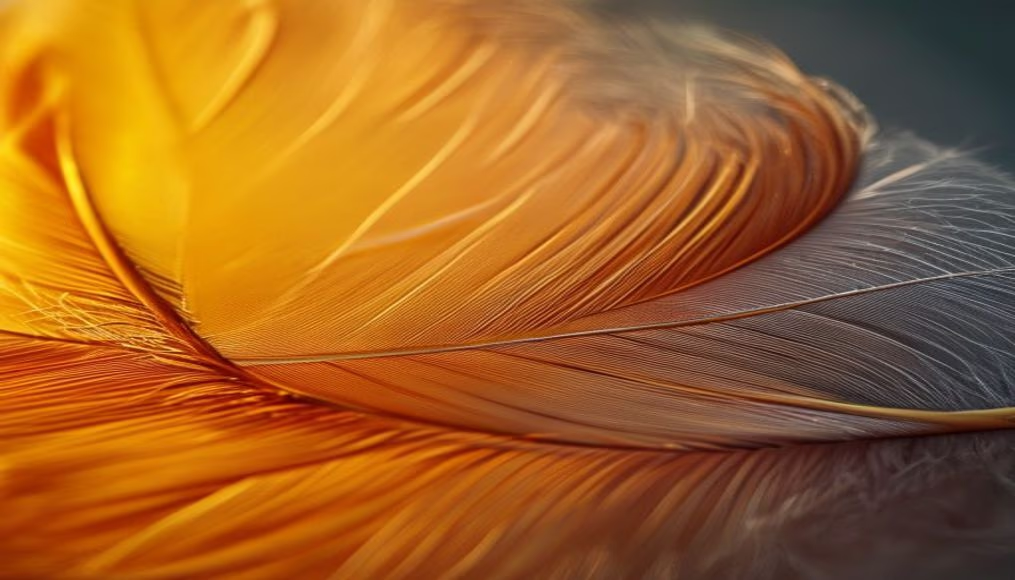
Microscopic details of a feather reveal structural and chromatic complexity that inspires artists and scientists.
About this subject
Feathers and plumes are keratinous structures that evolved to provide thermal insulation, waterproofing, and, in many birds, flight capability. When observed in macro photography, they reveal a universe of barbs and barbules interlocking like natural Velcro. Feather colors can be pigmentary, such as melanins and carotenoids, or structural, resulting from light interference in nanostructures. Structural colors, like the iridescent blue of macaws or metallic green of hummingbirds, do not fade over time as they depend on the feather's architecture.
Macro photography of feathers is common among nature and art photographers. It requires specialized lenses and cross-lighting techniques to highlight textures and reflections. Each bird species presents unique patterns: owl feathers have serrated edges for silent flight, while peacock feathers feature ocelli creating depth illusions. In Brazil, the rich avifauna offers endless possibilities, from the blue feathers of the tanager to the orange ones of the toucan.
In contemporary art, feathers are used in collages, installations, and jewelry. Brazilian indigenous artists, such as those from the Kayapó and Ticuna ethnicities, traditionally use feathers in headdresses and ceremonial adornments, valuing colors and textures. Macro photography of feathers also has scientific applications: ornithologists analyze microstructures to identify species and study bird health. Additionally, biomimetics draws inspiration from feathers to create adhesive materials and hydrophobic coatings.
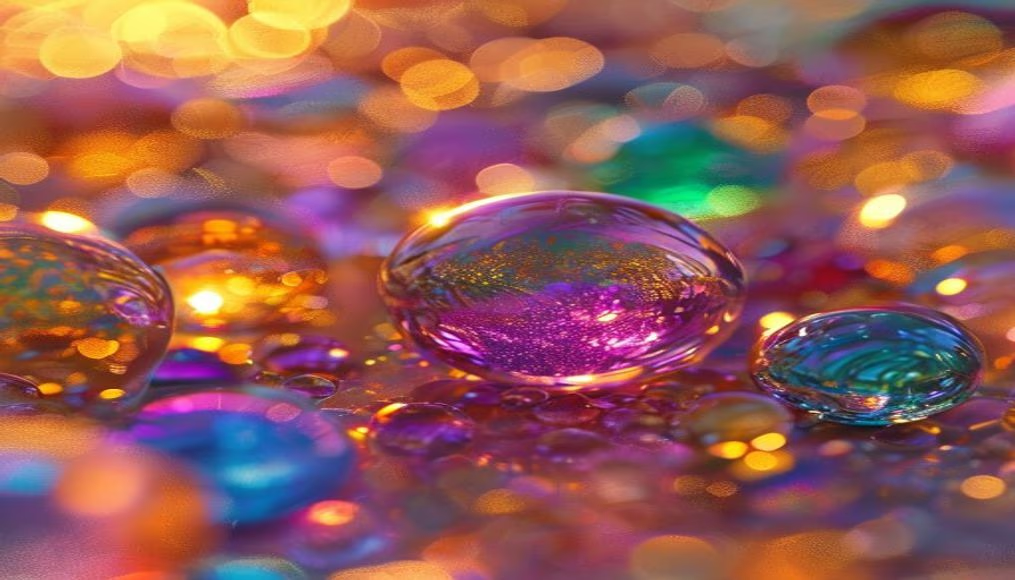
Interestingly, a feather's color can change depending on the viewing angle, a phenomenon known as iridescence. This occurs due to layers of keratin and air that refract light. In some birds, like the hummingbird, iridescence is so intense it seems to emit its own light. Macro photography captures these details invisible to the naked eye, turning the ordinary into abstract art.
Frequently Asked Questions
What causes iridescence in feathers?
Iridescence is caused by light interference in nanostructures of keratin and air within the feather barbs. Different thicknesses of these layers reflect specific wavelengths, creating colors that shift with the viewing angle.
What is the difference between pigmentary and structural color in feathers?
Pigmentary colors come from melanins (black, brown) or carotenoids (yellow, orange, red) and can fade with sun exposure. Structural colors, such as blue and metallic green, result from light reflection on microstructures and are more stable.
How to photograph feathers in macro to highlight textures?
Use a macro lens (60mm to 100mm) and side or grazing light to emphasize relief. A tripod and manual focus are recommended. Set aperture to f/8 to f/16 for greater depth of field, and consider focus stacking for overall sharpness.
Direct URL
https://pub-c7d6a6ea828543ac903a74a341ccb2e1.r2.dev/imagens/feather-macro-detail-travel-photography-v10.avifHow to credit
Include a visible link back to UtilizAí. Copy one of the snippets below:
<a href="https://xn--utiliza-eza.com/en/midia/imagens/feather-macro-detail-travel-photography-v10">Feather macro detail</a> by <a href="https://xn--utiliza-eza.com">UtilizAí</a>, licensed under <a href="https://creativecommons.org/licenses/by/4.0/">CC BY 4.0</a>.
[Feather macro detail](https://xn--utiliza-eza.com/en/midia/imagens/feather-macro-detail-travel-photography-v10) by [UtilizAí](https://xn--utiliza-eza.com), CC BY 4.0
License: CC-BY-4.0