Oil paint texture
1344×768 · AVIF · CC BY 4.0
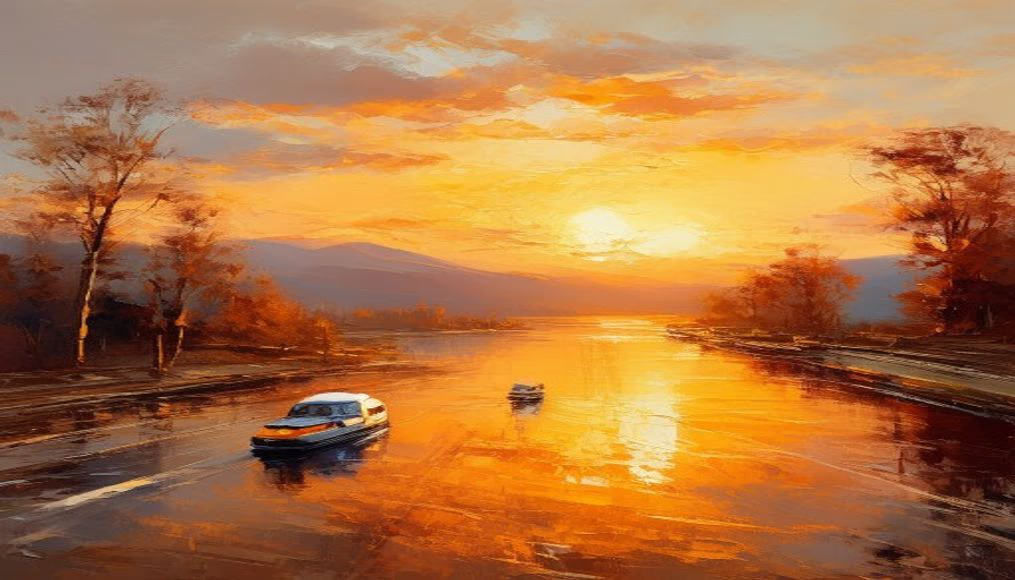
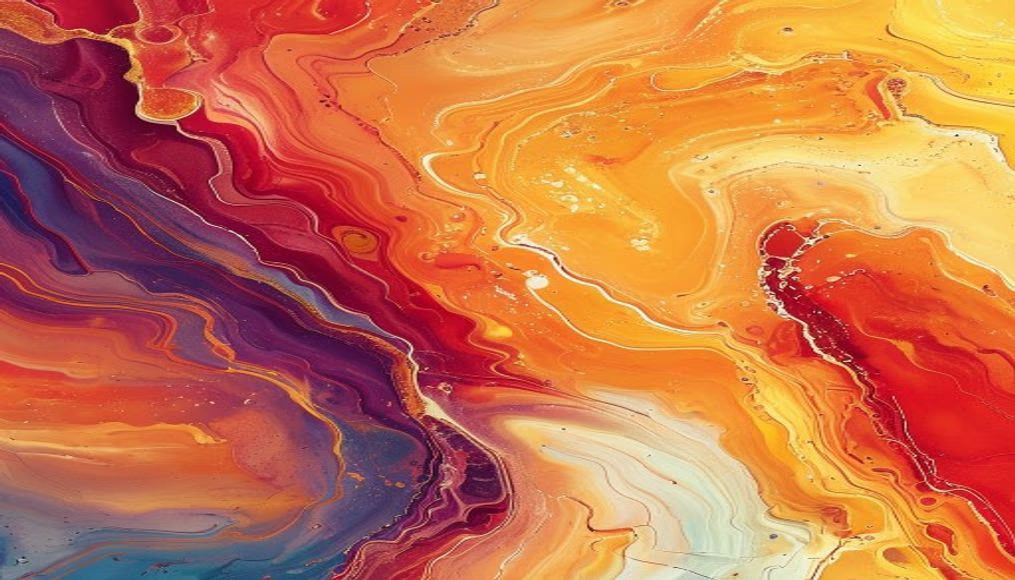
Oil paint texture is a fundamental element in painting, ranging from thin, smooth layers to thick impasto reliefs, influencing the visual and tactile perception of the artwork.
About this subject
Oil paint texture is determined by the composition of the paint, pigment mixed with vegetable oils such as linseed oil, and the application technique. Brushes, palette knives, and even the artist's fingers create surfaces that can be smooth, rough, granular, or with pronounced relief. Techniques like glazing produce translucent, smooth layers, while impasto accumulates thick paint that projects from the canvas, capturing light and shadow dramatically.
Historically, texture has always been an expressive resource in oil painting. Masters like Rembrandt used impasto in illuminated areas to add volume and realism, while Vincent van Gogh applied short, thick brushstrokes that conveyed emotion and movement. In the 20th century, Abstract Expressionists like Jackson Pollock and Willem de Kooning elevated texture to a central element, with drips, splatters, and overlapping layers defining the composition itself.
From a technical standpoint, texture directly affects how paint interacts with light. Smooth surfaces reflect uniformly, while reliefs create shadow and highlight zones that change with the viewing angle. In conservation, thick oil paint layers are more prone to cracking and flaking due to the expansion and contraction of the support with temperature and humidity variations. Therefore, many historical works with impasto require special care.
In the context of travel photography, oil paint texture is often captured in details of masterpieces in museums worldwide. Travelers and photographers seek to record the three-dimensionality of brushstrokes, revealing aspects that go unnoticed in an overall view. These images highlight the artist's skill and the materiality of the painting, connecting the viewer to the technique and history behind the work.
Frequently Asked Questions
What is impasto in oil painting?
Impasto is a technique where paint is applied in thick layers, creating visible relief on the canvas surface. This adds texture and three-dimensionality, highlighting brushstrokes and palette knife marks.
How does oil paint texture affect conservation of the artwork?
Thick oil paint layers, typical of impasto, are more prone to cracking and flaking because the expansion and contraction of the support with temperature and humidity changes create stress. Conservation requires environmental control and specialized restoration techniques.
Which artists are known for expressive use of oil paint texture?
Rembrandt, Vincent van Gogh, Jackson Pollock, and Willem de Kooning are examples. Rembrandt used impasto for volume, van Gogh for emotion, and the Abstract Expressionists made texture the central focus of the composition.
Direct URL
https://pub-c7d6a6ea828543ac903a74a341ccb2e1.r2.dev/imagens/oil-paint-texture-travel-photography-v10.avifHow to credit
Include a visible link back to UtilizAí. Copy one of the snippets below:
<a href="https://xn--utiliza-eza.com/en/midia/imagens/oil-paint-texture-travel-photography-v10">Oil paint texture</a> by <a href="https://xn--utiliza-eza.com">UtilizAí</a>, licensed under <a href="https://creativecommons.org/licenses/by/4.0/">CC BY 4.0</a>.
[Oil paint texture](https://xn--utiliza-eza.com/en/midia/imagens/oil-paint-texture-travel-photography-v10) by [UtilizAí](https://xn--utiliza-eza.com), CC BY 4.0
License: CC-BY-4.0