Navajo blanket pattern
1344×768 · AVIF · CC BY 4.0
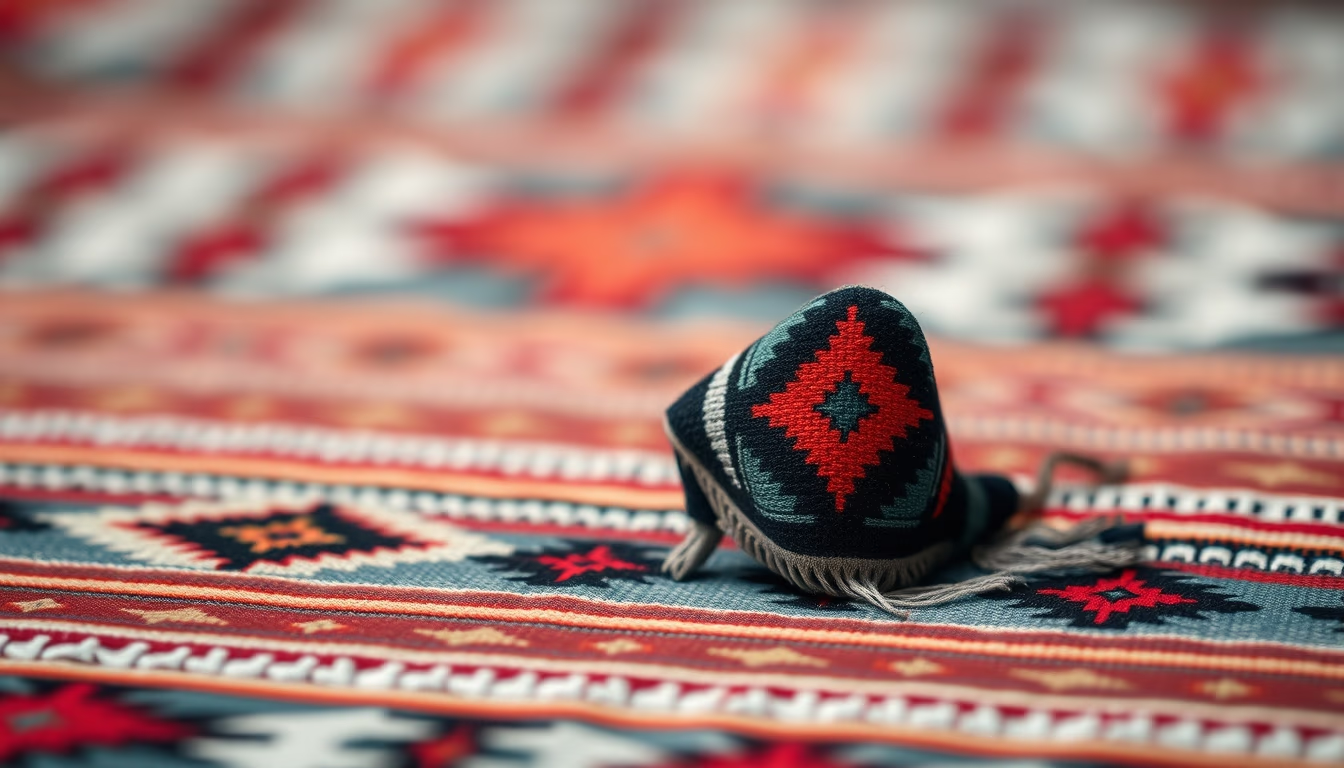
Navajo blanket patterns, woven by the Diné nation, combine geometric symbolism and vibrant colors, reflecting centuries of textile tradition.
About this subject
Navajo blankets, woven by the Diné people in the southwestern United States, are renowned worldwide for their geometric patterns and expressive use of color. Weaving was introduced to the Navajo by Pueblo peoples around the 17th century, but it quickly evolved into a distinct tradition after acquiring Merino sheep from Spanish colonizers. Wool became the primary material, dyed with natural pigments from plants, minerals, and insects such as indigo and cochineal red.
In the 19th century, Navajo blankets were valuable trade items among tribes and settlers. Notable are the "Chief's Blankets," divided into three phases: First Phase featured narrow horizontal stripes; Second Phase added colored rectangles at the edges; Third Phase displayed central diamonds and crosses. After the Navajo War (1863, 1864), confinement at Bosque Redondo forced changes, but weaving persisted. In the 1870s, contact with Mexican textiles inspired the "Eye-Dazzlers," dense patterns with vivid aniline dyes, creating a hypnotic visual effect.
Each pattern carries cultural meanings: zigzag lines represent lightning, diamonds symbolize sacred mountains, and crosses reference the four cardinal directions. The weaving technique is done on a vertical hand loom without prior designs, passed down orally through generations. From the 20th century onward, production shifted to the tourist market, with regional styles like Crystal and Two Grey Hills, known for fine patterns and light backgrounds. Today, Navajo blankets are valued as art and cultural heritage, protected by authenticity laws from the Navajo Nation.
Frequently Asked Questions
What are the main types of Navajo blanket patterns?
The main types include the Chief's Blankets (divided into three phases with stripes, rectangles, and diamonds), the Eye-Dazzlers (with vibrant colors and dense patterns), and regional styles like Crystal and Two Grey Hills, which feature fine designs on light backgrounds.
What colors are traditionally used in Navajo blankets?
Historically, natural dyes such as indigo (blue), cochineal (red), yellow ochre, and black from walnuts were used. After the 19th century, aniline dyes brought brighter colors, including green, orange, and purple.
How are Navajo blankets made?
They are handwoven on a vertical loom using spun and dyed sheep's wool. The weaver works without written patterns; each design is created mentally and passed down through oral tradition. The process can take months for a medium-sized piece.
Direct URL
https://pub-c7d6a6ea828543ac903a74a341ccb2e1.r2.dev/imagens/navajo-blanket-pattern-tilt-shift-miniature-fresh16.avifHow to credit
Include a visible link back to UtilizAí. Copy one of the snippets below:
<a href="https://xn--utiliza-eza.com/en/midia/imagens/navajo-blanket-pattern-tilt-shift-miniature-fresh16">Navajo blanket pattern</a> by <a href="https://xn--utiliza-eza.com">UtilizAí</a>, licensed under <a href="https://creativecommons.org/licenses/by/4.0/">CC BY 4.0</a>.
[Navajo blanket pattern](https://xn--utiliza-eza.com/en/midia/imagens/navajo-blanket-pattern-tilt-shift-miniature-fresh16) by [UtilizAí](https://xn--utiliza-eza.com), CC BY 4.0
License: CC-BY-4.0