Navajo blanket pattern
1344×768 · AVIF · CC BY 4.0
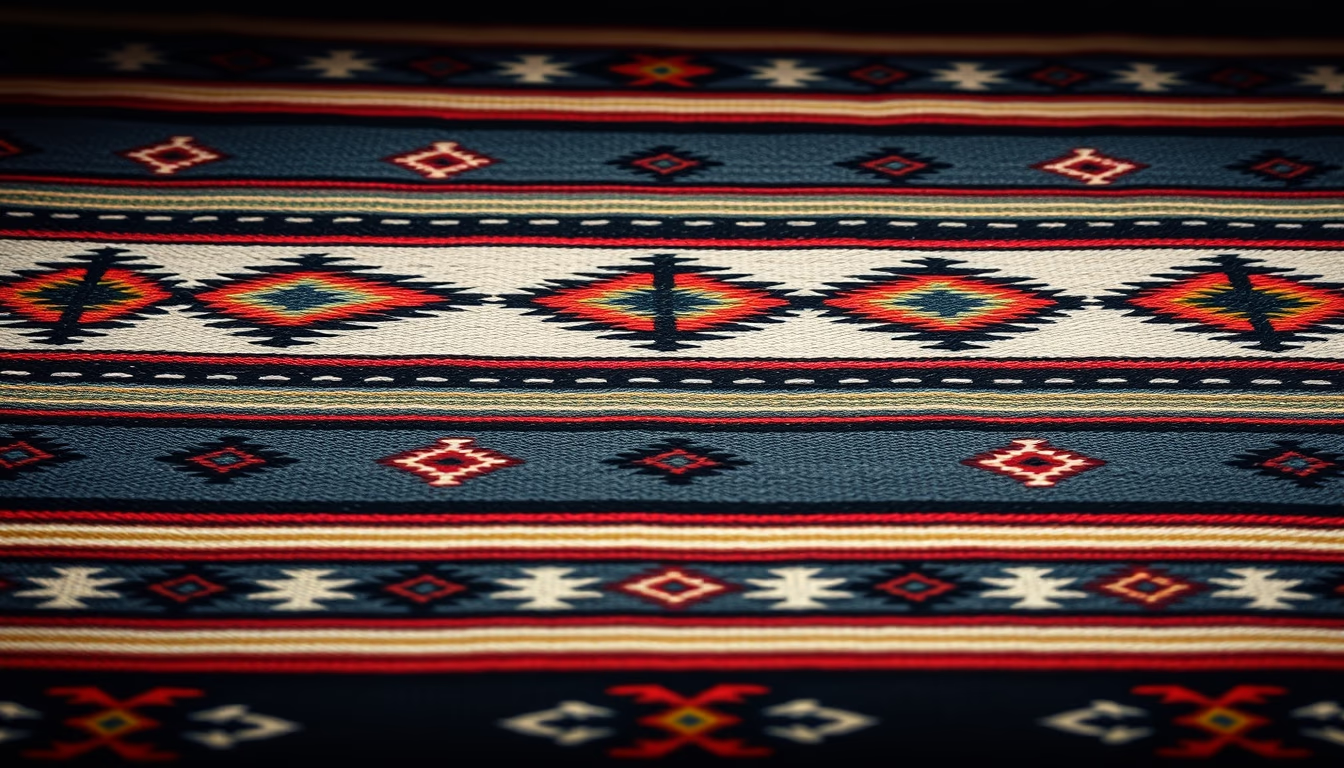
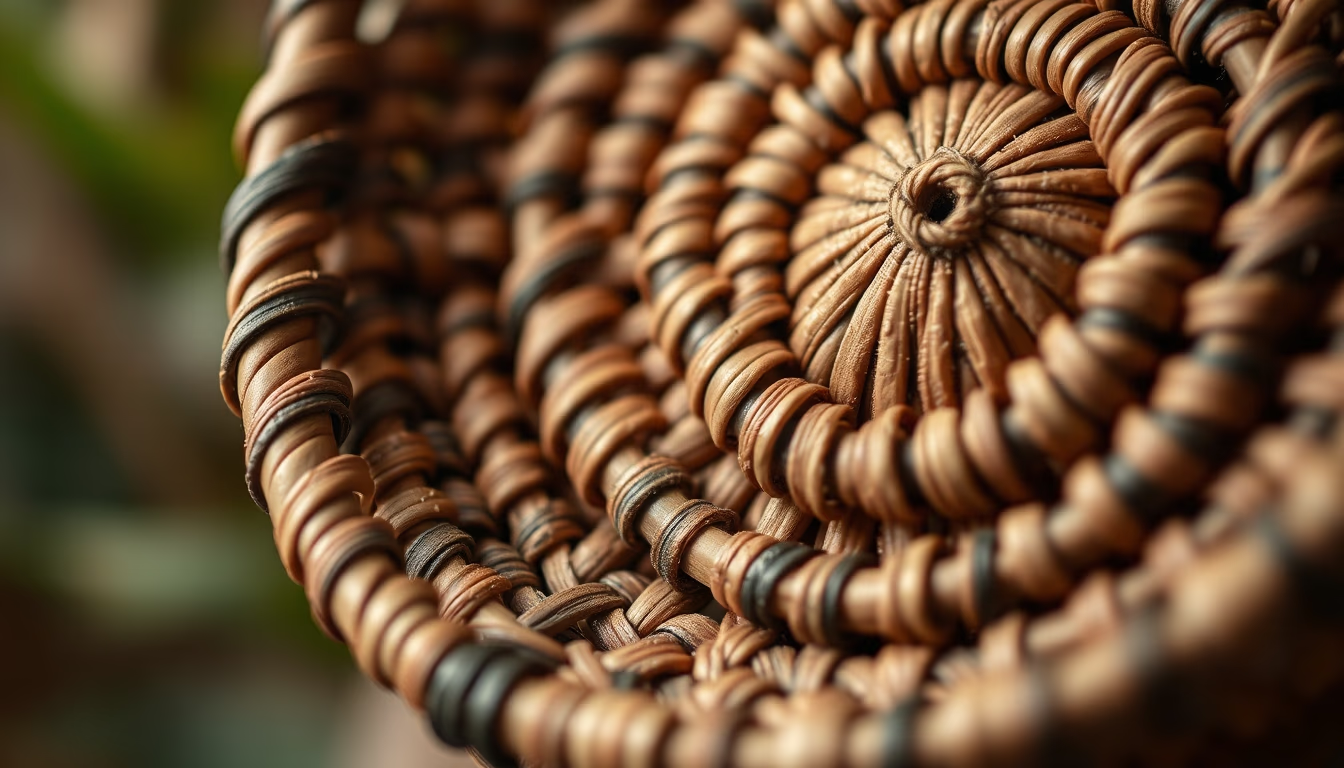
Geometric patterns typical of Navajo blankets, handwoven on upright looms, reflect centuries of tradition and cultural symbolism.
About this subject
Navajo blankets are among the most recognizable expressions of Indigenous North American textile art. Originating in the Southwestern United States, these textiles were traditionally made from the wool of churra sheep, introduced by the Spanish in the 17th century. Navajo women mastered upright loom weaving, creating both utilitarian and ceremonial pieces. The geometric patterns, such as diamonds, zigzags, and stripes, carry deep symbolic meaning related to the Navajo worldview, representing mountains, rivers, clouds, and the harmony of the universe.
The weaving technique is weft-faced, meaning the weft completely covers the warp, resulting in a dense, patterned surface. Traditional colors came from natural dyes: yellow from flowers, red from cochineal, blue from indigo. In the 19th century, synthetic aniline dyes expanded the palette. Collectors highly value the "First Phase" (c. 1800-1850), characterized by simple stripes in blue and red. The "Second Phase" (1850-1880) introduced diamonds and small geometric motifs.
Historically, Navajo blankets were valuable trade goods on Southwestern trade routes. They were used as clothing, horse blankets, and in rituals. The arrival of the railroad in the late 19th century facilitated mass commercialization, leading to finer, more colorful pieces for tourism. Despite external pressures, the tradition persisted, and contemporary Navajo weavers produce works that dialogue with the past.
In Navajo spirituality, weaving is associated with Spider Woman, who taught the art to women. The loom is seen as a representation of the universe: the warp as the path of life, the weft as experiences. Each piece is unique and carries the weaver's energy. Museums such as the Heard Museum (Phoenix) and the National Museum of the American Indian (Washington) exhibit historical examples, and collectors pay high prices for well-preserved antique pieces.
Frequently Asked Questions
What are the most common patterns in Navajo blankets?
Common patterns include diamonds, zigzags, stripes, and stepped forms. Each design carries symbolic meaning, representing natural elements like mountains, clouds, and rivers.
How are Navajo blankets traditionally made?
They are handwoven on upright looms using sheep wool. The technique is weft-faced, where the weft completely covers the warp. Natural or synthetic dyes are used to color the wool.
What is the historical importance of Navajo blankets?
They were essential trade items in the 19th century, exchanged for goods with settlers. They also had ceremonial uses and as clothing. Today they are valued as art and cultural heritage.
Direct URL
https://pub-c7d6a6ea828543ac903a74a341ccb2e1.r2.dev/imagens/navajo-blanket-pattern-studio-still-life-fresh12.avifHow to credit
Include a visible link back to UtilizAí. Copy one of the snippets below:
<a href="https://xn--utiliza-eza.com/en/midia/imagens/navajo-blanket-pattern-studio-still-life-fresh12">Navajo blanket pattern</a> by <a href="https://xn--utiliza-eza.com">UtilizAí</a>, licensed under <a href="https://creativecommons.org/licenses/by/4.0/">CC BY 4.0</a>.
[Navajo blanket pattern](https://xn--utiliza-eza.com/en/midia/imagens/navajo-blanket-pattern-studio-still-life-fresh12) by [UtilizAí](https://xn--utiliza-eza.com), CC BY 4.0
License: CC-BY-4.0