Navajo blanket pattern
1344×768 · AVIF · CC BY 4.0
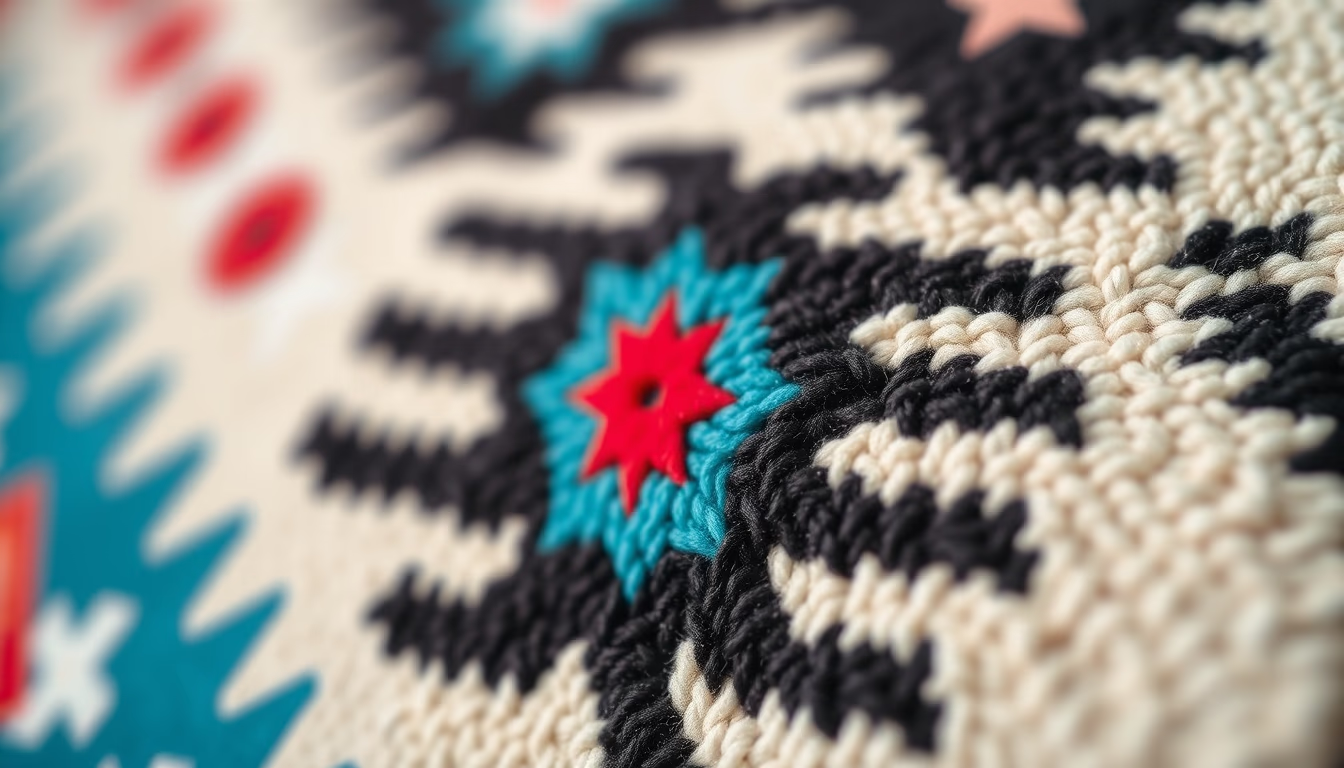
The geometric patterns of Navajo blankets represent centuries of textile tradition and cultural symbolism.
About this subject
Navajo blankets, handwoven by the Navajo (Diné) people of the southwestern United States, are renowned for their intricate geometric patterns. Common motifs include diamonds, stepped lines, and horizontal bands, often set against a cream or gray background. Traditional colors were derived from natural sources: black from sumac, yellow from rabbitbrush flowers, red from cochineal (introduced by the Spanish), and blue from commercial indigo.
Until the mid-19th century, Navajo weavers used upright looms and spun wool from Churro sheep, a breed brought by Spanish colonists. The patterns were not merely decorative: many held spiritual meanings or represented natural elements such as lightning, mountains, and clouds. After the Navajo were forced into internment at Bosque Redondo in 1864, they had to adapt their techniques, but the geometric style remained a core cultural identifier.
In the late 19th century, traders like J.B. Moore encouraged production for tourists, influencing colors and designs. This led to “transitional blankets” with simpler patterns and synthetic dyes. Yet the tradition endures: contemporary weavers like Barbara Teller Ornelas preserve ancestral techniques, using Churro wool and natural dyes. Each blanket can take months to complete, and patterns are passed down orally through generations.
Frequently Asked Questions
What do the geometric patterns on Navajo blankets mean?
Many patterns have spiritual meanings or represent natural elements such as lightning, mountains, clouds, and cosmic harmony. Each design may tell a story or provide protection to the wearer.
How are traditional Navajo blankets made?
They are handwoven on an upright loom using wool from Churro sheep. Colors come from natural dyes: plants, minerals, and insects. The process can take months, and the weaver usually works from memory and oral tradition, not written patterns.
What is the difference between Navajo blankets and Navajo rugs?
Historically, Navajo wove blankets for personal use as garments or coverings. With the arrival of traders in the 19th century, they began producing floor rugs for the outside market. Techniques and patterns are similar, but rugs are heavier and have distinct finishes.
Direct URL
https://pub-c7d6a6ea828543ac903a74a341ccb2e1.r2.dev/imagens/navajo-blanket-pattern-macro-closeup-fresh2.avifHow to credit
Include a visible link back to UtilizAí. Copy one of the snippets below:
<a href="https://xn--utiliza-eza.com/en/midia/imagens/navajo-blanket-pattern-macro-closeup-fresh2">Navajo blanket pattern</a> by <a href="https://xn--utiliza-eza.com">UtilizAí</a>, licensed under <a href="https://creativecommons.org/licenses/by/4.0/">CC BY 4.0</a>.
[Navajo blanket pattern](https://xn--utiliza-eza.com/en/midia/imagens/navajo-blanket-pattern-macro-closeup-fresh2) by [UtilizAí](https://xn--utiliza-eza.com), CC BY 4.0
License: CC-BY-4.0