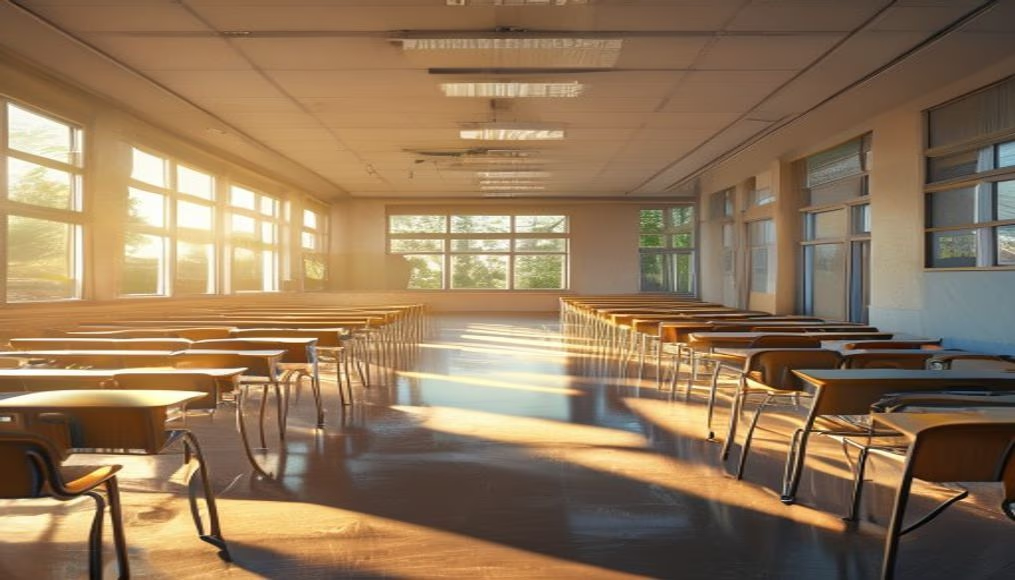
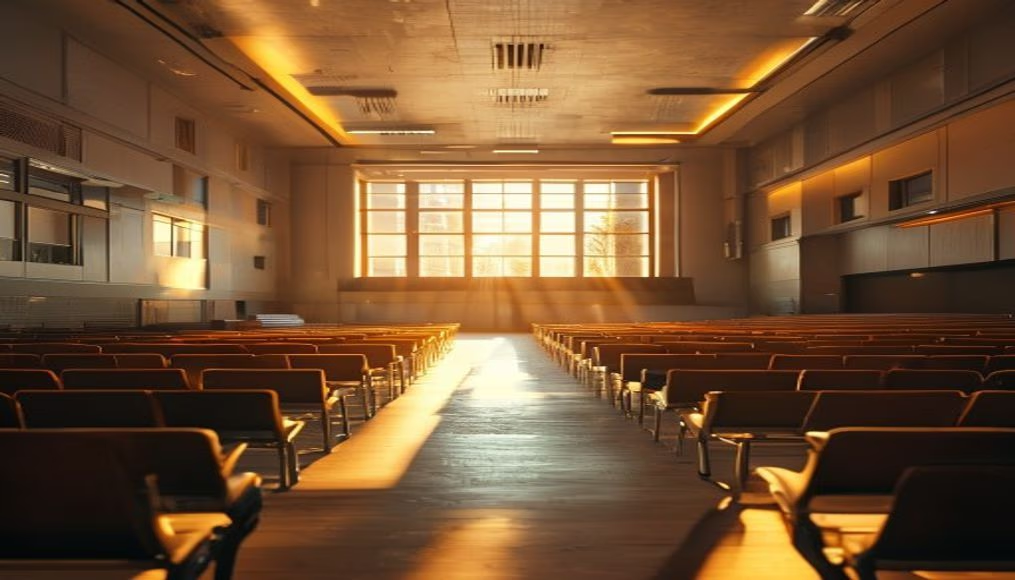
Modern classroom empty rows
1344×768 · AVIF · CC BY 4.0
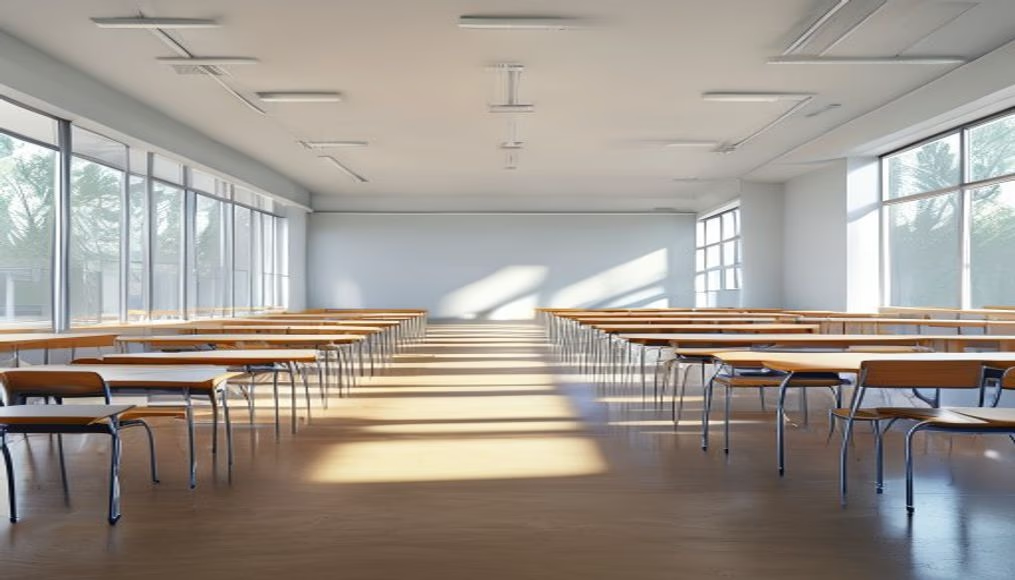
Modern classroom with empty rows reflects contemporary design that prioritizes flexibility and technology in the educational environment.
About this subject
Modern classrooms have evolved significantly from traditional fixed rows of desks. The empty rows seen in the image do not indicate an absence of students, but rather a space designed for multiple configurations. Many educational institutions adopt modular furniture and integrated technologies, such as digital whiteboards and audio systems, allowing the environment to adapt to different active methodologies, such as blended learning or project-based learning.
The arrangement of desks in rows is still common for formal assessments or lectures, but the empty space can be quickly rearranged to promote collaboration. Studies from the University of Salford indicate that classroom design can influence student progress by up to 25%. Factors such as natural lighting, acoustics, and furniture flexibility are crucial. In Brazil, schools like Sesi and Senai already implement these concepts, integrating rest areas and technology.
Interestingly, the term "empty rows" also recalls the post-pandemic reality, where temporary social distancing required wider spaces. However, the long-term trend is personalization: rooms with individual workstations, reading corners, and interactive panels. The presence of equipment such as projectors and built-in electrical outlets shows preparation for activities beyond the lecture.
Globally, countries like Finland and Singapore lead the adoption of flexible classrooms, with lightweight furniture and full connectivity. Brazil is moving in this direction, especially in private schools and universities seeking to align with 21st-century skills, such as creativity and critical thinking.
The image, with organized rows and no students, may represent a moment of transition between classes or an environment ready to host different pedagogical dynamics.
Frequently Asked Questions
Why do modern classrooms use empty rows?
Empty rows indicate flexibility: the space can be rearranged for collaborative, individual, or lecture activities. Modular furniture allows quick adaptation.
How important is classroom design for learning?
Research shows design can improve student performance by up to 25%. Lighting, acoustics, and flexibility affect concentration and participation.
Does Brazil adopt flexible classrooms?
Yes, schools like Sesi and Senai already implement spaces with lightweight furniture and integrated technology. Universities also invest in adaptable rooms.
Direct URL
https://pub-c7d6a6ea828543ac903a74a341ccb2e1.r2.dev/imagens/modern-classroom-empty-rows-commercial-product-photography-v9.avifHow to credit
Include a visible link back to UtilizAí. Copy one of the snippets below:
<a href="https://xn--utiliza-eza.com/en/midia/imagens/modern-classroom-empty-rows-commercial-product-photography-v9">Modern classroom empty rows</a> by <a href="https://xn--utiliza-eza.com">UtilizAí</a>, licensed under <a href="https://creativecommons.org/licenses/by/4.0/">CC BY 4.0</a>.
[Modern classroom empty rows](https://xn--utiliza-eza.com/en/midia/imagens/modern-classroom-empty-rows-commercial-product-photography-v9) by [UtilizAí](https://xn--utiliza-eza.com), CC BY 4.0
License: CC-BY-4.0