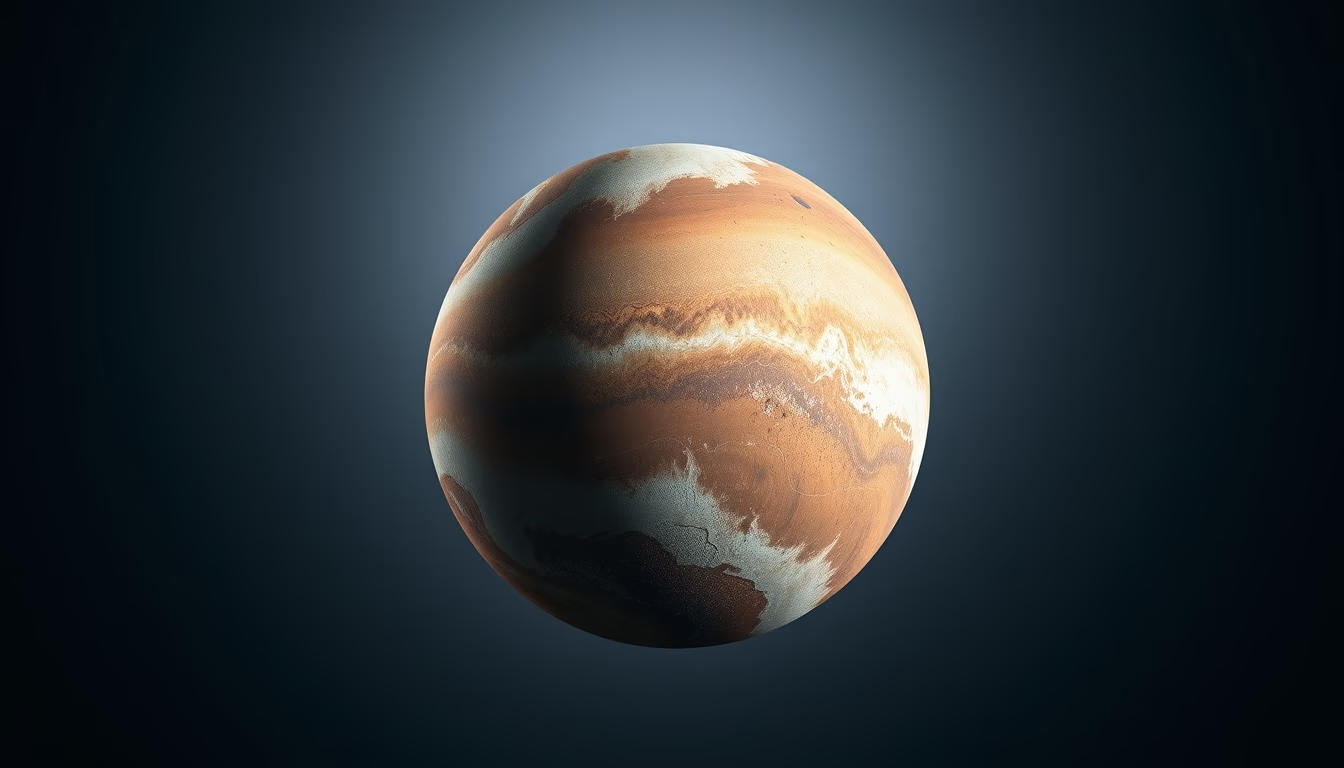
Kepler 186f earthlike concept
1344×768 · AVIF · CC BY 4.0

Kepler-186f is the first Earth-sized planet found orbiting in the habitable zone of another star, a milestone in the search for potentially habitable worlds.
About this subject
Discovered in 2014 by the Kepler Space Telescope, Kepler-186f orbits the red dwarf star Kepler-186, located about 500 light-years away in the constellation Cygnus. With a radius approximately 1.1 times that of Earth, it is a rocky planet that completes an orbit every 130 days. Its host star is smaller and cooler than the Sun, placing the planet at the outer edge of the habitable zone, where radiation is weaker. This means Kepler-186f likely receives less light than Earth, resulting in lower surface temperatures, potentially similar to Earth's polar regions. Despite this, the presence of liquid water on its surface is not ruled out, depending on atmospheric composition. The discovery was a major milestone, demonstrating that Earth-sized planets can exist in regions where life as we know it could thrive. Subsequent climate models suggest that if it has an atmosphere with greenhouse gases, Kepler-186f could maintain temperatures above freezing. However, its red dwarf star emits flares that could strip the atmosphere over time. Kepler-186f remains a subject of intense study, serving as a benchmark for future missions like the James Webb Space Telescope, which could analyze its atmospheric composition. Its existence reinforces the notion that rocky planets in habitable zones are common in the galaxy, fueling debates about the likelihood of extraterrestrial life.
Frequently Asked Questions
How was Kepler-186f discovered?
It was detected via the transit method by the Kepler Space Telescope, which measures tiny dips in the star's brightness as the planet passes in front of it.
Is Kepler-186f habitable?
It lies in the habitable zone, but its habitability depends on factors like atmosphere and stellar activity. Models suggest it could sustain liquid water, but this is not confirmed.
How far is Kepler-186f from Earth?
About 500 light-years away, or roughly 4.7 quadrillion kilometers.
Direct URL
https://pub-c7d6a6ea828543ac903a74a341ccb2e1.r2.dev/imagens/kepler-186f-earthlike-concept-documentary-nature-style-fresh8.avifHow to credit
Include a visible link back to UtilizAí. Copy one of the snippets below:
<a href="https://xn--utiliza-eza.com/en/midia/imagens/kepler-186f-earthlike-concept-documentary-nature-style-fresh8">Kepler 186f earthlike concept</a> by <a href="https://xn--utiliza-eza.com">UtilizAí</a>, licensed under <a href="https://creativecommons.org/licenses/by/4.0/">CC BY 4.0</a>.
[Kepler 186f earthlike concept](https://xn--utiliza-eza.com/en/midia/imagens/kepler-186f-earthlike-concept-documentary-nature-style-fresh8) by [UtilizAí](https://xn--utiliza-eza.com), CC BY 4.0
License: CC-BY-4.0