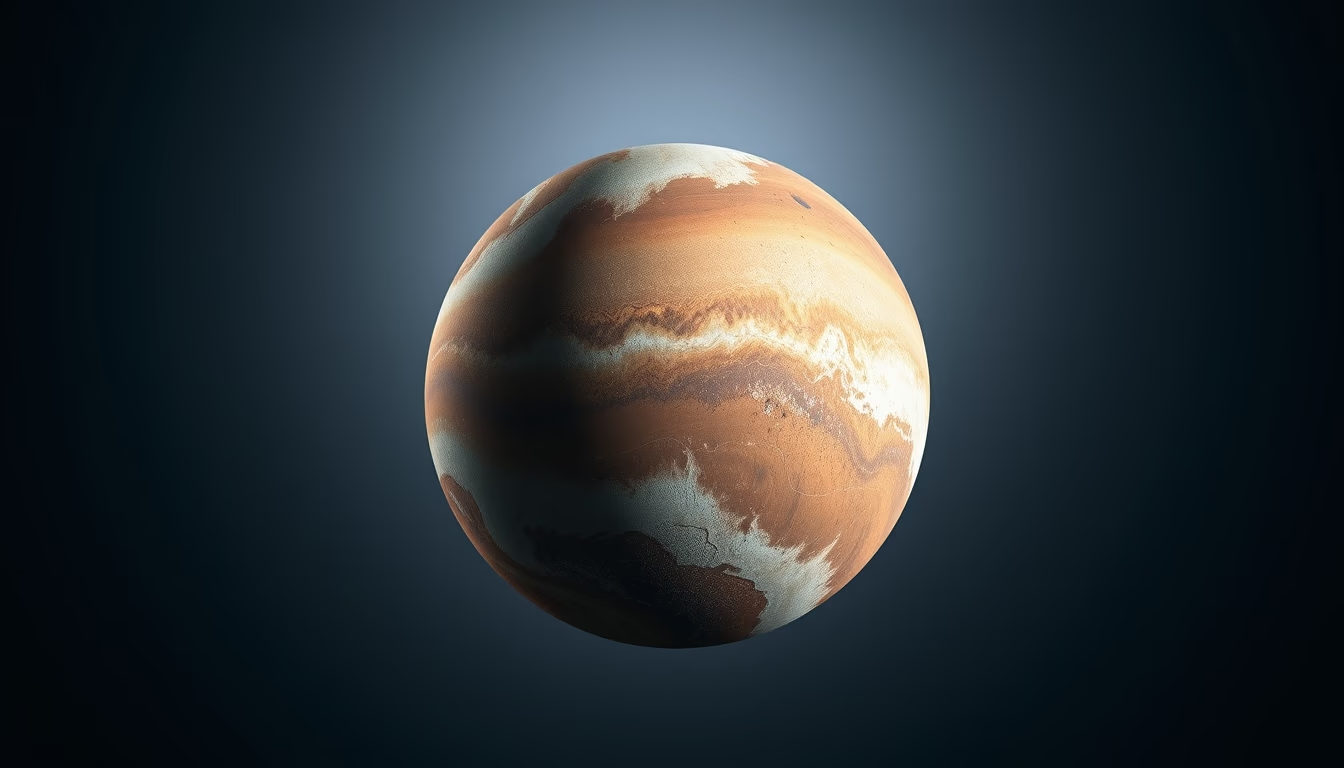
Kepler 186f earthlike concept
1344×768 · AVIF · CC BY 4.0

Kepler-186f is the first Earth-sized exoplanet discovered in the habitable zone of another star, marking a milestone in the search for worlds like our own.
About this subject
Kepler-186f is an exoplanet located approximately 500 light-years from Earth in the constellation Cygnus. Discovered in 2014 by NASA's Kepler space telescope, it was the first Earth-sized planet found orbiting within the habitable zone of a red dwarf star. The host star, Kepler-186, is an M-dwarf about half the mass and size of the Sun and much cooler, meaning the habitable zone is much closer to the star than in our solar system.
The planet has a radius about 1.1 times that of Earth, suggesting a rocky composition. Its orbital period is roughly 130 days, and it receives about one-third the energy Earth gets from the Sun, placing it on the outer edge of the habitable zone. While it lies in a region where liquid water could exist, its exact atmosphere and composition remain unknown. Climate models indicate that depending on the atmosphere, Kepler-186f could be too cold to sustain liquid water on its surface.
The discovery of Kepler-186f was a crucial step in exoplanetology, demonstrating that Earth-sized planets can exist in habitable zones around common stars in the galaxy. Years of Kepler observations revealed that small, rocky planets are frequent, but finding one in the habitable zone was a major breakthrough. Since then, other candidates like Kepler-452b and the TRAPPIST-1 system planets have expanded this knowledge.
Kepler-186f reminds us that the search for extraterrestrial life is not limited to exact copies of Earth. Red dwarf stars are the most common in the Milky Way, and their planetary systems may be the best places to look for signs of life in the future using telescopes like the James Webb Space Telescope. Although surface life on Kepler-186f is uncertain due to low received energy and possible stellar flares, the planet remains a fascinating object of study and a symbol of human curiosity.
Frequently Asked Questions
Is Kepler-186f really Earth-like?
It is similar in size, about 1.1 Earth radii, and orbits in the habitable zone of its star. However, because the star is much cooler than the Sun, the planet receives only about one-third the energy Earth does. Its atmosphere is unknown, so we cannot yet say how Earth-like it is in terms of climate or habitability.
How far away is Kepler-186f?
Kepler-186f is about 500 light-years away in the constellation Cygnus. With current technology, we cannot send probes or observe it in detail. Our knowledge comes from transit data captured by the Kepler telescope.
Could life exist on Kepler-186f?
It is possible but uncertain. It lies in the habitable zone where liquid water could exist. However, its star is a red dwarf that may emit dangerous flares. Also, being on the outer edge of the habitable zone might make it too cold for life, unless it has a strong greenhouse atmosphere.
Direct URL
https://pub-c7d6a6ea828543ac903a74a341ccb2e1.r2.dev/imagens/kepler-186f-earthlike-concept-cinematic-wide-shot-fresh0.avifHow to credit
Include a visible link back to UtilizAí. Copy one of the snippets below:
<a href="https://xn--utiliza-eza.com/en/midia/imagens/kepler-186f-earthlike-concept-cinematic-wide-shot-fresh0">Kepler 186f earthlike concept</a> by <a href="https://xn--utiliza-eza.com">UtilizAí</a>, licensed under <a href="https://creativecommons.org/licenses/by/4.0/">CC BY 4.0</a>.
[Kepler 186f earthlike concept](https://xn--utiliza-eza.com/en/midia/imagens/kepler-186f-earthlike-concept-cinematic-wide-shot-fresh0) by [UtilizAí](https://xn--utiliza-eza.com), CC BY 4.0
License: CC-BY-4.0