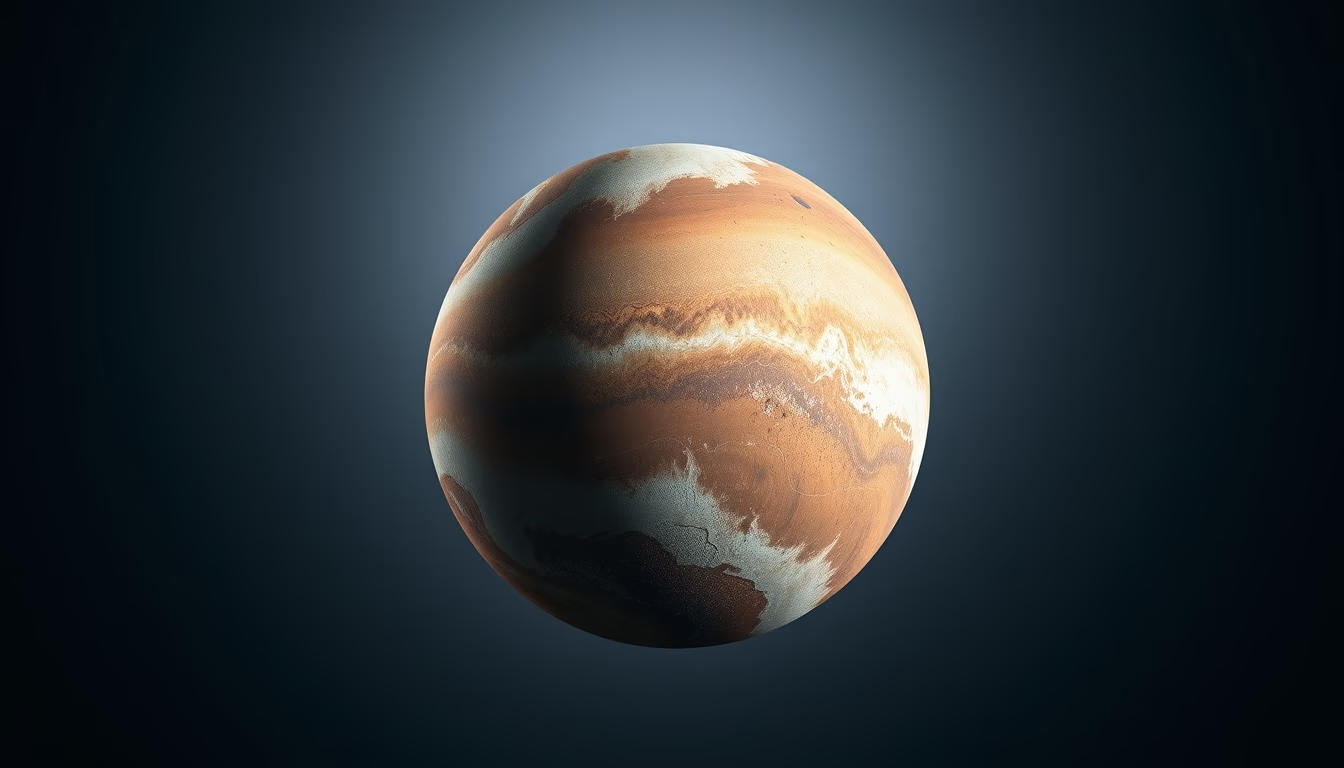
Kepler 186f earthlike concept
1344×768 · AVIF · CC BY 4.0

Kepler-186f was the first Earth-sized exoplanet discovered in the habitable zone of its star, a red dwarf 580 light-years away.
About this subject
Discovered in 2014 by NASA's Kepler space telescope, Kepler-186f orbits the red dwarf star Kepler-186 in the constellation Cygnus. About 11% larger than Earth, it lies at the outer edge of the habitable zone, where liquid water could exist on the surface. Its host star, however, is much cooler and dimmer than the Sun, emitting mainly in the infrared. This means that even within the habitable zone, the planet receives only about one-third of the energy Earth gets from the Sun, which could make its surface colder, possibly with climates similar to Mars.
A year on Kepler-186f lasts approximately 130 Earth days, and its orbit is much closer to its star than Mercury's is to the Sun. Yet because it orbits a red dwarf, the received radiation is moderate. Studies suggest that if the planet has an atmosphere with carbon dioxide and water vapor, it could retain enough heat to maintain liquid water. The discovery of Kepler-186f was a milestone in astronomy, proving that Earth-sized rocky planets can exist in habitable zones around common stars in the galaxy.
To this day, Kepler-186f remains one of the most important examples of a potentially habitable exoplanet. It has inspired climate simulations and atmospheric models that help understand the conditions necessary for life. Although current technology cannot observe details of its surface or atmosphere, future missions like the James Webb Space Telescope may look for signatures of gases such as oxygen and methane on similar planets, bringing us closer to answering whether we are alone in the universe.
Frequently Asked Questions
Is Kepler-186f actually habitable?
It is uncertain. While it lies in the habitable zone, its temperature depends on factors like atmosphere and albedo. Models indicate that with a dense CO₂ atmosphere it could have liquid water, but there is no confirmation yet.
How far is Kepler-186f from Earth?
Kepler-186f is about 580 light-years away in the constellation Cygnus. This means that even with current technology, a journey there would take millennia.
Why was the discovery of Kepler-186f important?
It was the first Earth-sized exoplanet found in the habitable zone of another star. It showed that rocky planets like ours are common in the galaxy and increased hopes of finding potentially habitable worlds.
Direct URL
https://pub-c7d6a6ea828543ac903a74a341ccb2e1.r2.dev/imagens/kepler-186f-earthlike-concept-architectural-photography-fresh10.avifHow to credit
Include a visible link back to UtilizAí. Copy one of the snippets below:
<a href="https://xn--utiliza-eza.com/en/midia/imagens/kepler-186f-earthlike-concept-architectural-photography-fresh10">Kepler 186f earthlike concept</a> by <a href="https://xn--utiliza-eza.com">UtilizAí</a>, licensed under <a href="https://creativecommons.org/licenses/by/4.0/">CC BY 4.0</a>.
[Kepler 186f earthlike concept](https://xn--utiliza-eza.com/en/midia/imagens/kepler-186f-earthlike-concept-architectural-photography-fresh10) by [UtilizAí](https://xn--utiliza-eza.com), CC BY 4.0
License: CC-BY-4.0