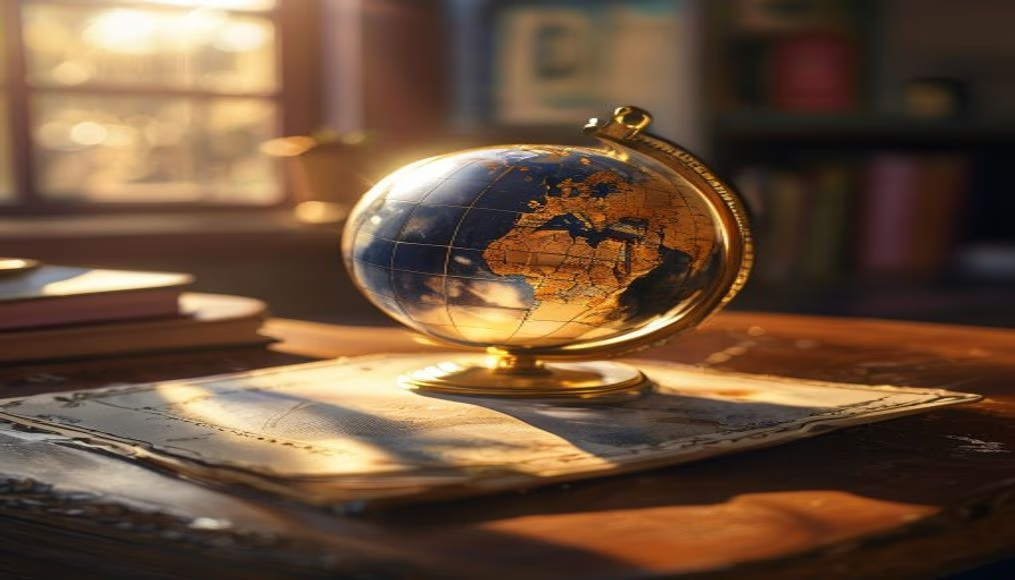
Globe on student desk vintage
1344×768 · AVIF · CC BY 4.0
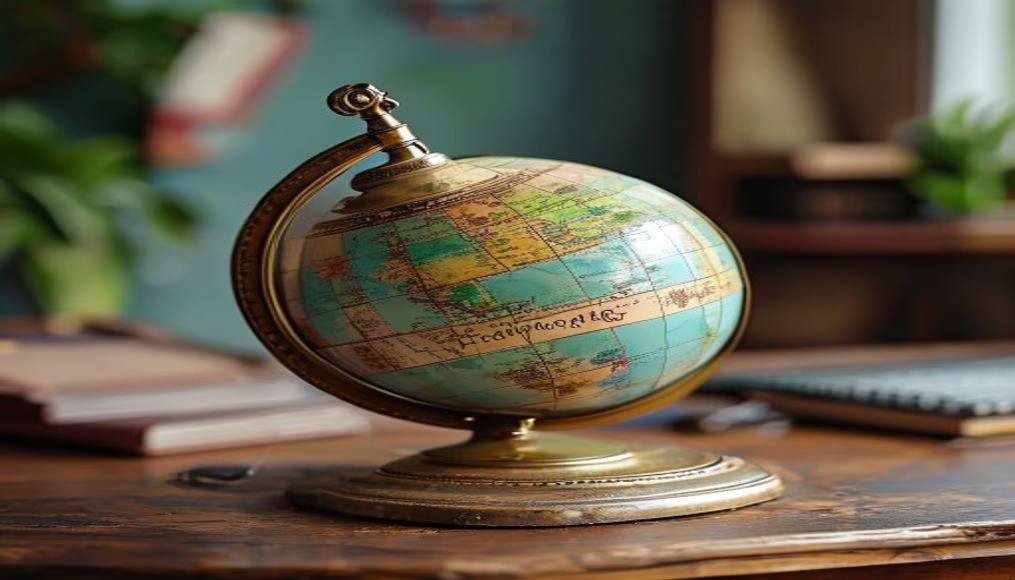
Vintage terrestrial globe on a student desk: a classic symbol of geographic education and curiosity about the world.
About this subject
The terrestrial globe is a three-dimensional representation of planet Earth, used for centuries as an educational tool. The first models appeared in 15th-century Europe, notably Martin Behaim's globe of 1492, which predated the inclusion of the Americas. In the classroom, the vintage globe evokes an era when maps were treasures and geography was learned through touch and manual rotation. These objects were often made of paper glued over wood or plaster, with metal brackets and turned wooden bases.
During the 19th and early 20th centuries, terrestrial globes became a common sight in schools worldwide, especially in countries like France, England, and Brazil. They taught not only the location of continents and oceans but also concepts of time zones, navigation routes, and climatic influences. Vintage designs often feature muted colors, serif typography, and a patina that reflects decades of use.
Today, old globes are collectibles and decorative items. Their historical value lies in the political representation of the world at the time of manufacture, showing borders that have since changed or names of extinct countries. Moreover, the vintage globe on a student desk symbolizes a tangible and contemplative approach to learning, contrasting with the abstraction of digital maps. The wooden base and the 23.5-degree inclined axis, representing Earth's axial tilt, are distinctive features of these instruments.
Frequently Asked Questions
Why are terrestrial globes important in education?
Globes provide an accurate three-dimensional representation of the planet, helping students visualize continents, oceans, time zones, and Earth's tilt intuitively, complementing two-dimensional maps.
What was the first terrestrial globe in history?
The first known terrestrial globe was created by Martin Behaim in 1492, called the Erdapfel (earth apple). It did not show the Americas, as Christopher Columbus set sail that same year.
How to identify an authentic vintage globe?
Vintage globes typically have a turned wooden base, a metal cradle allowing tilt, and the map printed on paper with dull colors. Manufacturer marks like Replogle, Cram, or George Philip & Son indicate provenance.
Direct URL
https://pub-c7d6a6ea828543ac903a74a341ccb2e1.r2.dev/imagens/globe-on-student-desk-vintage-commercial-product-photography-v9.avifHow to credit
Include a visible link back to UtilizAí. Copy one of the snippets below:
<a href="https://xn--utiliza-eza.com/en/midia/imagens/globe-on-student-desk-vintage-commercial-product-photography-v9">Globe on student desk vintage</a> by <a href="https://xn--utiliza-eza.com">UtilizAí</a>, licensed under <a href="https://creativecommons.org/licenses/by/4.0/">CC BY 4.0</a>.
[Globe on student desk vintage](https://xn--utiliza-eza.com/en/midia/imagens/globe-on-student-desk-vintage-commercial-product-photography-v9) by [UtilizAí](https://xn--utiliza-eza.com), CC BY 4.0
License: CC-BY-4.0