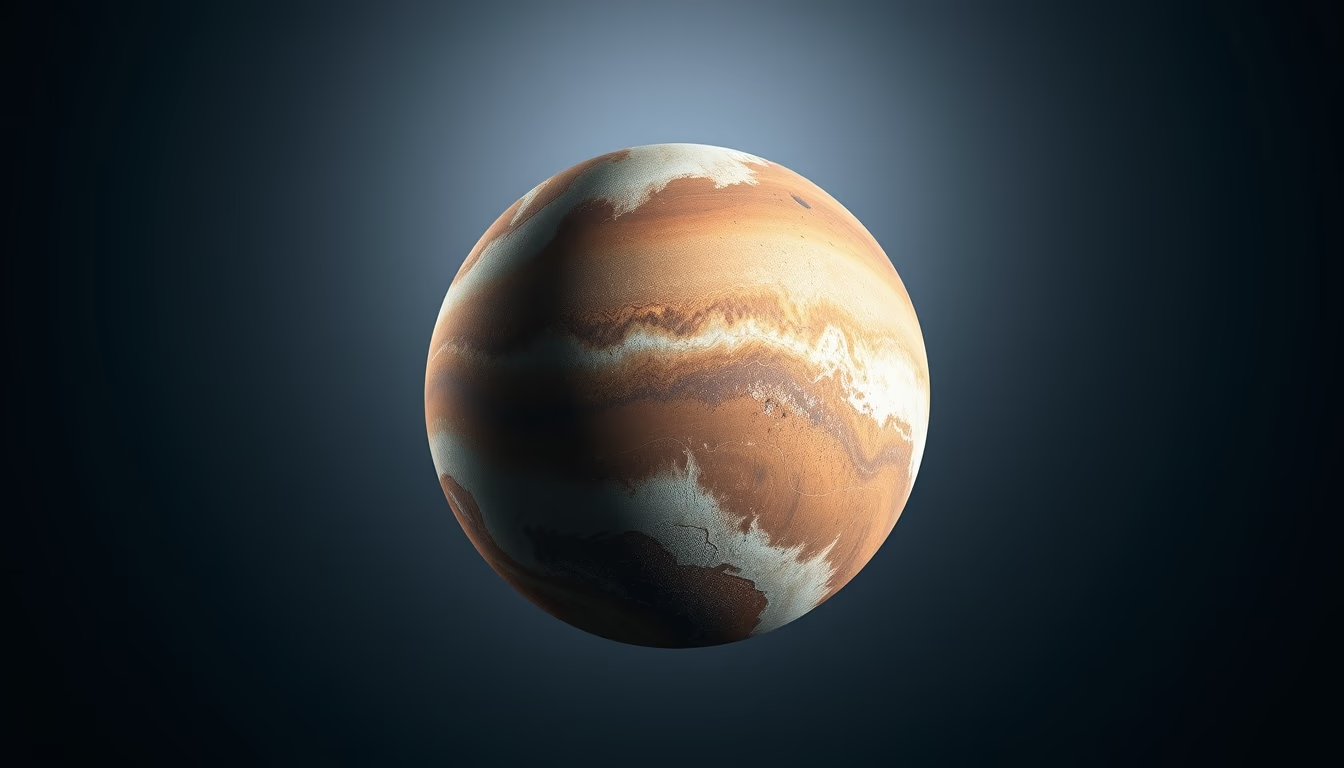
Gas giant ringed exoplanet
1344×768 · AVIF · CC BY 4.0
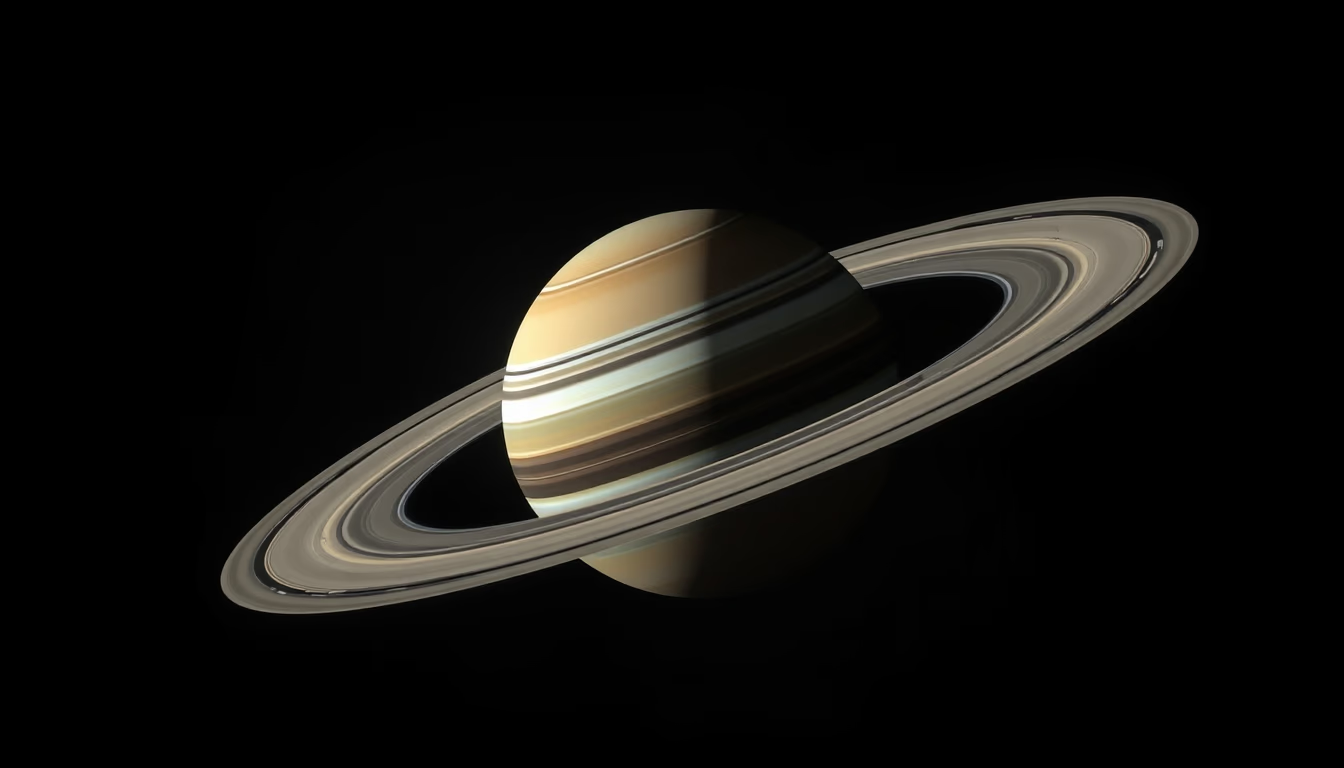
Ringed gas giant exoplanets, such as J1407b, reveal massive ring systems that redefine planetary formation concepts.
About this subject
Ringed gas giant exoplanets are observational rarities but extremely valuable for science. The most notable example is J1407b, discovered in 2012, which has a ring system estimated to be 200 times the diameter of Saturn's rings. These rings contain gaps suggesting the presence of forming exomoons, a phenomenon never before observed outside the Solar System. Detection of exoplanetary rings is primarily achieved through transit photometry, where the host star's light curve exhibits asymmetric distortions caused by the rings. As a ringed planet transits, the amount of starlight blocked varies as the rings intercept light, creating unique patterns that can be modeled to infer ring structure. The significance of these systems extends beyond astronomical curiosity. Rings may be remnants of planetary accretion processes or fragments of disintegrated moons. Studying them helps scientists understand planetary system evolution, orbital dynamics, and the formation of natural satellites. Moreover, massive rings could influence the habitability of potential exomoons, providing material for impacts and potentially affecting climate. The search for more ringed exoplanets continues, especially with missions like the James Webb Space Telescope, which can resolve subtle features in the reflected light of distant planets.
Frequently Asked Questions
How are exoplanet rings detected?
They are mainly detected through transit photometry, where the star's light curve shows asymmetric distortions due to rings blocking some light. Computational models compare observed data with simulations of different ring configurations.
How many ringed exoplanets have been discovered?
So far, only a few candidates have been identified, with J1407b being the most famous. Detection is difficult because signals are subtle and can be confused with other features like starspots or binary companions.
Can exoplanet rings indicate the presence of moons?
Yes, gaps in the rings, like those observed in J1407b, suggest the existence of exomoons that carve out space while orbiting. These moons may be Mars-sized or larger, and their indirect detection helps understand satellite system formation.
Direct URL
https://pub-c7d6a6ea828543ac903a74a341ccb2e1.r2.dev/imagens/gas-giant-ringed-exoplanet-minimalist-composition-fresh1.avifHow to credit
Include a visible link back to UtilizAí. Copy one of the snippets below:
<a href="https://xn--utiliza-eza.com/en/midia/imagens/gas-giant-ringed-exoplanet-minimalist-composition-fresh1">Gas giant ringed exoplanet</a> by <a href="https://xn--utiliza-eza.com">UtilizAí</a>, licensed under <a href="https://creativecommons.org/licenses/by/4.0/">CC BY 4.0</a>.
[Gas giant ringed exoplanet](https://xn--utiliza-eza.com/en/midia/imagens/gas-giant-ringed-exoplanet-minimalist-composition-fresh1) by [UtilizAí](https://xn--utiliza-eza.com), CC BY 4.0
License: CC-BY-4.0