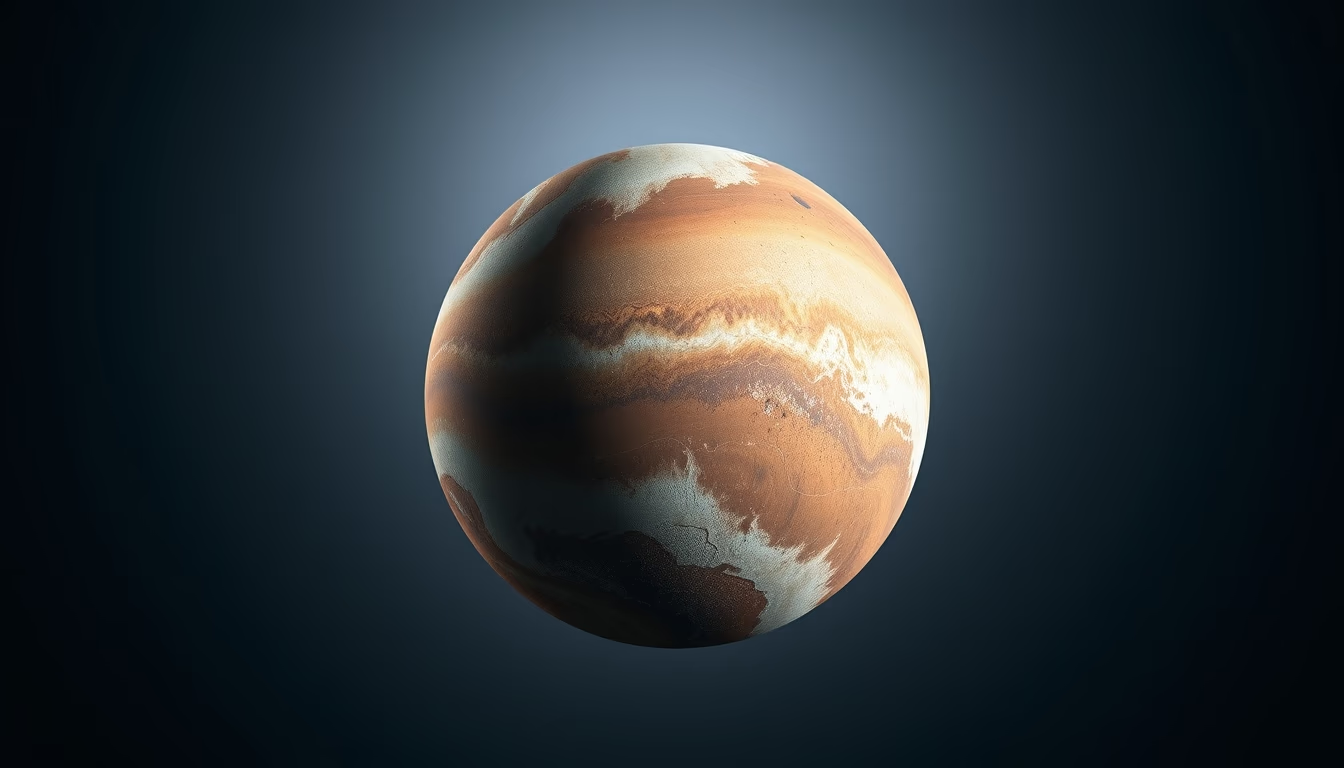
Gas giant ringed exoplanet
1344×768 · AVIF · CC BY 4.0
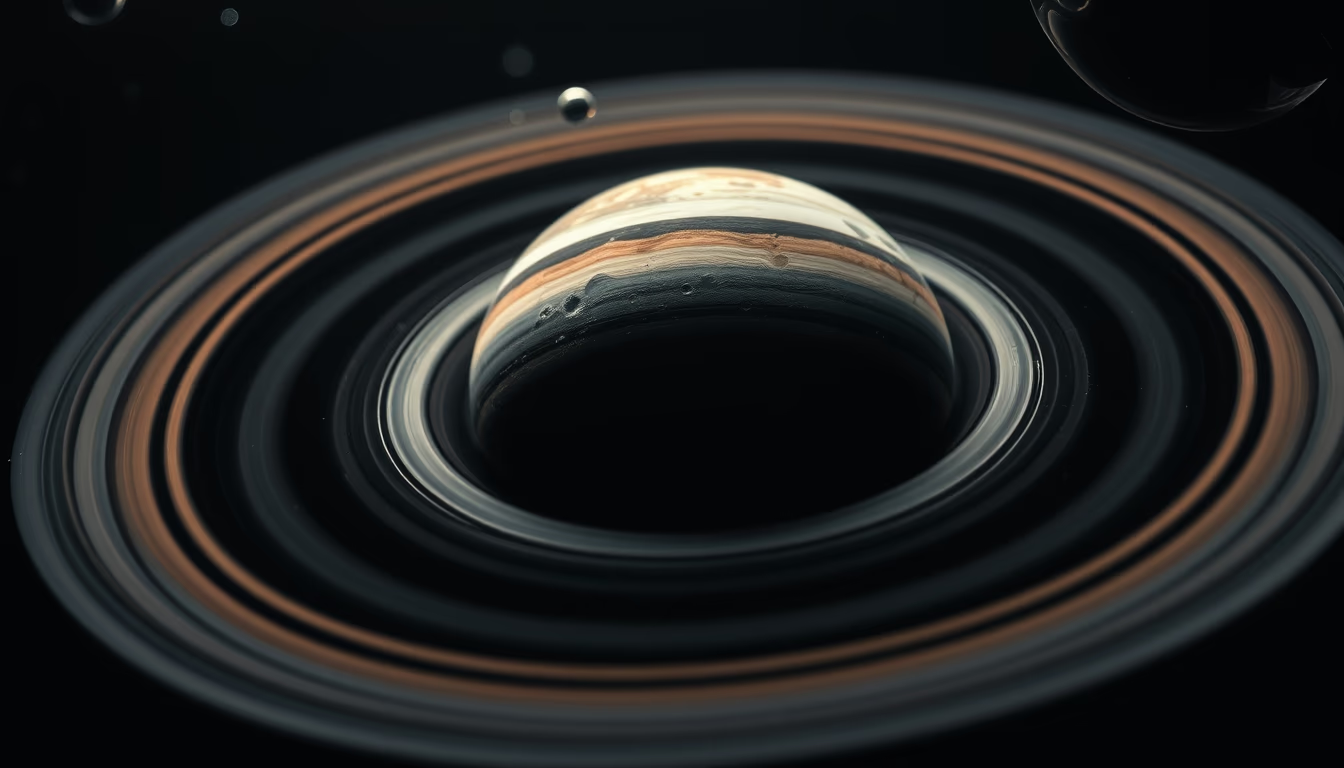
Gas giant ringed exoplanets are fascinating worlds that challenge our understanding of planetary formation and the dynamics of distant star systems.
About this subject
Gas giant ringed exoplanets are among the most intriguing discoveries in modern astronomy. These worlds, similar to Saturn in our Solar System, possess ring systems that can be vastly larger and more complex. The first confirmed ringed exoplanet was J1407b, discovered in 2012, whose ring system is about 200 times larger than Saturn's. These rings may indicate the presence of forming moons or even established exomoons.
Detecting rings around exoplanets is extremely challenging, as they usually do not block enough light to be directly observed. Astronomers use indirect methods such as transit photometry, where the light curve of the host star reveals complex occultation patterns. Additionally, the tilt of the rings can cause seasonal variations in the reflected light of the planet.
The importance of these systems goes beyond visual curiosity. They provide clues about the planet's accretion history, possible interactions with moons, and even planetary migration. Studying exoplanetary rings helps us understand how our own Saturn formed its rings and whether similar systems are common in the universe. So far, only a few ring candidates have been identified, but new missions such as the James Webb Space Telescope promise to expand our knowledge.
Frequently Asked Questions
How are exoplanet rings detected?
Detection is mainly done via transit photometry, where the star's light curve shows complex dips not explainable by the planet alone. These patterns indicate rings blocking some starlight.
How many ringed exoplanets have been discovered so far?
So far, only a handful of ring candidates have been confirmed, with J1407b being the most famous. Most candidates await confirmation with additional observations.
Why is studying exoplanetary rings important?
They help understand planetary formation and evolution, moon dynamics, and system history. They can also reveal processes like planetary migration and material accretion.
Direct URL
https://pub-c7d6a6ea828543ac903a74a341ccb2e1.r2.dev/imagens/gas-giant-ringed-exoplanet-macro-closeup-fresh0.avifHow to credit
Include a visible link back to UtilizAí. Copy one of the snippets below:
<a href="https://xn--utiliza-eza.com/en/midia/imagens/gas-giant-ringed-exoplanet-macro-closeup-fresh0">Gas giant ringed exoplanet</a> by <a href="https://xn--utiliza-eza.com">UtilizAí</a>, licensed under <a href="https://creativecommons.org/licenses/by/4.0/">CC BY 4.0</a>.
[Gas giant ringed exoplanet](https://xn--utiliza-eza.com/en/midia/imagens/gas-giant-ringed-exoplanet-macro-closeup-fresh0) by [UtilizAí](https://xn--utiliza-eza.com), CC BY 4.0
License: CC-BY-4.0