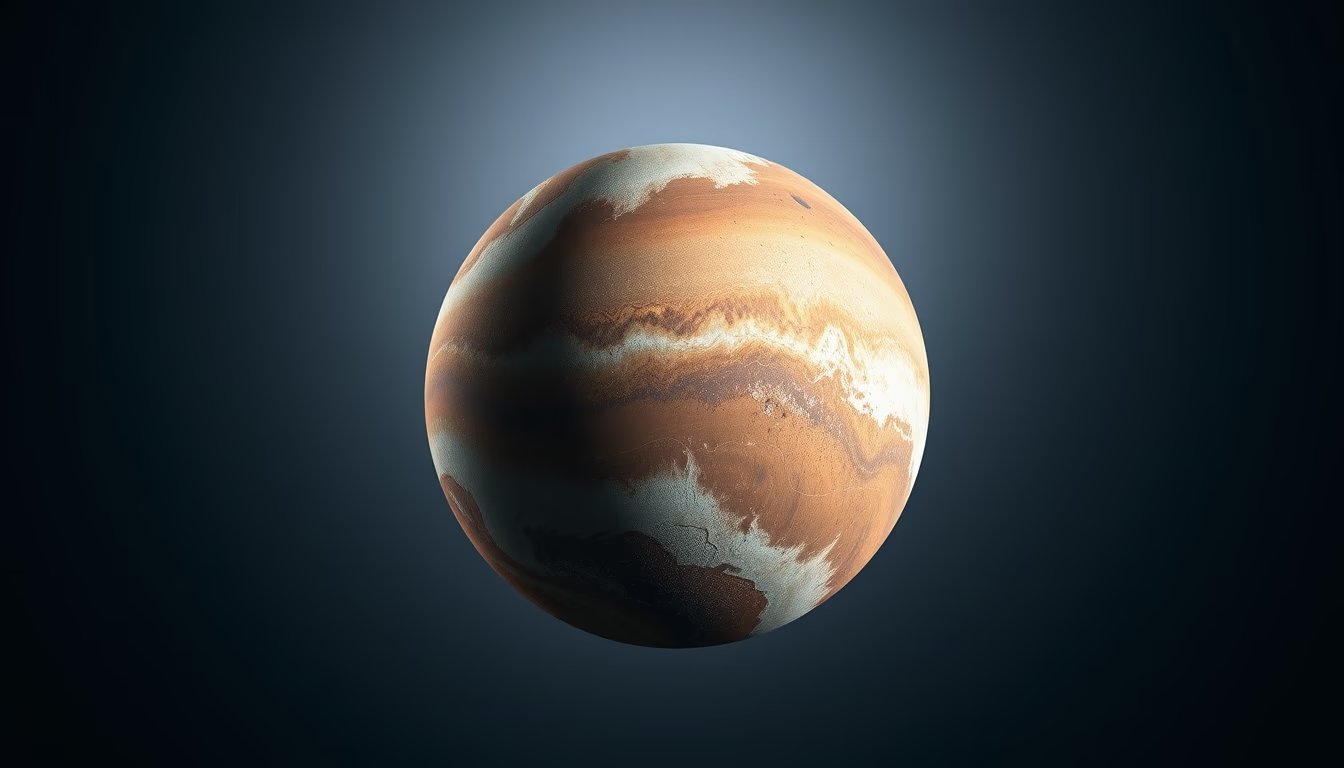
Gas giant ringed exoplanet
1344×768 · AVIF · CC BY 4.0
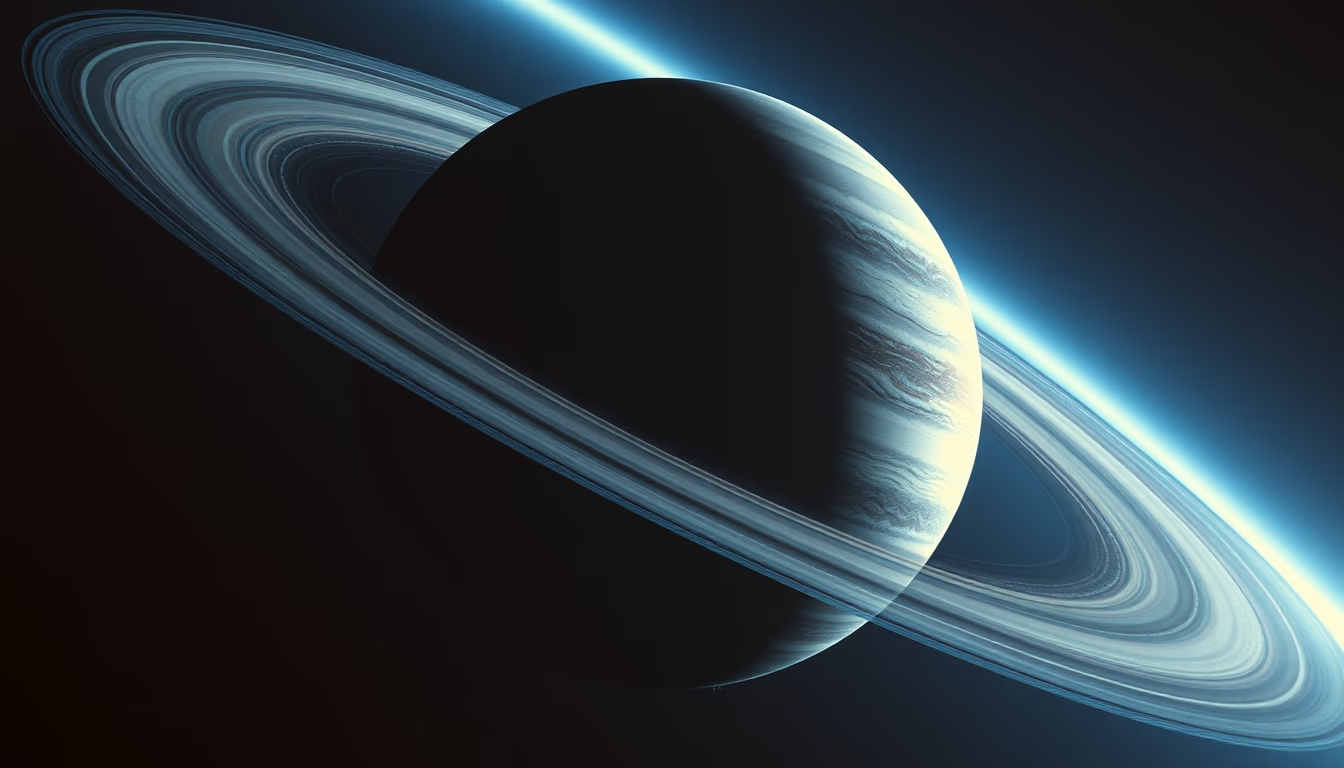
Ringed gas giants, like Jupiter and Saturn, are also common among exoplanets, revealing fascinating dynamics and clues about planetary system formation.
About this subject
Exoplanets that are gas giants with ring systems are intriguing celestial objects that challenge our understanding of planetary formation and evolution. Unlike our Solar System, where only Saturn has prominent rings, many discovered exoplanets feature massive ring structures, some hundreds of times larger than Saturn's rings. Notable examples include J1407b, a gas giant with a ring system so vast it would eclipse Saturn, and HIP 41378 f, a planet with possible rings detected through light curve variations.
Detection of rings around exoplanets is primarily done via transit photometry, where an unusual dip in starlight may indicate rings around the planet. Another technique is direct imaging, capturing reflected light from rings in infrared wavelengths. These ring systems can be composed of dust and ice, similar to Saturn's rings, but often more massive and extended due to weaker gravitational influence of moons or capture of material from a protoplanetary disk.
The scientific importance of exoplanetary rings goes beyond aesthetics. They provide information about the planet's accretion history, presence of shepherd moons, and planetary migration processes. Recent studies suggest that extensive rings may be related to recent collisions or the disintegration of moons. Additionally, observing rings helps refine models of planetary system formation, especially in the region where gas giants form, typically beyond the frost line.
A fascinating curiosity is that some ringed exoplanets may host exomoons orbiting within the ring gaps, creating structures similar to Saturn's Cassini Division. The discovery of such systems expands our knowledge of the diversity of planetary architectures and paves the way for future space missions dedicated to detailed study of these ringed worlds.
Frequently Asked Questions
How are ringed exoplanets detected?
Detection is primarily via transit photometry, where the star's light curve shows additional or asymmetric dips caused by rings. They can also be detected by direct imaging in infrared, capturing reflected light from the rings.
Are there confirmed examples of ringed exoplanets?
As of now, there is no absolute confirmation, but strong candidates include J1407b, with a huge ring system, and HIP 41378 f, which shows ring-like signals in its light curve. Confirmation requires further observations with telescopes like the James Webb.
Are exoplanetary rings permanent?
Not necessarily. Rings can be temporary, originating from collisions or moon disintegration, and may dissipate over millions of years. Their permanence depends on dynamical processes such as gravitational perturbations and material accretion.
Direct URL
https://pub-c7d6a6ea828543ac903a74a341ccb2e1.r2.dev/imagens/gas-giant-ringed-exoplanet-lo-fi-disposable-camera-fresh9.avifHow to credit
Include a visible link back to UtilizAí. Copy one of the snippets below:
<a href="https://xn--utiliza-eza.com/en/midia/imagens/gas-giant-ringed-exoplanet-lo-fi-disposable-camera-fresh9">Gas giant ringed exoplanet</a> by <a href="https://xn--utiliza-eza.com">UtilizAí</a>, licensed under <a href="https://creativecommons.org/licenses/by/4.0/">CC BY 4.0</a>.
[Gas giant ringed exoplanet](https://xn--utiliza-eza.com/en/midia/imagens/gas-giant-ringed-exoplanet-lo-fi-disposable-camera-fresh9) by [UtilizAí](https://xn--utiliza-eza.com), CC BY 4.0
License: CC-BY-4.0