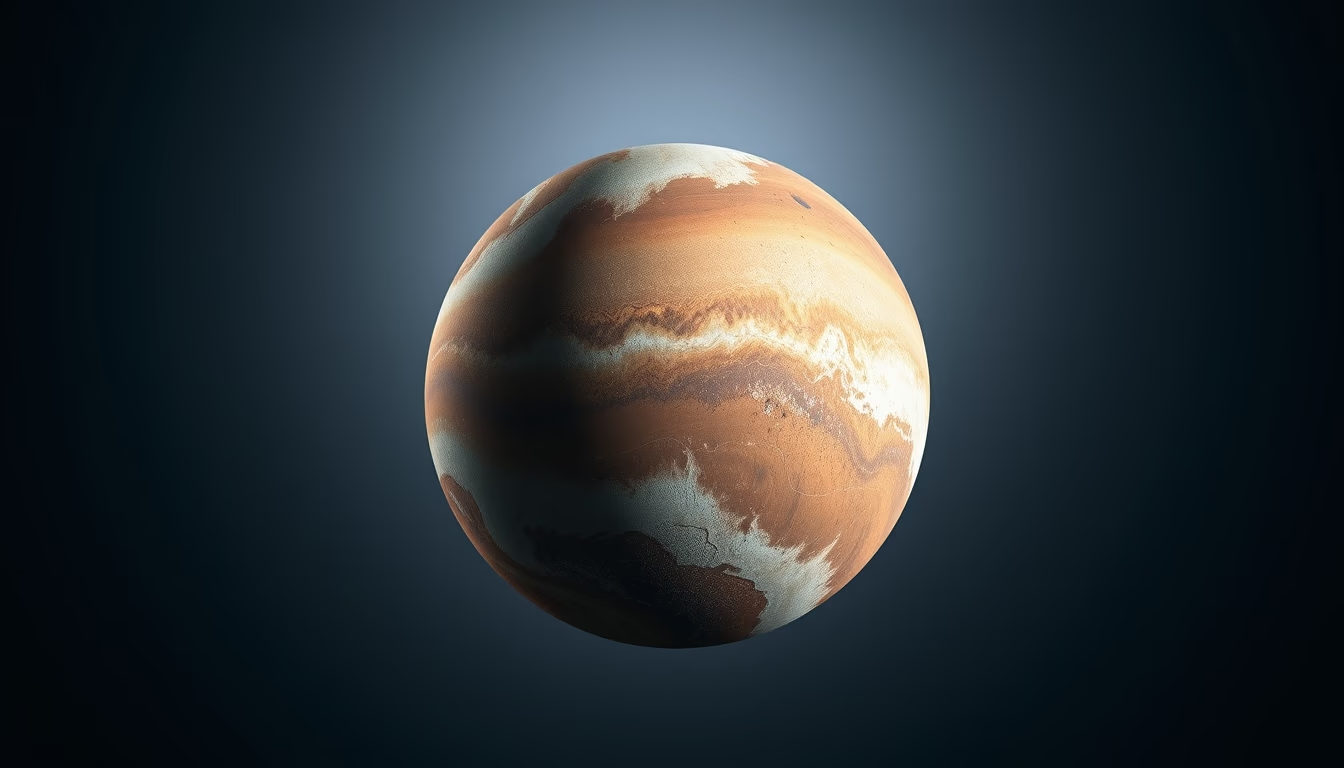
Gas giant ringed exoplanet
1344×768 · AVIF · CC BY 4.0
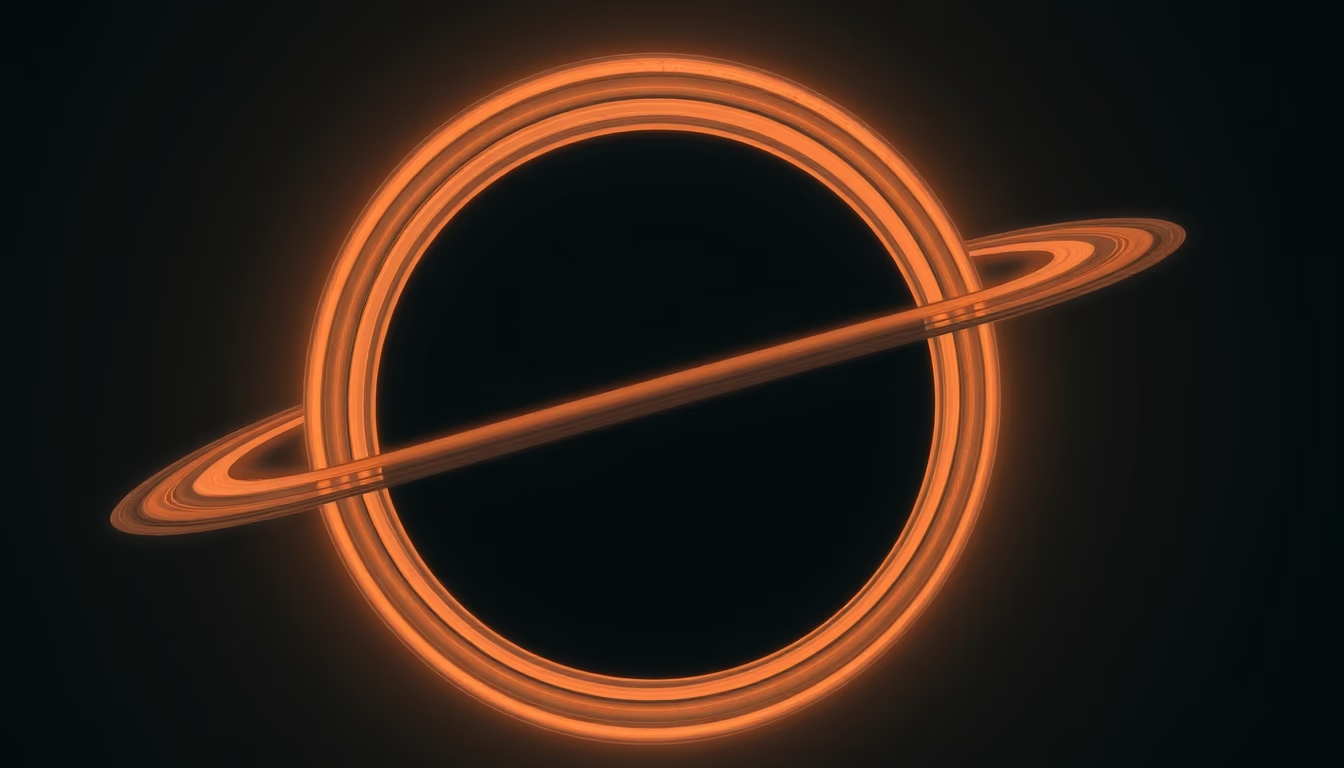
Gas giant exoplanets with rings are fascinating objects that challenge our understanding of planetary formation and system dynamics.
About this subject
Ringed gas giant exoplanets are celestial bodies with masses comparable to Jupiter or Saturn that possess ring systems around them. Although not yet directly imaged in detail, their existence is inferred through indirect observations, such as transit light curves that display complex dimming and brightening patterns. The most famous candidate is the object J1407b, discovered in 2012, which has a ring system hundreds of times larger than Saturn's, with gaps indicating possible exomoons. Other candidates include exoplanets around stars like HIP 41378 f, whose transit shows asymmetries consistent with rings. Detecting exoplanetary rings is challenging because the structures are faint and often indistinguishable from other phenomena, such as starspots or circumplanetary dust. However, theoretical studies suggest that giant rings may be common around young planets or in systems with intense accretion activity. The presence of rings also offers clues about the system's history, including moon collisions or capture of objects from the asteroid belt. With the next generation of telescopes, such as the James Webb and future missions, more rings are expected to be discovered, revealing details about their composition and orbital dynamics.
Frequently Asked Questions
How do scientists detect exoplanets with rings?
They mainly use transit photometry, analyzing the host star's light curve. Rings cause characteristic variations in transit depth and duration, as well as asymmetries and structures not explainable by the planet alone.
What is the largest ring system detected outside the Solar System?
The largest known is around J1407b, with rings spanning about 120 million kilometers in diameter. This system is hundreds of times larger than Saturn's and contains gaps suggesting the presence of exomoons.
Can ringed exoplanets host moons?
Yes, gaps in the rings are strong indicators of moon presence. These satellites clear material from the rings, creating empty lanes. Detecting exomoons in rings is a goal of modern astronomy.
Direct URL
https://pub-c7d6a6ea828543ac903a74a341ccb2e1.r2.dev/imagens/gas-giant-ringed-exoplanet-documentary-nature-style-fresh5.avifHow to credit
Include a visible link back to UtilizAí. Copy one of the snippets below:
<a href="https://xn--utiliza-eza.com/en/midia/imagens/gas-giant-ringed-exoplanet-documentary-nature-style-fresh5">Gas giant ringed exoplanet</a> by <a href="https://xn--utiliza-eza.com">UtilizAí</a>, licensed under <a href="https://creativecommons.org/licenses/by/4.0/">CC BY 4.0</a>.
[Gas giant ringed exoplanet](https://xn--utiliza-eza.com/en/midia/imagens/gas-giant-ringed-exoplanet-documentary-nature-style-fresh5) by [UtilizAí](https://xn--utiliza-eza.com), CC BY 4.0
License: CC-BY-4.0