Binary star sunset
1344×768 · AVIF · CC BY 4.0

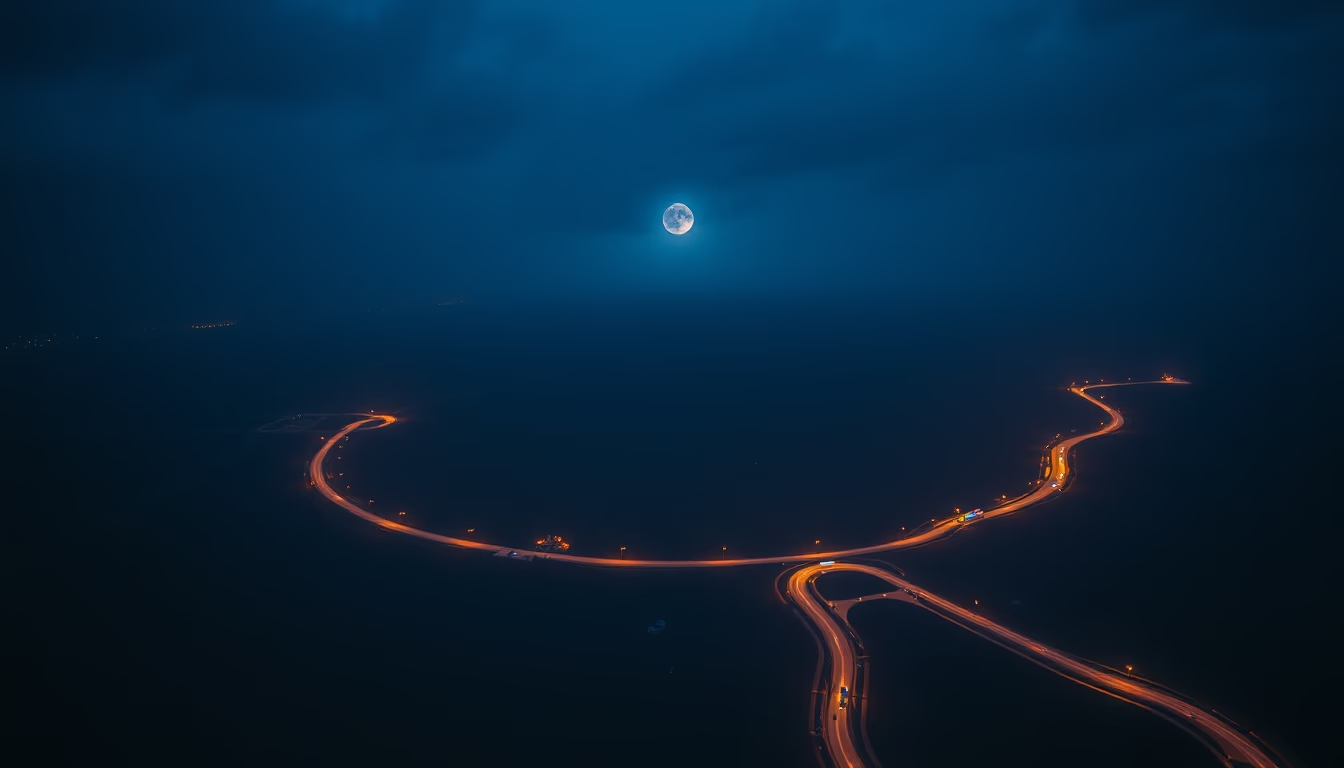
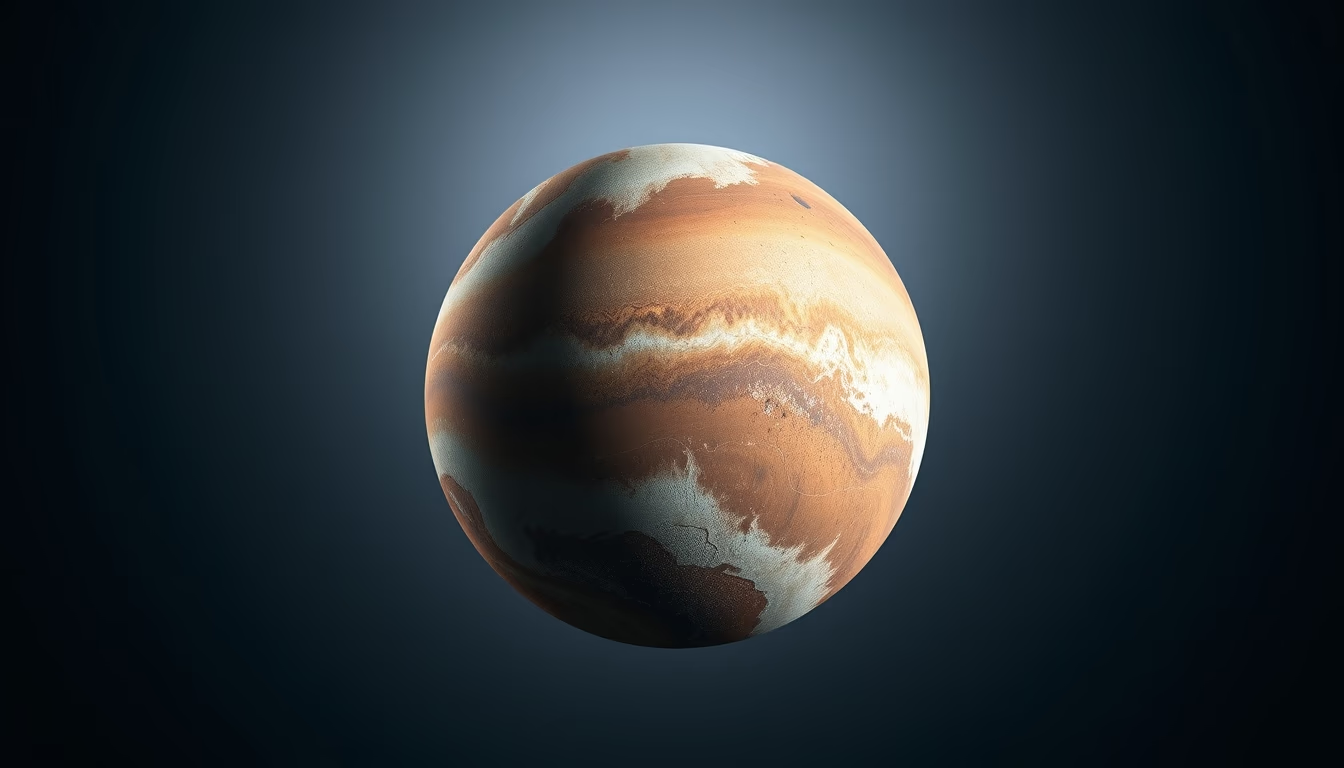
In binary star systems, planets can orbit two stars, creating sunsets with two suns on the horizon, a rare and fascinating phenomenon.
About this subject
Binary star systems consist of two stars orbiting a common center of mass. About half of Sun-like stars are part of multiple systems, and planets orbiting both stars, called circumbinary planets, have been confirmed by missions like Kepler. The most famous example is Kepler-16b, discovered in 2011, which orbits a pair of dwarf stars about 200 light-years from Earth. This Saturn-sized gas giant experiences a double sunset whenever one star sets before the other, creating a unique visual spectacle.
The orbital dynamics of circumbinary planets are complex and unstable. The stars vary in distance and illumination over time, making the habitable zone, where liquid water can exist, narrower and more variable. However, simulations indicate that rocky planets can maintain stable orbits if located far enough from the stellar pair. Science fiction popularized this idea with Tatooine from Star Wars, but real science shows these worlds are extreme: days can last a few hours, and temperature varies drastically as the stars align.
Observing a binary sunset depends on the types of stars involved. If both are yellow like the Sun, the sky may show orange and red hues with two distinct light sources. If one is a red dwarf, its redder light would contrast with the other. In systems with very close stars, the sunset might be mistaken for a single star, but with wider orbits, the effect of two solar balls setting at different times or simultaneously would be unforgettable. The tilt-shift technique used in the image approaches this scene as a miniature model, highlighting the beauty and strangeness of the phenomenon.
Although rare, circumbinary planets are important targets for studying planet formation. They show that the presence of two stars does not prevent the emergence of worlds, but imposes strict conditions. Currently, we know about a dozen such planets, but with telescopes like James Webb, the search for atmospheres and signs of life in these extreme environments is just beginning.
Frequently Asked Questions
Is it possible for life to exist on a planet with two suns?
Yes, theoretically, but the habitable zone is more unstable due to the varying radiation from the two stars. Rocky planets can maintain liquid water if they are in stable orbits at the right distance from the stellar pair.
What would a sunset look like on a binary planet?
It depends on the type and distance of the stars. Generally, the sky could show two solar balls setting at different times, with colors ranging from yellow to red depending on stellar composition. The effect can be stunning and unlike anything on Earth.
How many circumbinary planets have been discovered so far?
To date, about a dozen circumbinary planets have been confirmed, with Kepler responsible for most discoveries. The most famous is Kepler-16b, but others like Kepler-47 and Kepler-1647 are also notable.
Direct URL
https://pub-c7d6a6ea828543ac903a74a341ccb2e1.r2.dev/imagens/binary-star-sunset-tilt-shift-miniature-fresh15.avifHow to credit
Include a visible link back to UtilizAí. Copy one of the snippets below:
<a href="https://xn--utiliza-eza.com/en/midia/imagens/binary-star-sunset-tilt-shift-miniature-fresh15">Binary star sunset</a> by <a href="https://xn--utiliza-eza.com">UtilizAí</a>, licensed under <a href="https://creativecommons.org/licenses/by/4.0/">CC BY 4.0</a>.
[Binary star sunset](https://xn--utiliza-eza.com/en/midia/imagens/binary-star-sunset-tilt-shift-miniature-fresh15) by [UtilizAí](https://xn--utiliza-eza.com), CC BY 4.0
License: CC-BY-4.0