Binary star sunset
1344×768 · AVIF · CC BY 4.0
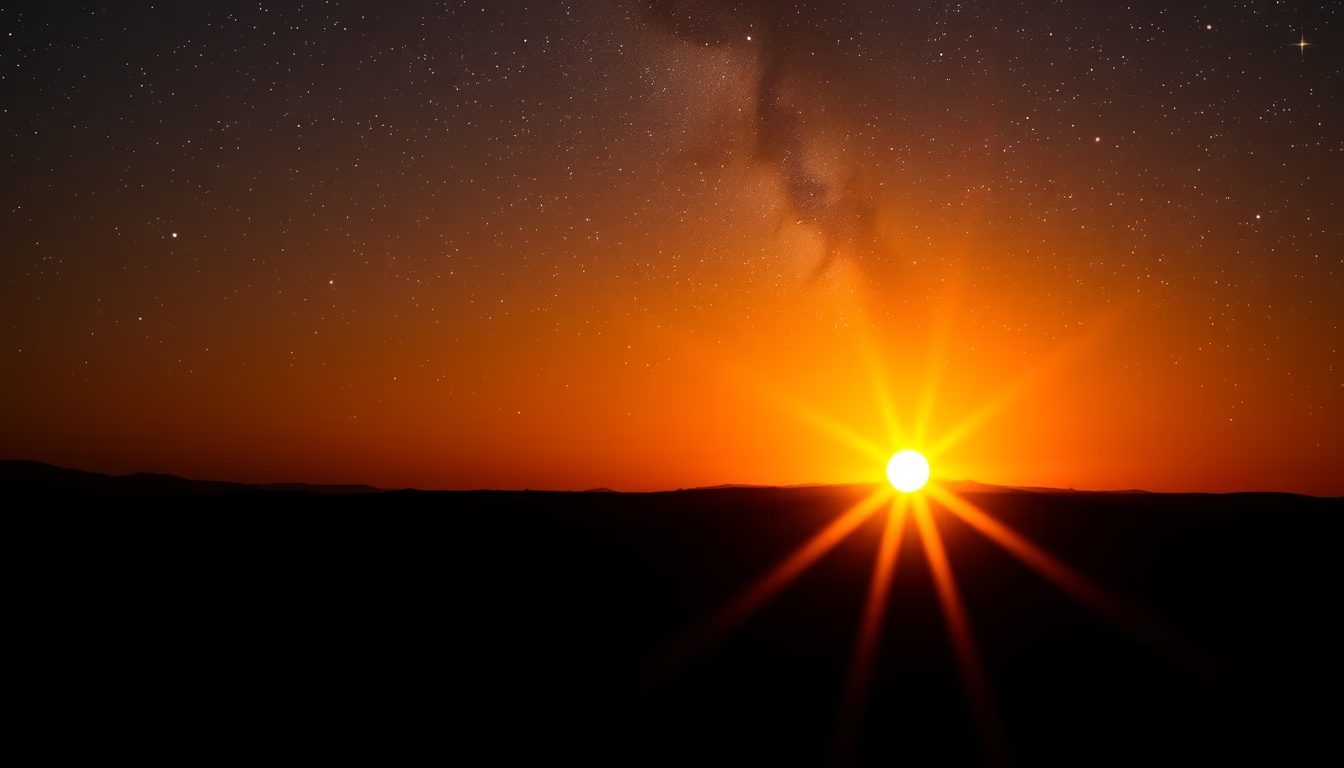
Imagine a sunset with two suns on the horizon. Exoplanets in binary star systems are real, and science has discovered several worlds like Tatooine.
About this subject
Binary star systems are common in the universe, it is estimated that about half of Sun-like stars belong to multiple star systems. Since the discovery of the first exoplanet in a binary system, Kepler-16b in 2011, astronomers have found dozens of planets orbiting double stars. These worlds, called circumbinary planets, orbit the common center of mass of both stars, not just one of them individually.
Habitability in binary systems is an active area of research. For a planet to be potentially habitable, it must maintain a stable orbit within the habitable zone, the region where liquid water can exist. In binary systems, the habitable zone can be more complex, depending on the separation and masses of the stars. P-type planets (circumbinary) orbit both stars, while S-type planets orbit only one. Notable examples include Kepler-47c, which lies in the habitable zone of its binary system.
The concept of a sunset with two suns was popularized by the movie Star Wars, with the desert planet Tatooine. Although science has not yet found an exact analog, the discovery of Kepler-16b confirmed that such scenarios are physically possible. Currently, missions like TESS (Transiting Exoplanet Survey Satellite) continue to hunt for planets in binary systems, expanding our understanding of the diversity of worlds in the galaxy.
Fun fact: some binary configurations may allow a planet to have two simultaneous sunsets, but the exact appearance depends on the relative colors and brightnesses of the stars. Cooler stars tend to orange or red, while hotter ones are bluish, creating a unique visual spectacle that has not yet been witnessed by humans, but perhaps one day will be observed by probes or advanced telescopes.
Frequently Asked Questions
Is there a real planet like Tatooine with two suns?
Yes, several exist. The first discovered was Kepler-16b in 2011, which orbits two dwarf stars. Since then, dozens of circumbinary planets have been found, such as Kepler-47c and TOI-1338 b.
How can a planet orbit two stars without being ejected?
Circumbinary planets orbit the common center of mass of both stars in a wide enough orbit to be stable. The gravitational dynamics allow them to remain in nearly Keplerian orbits around the pair.
Is a binary sunset actually observable?
Yes, it is possible. On a circumbinary planet, the two stars rise and set at different times, but they can appear together on the horizon depending on the orbital position. The visual effect would be similar to what is shown in fiction.
Direct URL
https://pub-c7d6a6ea828543ac903a74a341ccb2e1.r2.dev/imagens/binary-star-sunset-rembrandt-lighting-dramatic-shadows-fresh16.avifHow to credit
Include a visible link back to UtilizAí. Copy one of the snippets below:
<a href="https://xn--utiliza-eza.com/en/midia/imagens/binary-star-sunset-rembrandt-lighting-dramatic-shadows-fresh16">Binary star sunset</a> by <a href="https://xn--utiliza-eza.com">UtilizAí</a>, licensed under <a href="https://creativecommons.org/licenses/by/4.0/">CC BY 4.0</a>.
[Binary star sunset](https://xn--utiliza-eza.com/en/midia/imagens/binary-star-sunset-rembrandt-lighting-dramatic-shadows-fresh16) by [UtilizAí](https://xn--utiliza-eza.com), CC BY 4.0
License: CC-BY-4.0