Binary star sunset
1344×768 · AVIF · CC BY 4.0

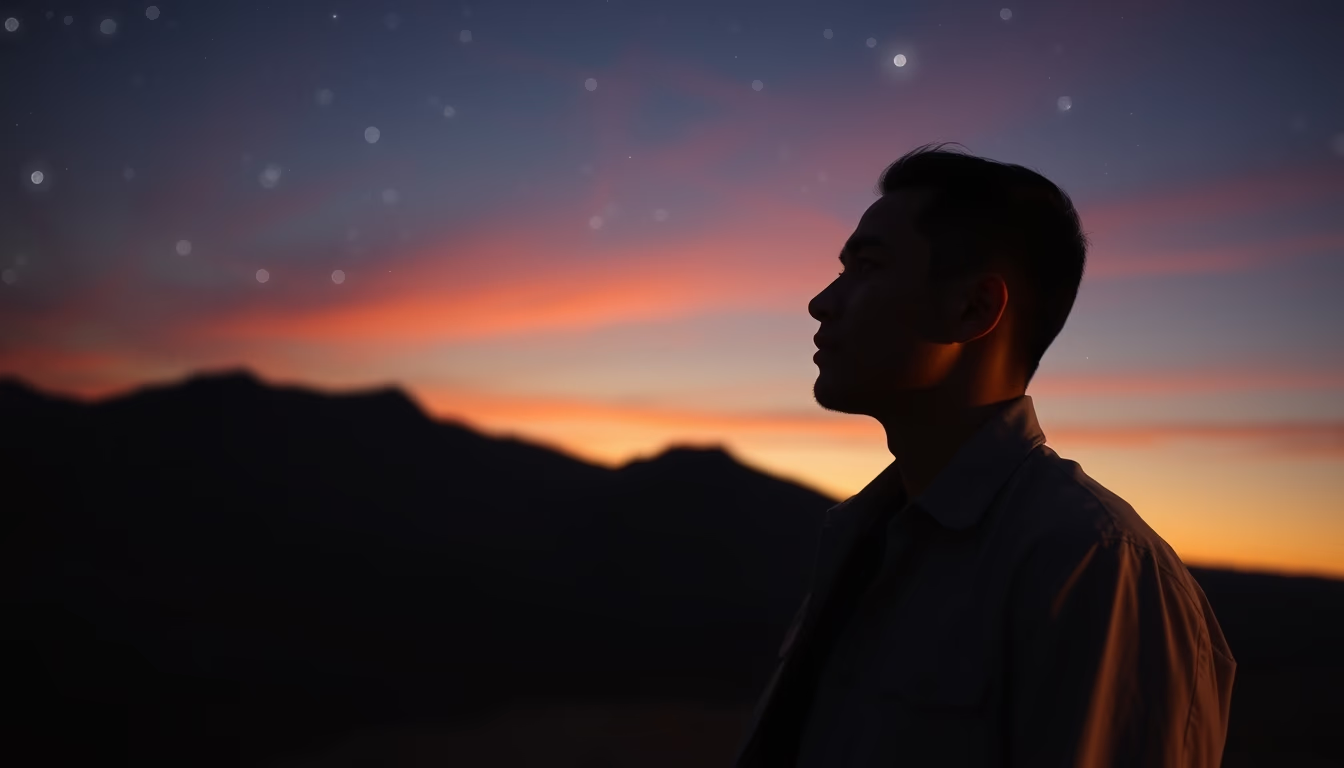
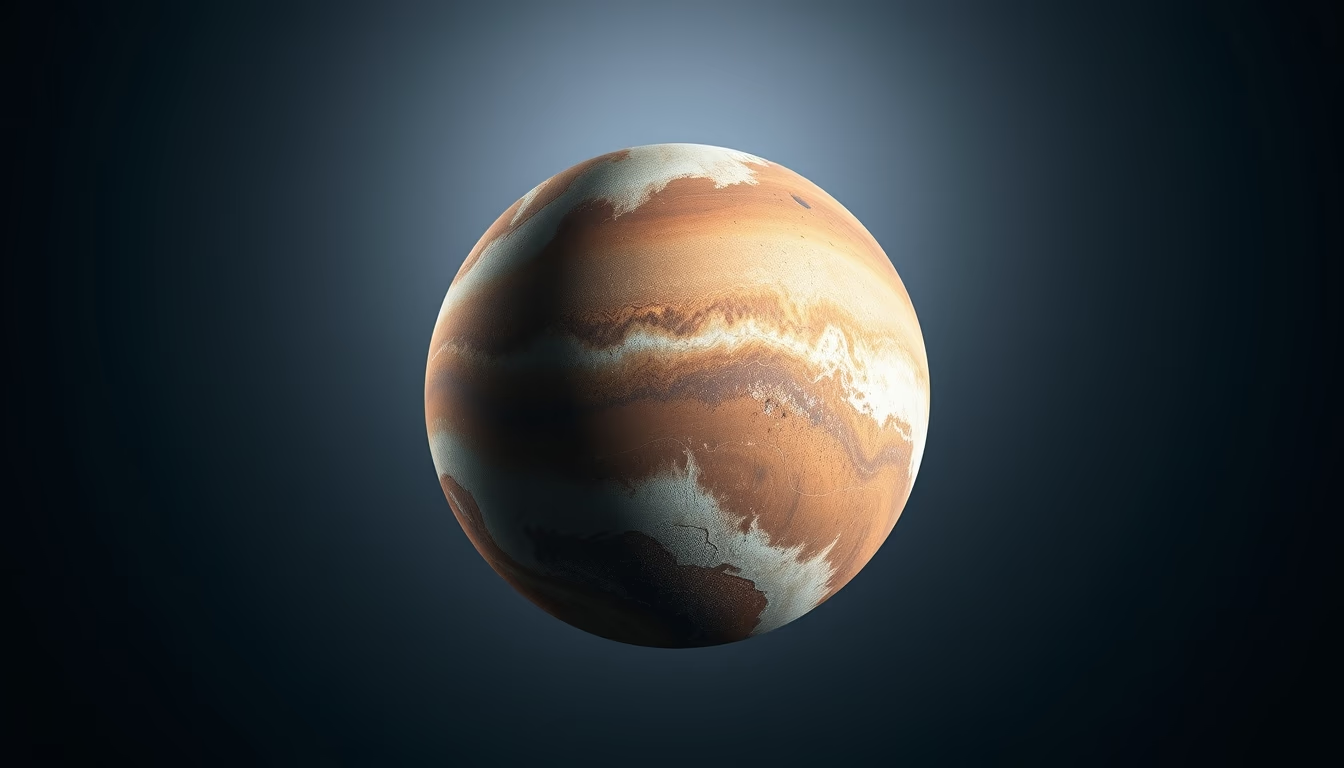
In binary star systems, sunsets can feature two suns on the horizon, a phenomenon that inspires science fiction and real astronomical studies.
About this subject
Binary star systems consist of two stars orbiting a common center of mass. About half of Sun-like stars are part of multiple systems, and the discovery of exoplanets orbiting binary stars, known as circumbinary planets, is a reality confirmed by telescopes like Kepler. The most famous example is the Kepler-16 system, where a Saturn-sized planet orbits two dwarf stars, creating a double sunset scene reminiscent of Tatooine from Star Wars.
The orbital dynamics of these planets are complex: they must reside in a habitable zone that remains stable against the gravitational variations of both stars. Despite the challenges, simulations indicate that rocky planets could exist in such systems, albeit with radically different day and night skies. Surface temperatures can vary dramatically depending on the relative positions of the stars, and day lengths can be irregular.
Culturally, the image of a binary sunset has captivated popular imagination since George Lucas introduced Tatooine in 1977. In real astronomy, the search for circumbinary exoplanets helps us understand planet formation in extreme environments. As of 2024, about a dozen such planets have been confirmed, with the first discovered in 2011. Studying these worlds challenges theoretical models and expands our concept of habitability.
Frequently Asked Questions
What is a binary star system?
It is a system of two stars orbiting a common center of mass. They can be visual, spectroscopic, or eclipsing binaries depending on detection method.
Are there planets orbiting binary stars?
Yes, called circumbinary planets. The first confirmed was Kepler-16b in 2011. They orbit both stars, not just one.
Could a planet in a binary system support life?
Theoretically, yes, if in the habitable zone. But variable radiation from two stars creates climate instability. No unequivocally habitable candidate has been found yet.
Direct URL
https://pub-c7d6a6ea828543ac903a74a341ccb2e1.r2.dev/imagens/binary-star-sunset-magazine-editorial-fresh4.avifHow to credit
Include a visible link back to UtilizAí. Copy one of the snippets below:
<a href="https://xn--utiliza-eza.com/en/midia/imagens/binary-star-sunset-magazine-editorial-fresh4">Binary star sunset</a> by <a href="https://xn--utiliza-eza.com">UtilizAí</a>, licensed under <a href="https://creativecommons.org/licenses/by/4.0/">CC BY 4.0</a>.
[Binary star sunset](https://xn--utiliza-eza.com/en/midia/imagens/binary-star-sunset-magazine-editorial-fresh4) by [UtilizAí](https://xn--utiliza-eza.com), CC BY 4.0
License: CC-BY-4.0