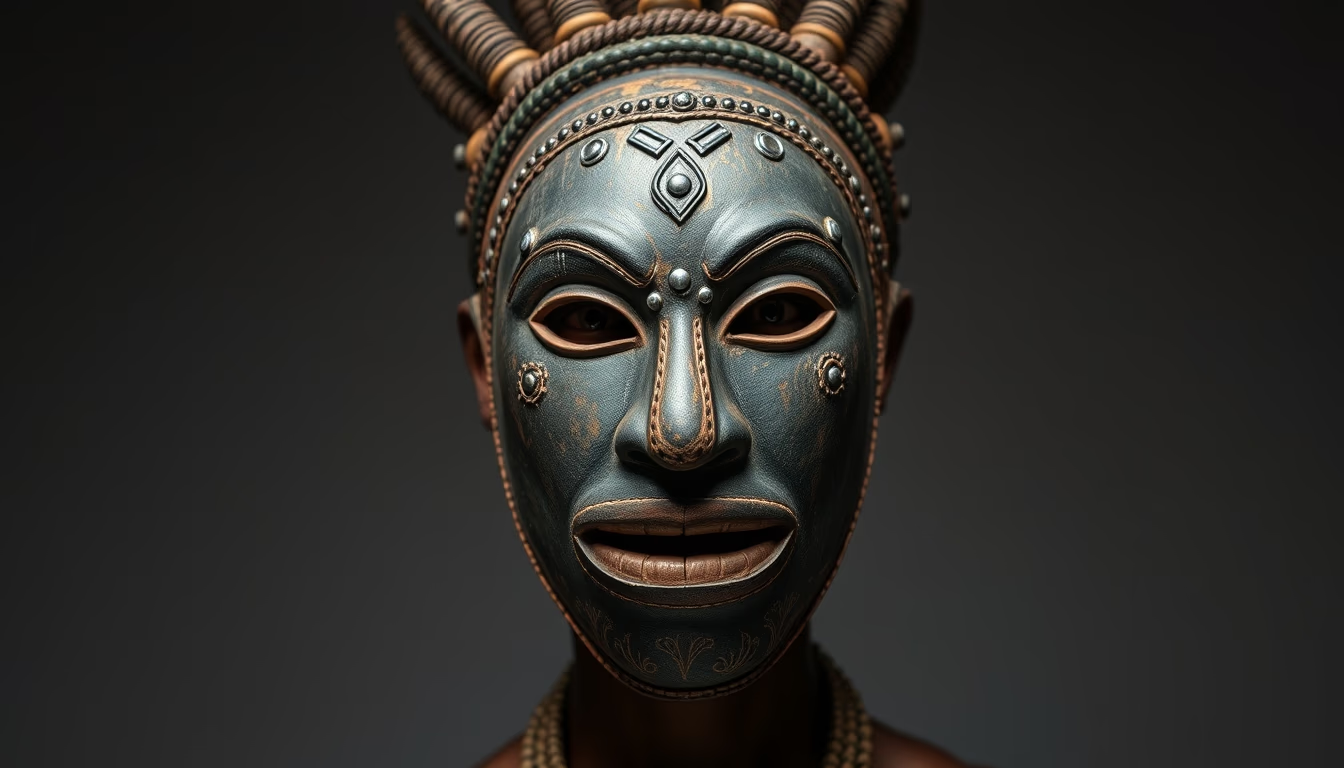
Andean textile vivid
1344×768 · AVIF · CC BY 4.0
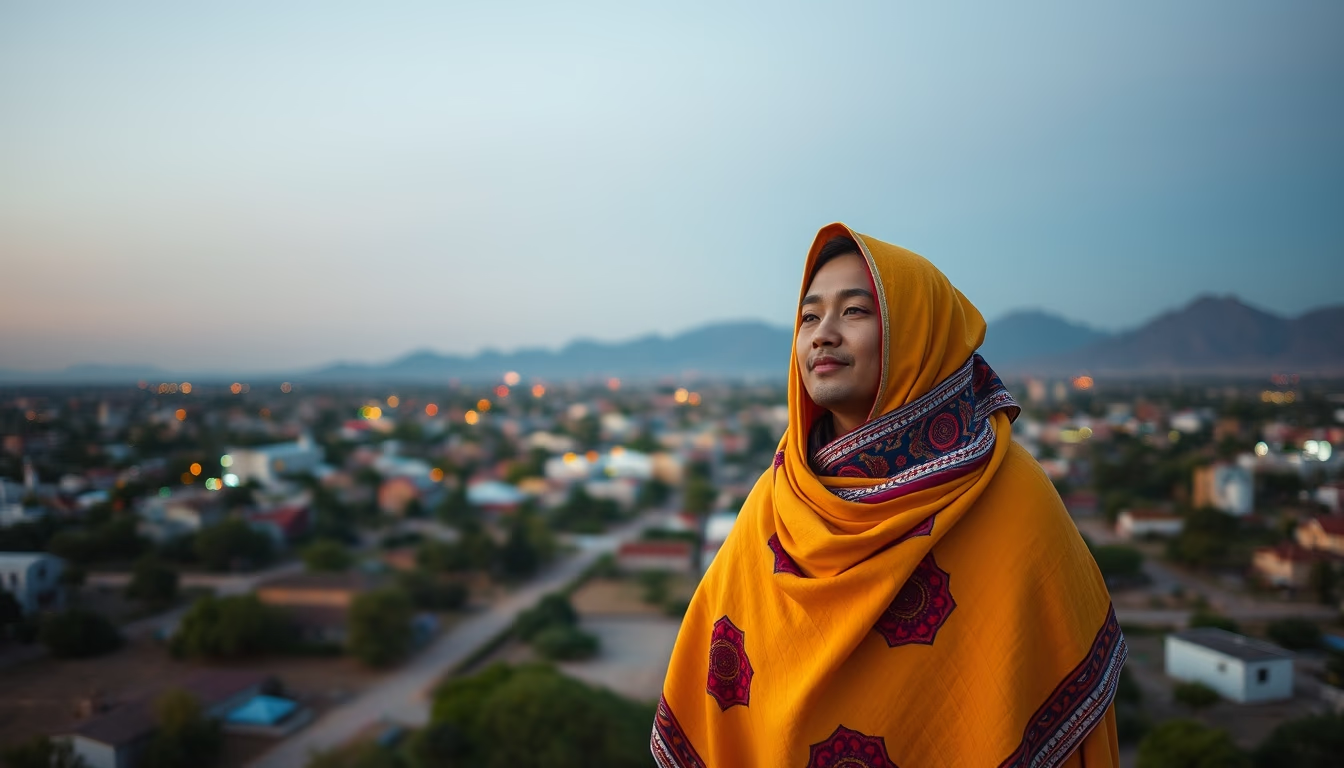
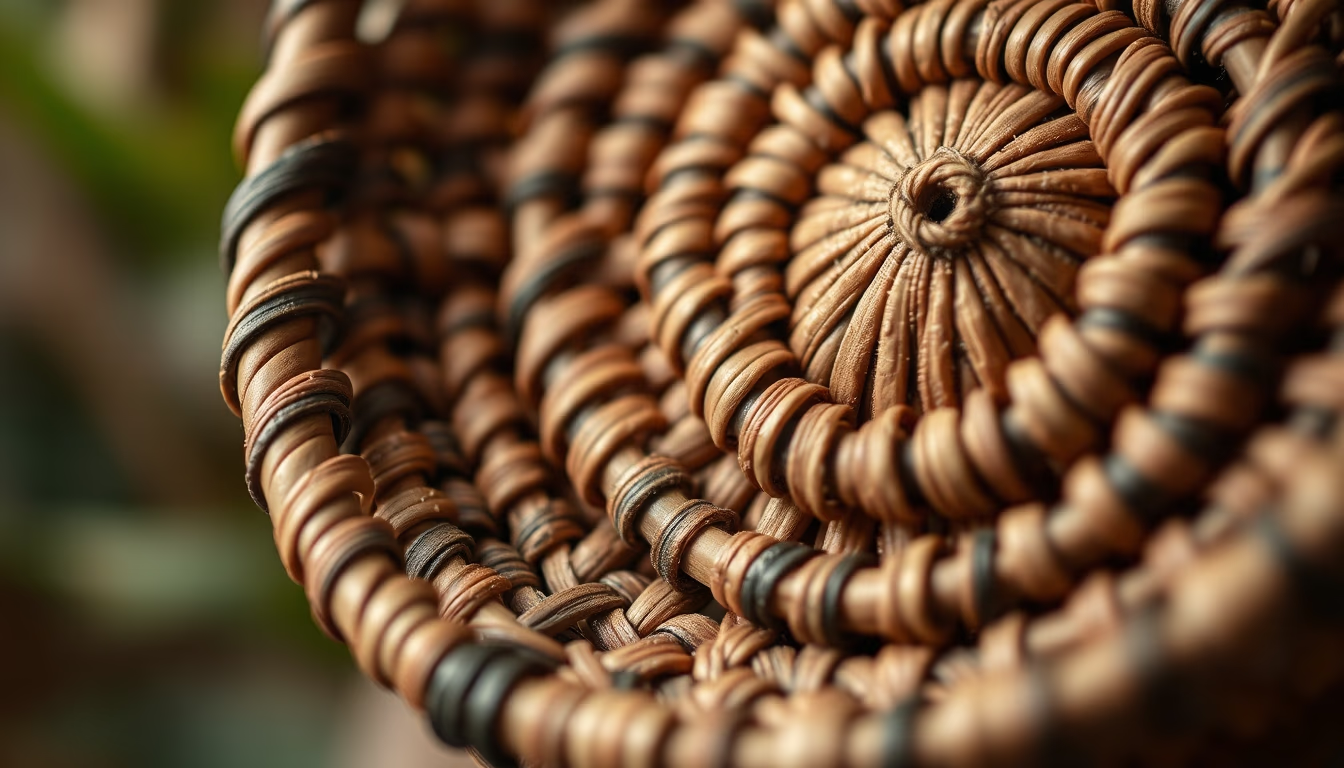
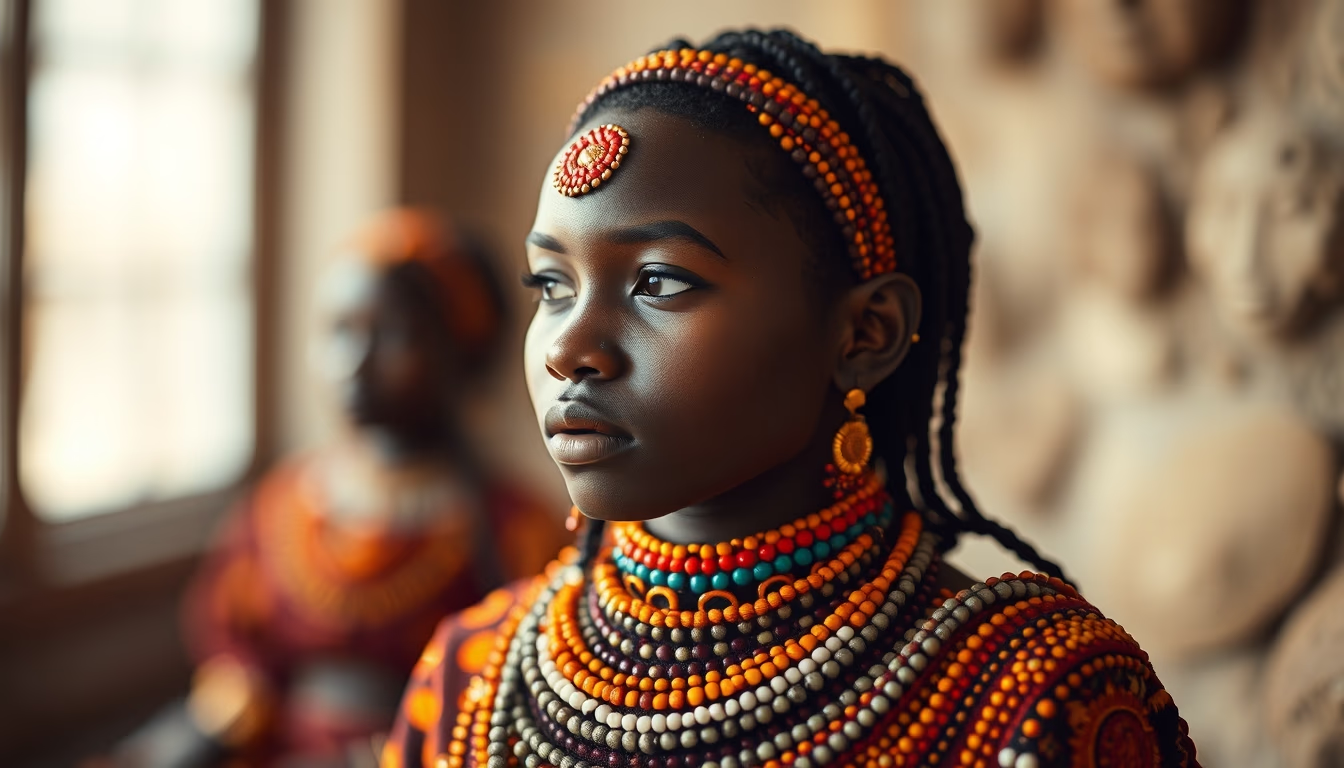
Andean textiles, woven by Quechua and Aymara communities, represent a millennia-old tradition of textile art with unique techniques and symbolism.
About this subject
Andean textiles are one of the oldest and richest cultural expressions in South America, with origins dating back to pre-Inca civilizations such as Chavín, Paracas, and Nazca. Produced mainly in the highlands of Peru, Bolivia, Ecuador, and northern Chile, these textiles are woven on backstrap looms, a technique that has remained virtually unchanged for thousands of years. The fibers used include llama, alpaca, vicuña wool, and native cotton, dyed with natural colorants from plants, minerals, and insects like cochineal.
The symbolism of the patterns is profound: geometric, zoomorphic, and anthropomorphic figures represent elements of Andean cosmology, such as Pachamama (Mother Earth), the apus (mountain spirits), and the duality between the upper and lower worlds. Each community has distinct motifs that tell stories of their identity and relationship with the environment. During the Inca Empire, textiles were so valuable that they served as currency, tribute, and status indicators, and were used in religious rituals.
Today, Andean weaving faces challenges from globalization but is experiencing a resurgence through sustainable tourism and fair trade. Organizations like the Center for Traditional Textiles of Cusco and artisan fairs preserve ancestral techniques and provide income for rural communities. UNESCO recognized Peruvian weaving as Intangible Cultural Heritage, highlighting its living relevance. The textiles are renowned for high quality, with vicuña fiber being one of the finest and most expensive in the world.
Frequently Asked Questions
What are the main types of Andean textiles?
Textiles include aguayos (colorful blankets), ponchos, chumpis (belts), and llicllas (women's shawls). Each has specific functions and patterns that vary by region.
How are natural dyes obtained in Andean weaving?
Colors come from plants like cochineal (insect for red), indigo (blue), and minerals like limonite (yellow). The dyeing process is passed down orally through generations.
Why are Andean textiles considered cultural heritage?
Because they represent ancestral knowledge, community identity, and unique techniques that have survived for millennia. UNESCO recognized Peruvian weaving as Intangible Cultural Heritage in 2005.
Direct URL
https://pub-c7d6a6ea828543ac903a74a341ccb2e1.r2.dev/imagens/andean-textile-vivid-aerial-drone-shot-fresh16.avifHow to credit
Include a visible link back to UtilizAí. Copy one of the snippets below:
<a href="https://xn--utiliza-eza.com/en/midia/imagens/andean-textile-vivid-aerial-drone-shot-fresh16">Andean textile vivid</a> by <a href="https://xn--utiliza-eza.com">UtilizAí</a>, licensed under <a href="https://creativecommons.org/licenses/by/4.0/">CC BY 4.0</a>.
[Andean textile vivid](https://xn--utiliza-eza.com/en/midia/imagens/andean-textile-vivid-aerial-drone-shot-fresh16) by [UtilizAí](https://xn--utiliza-eza.com), CC BY 4.0
License: CC-BY-4.0