Amazonian basketry
1344×768 · AVIF · CC BY 4.0
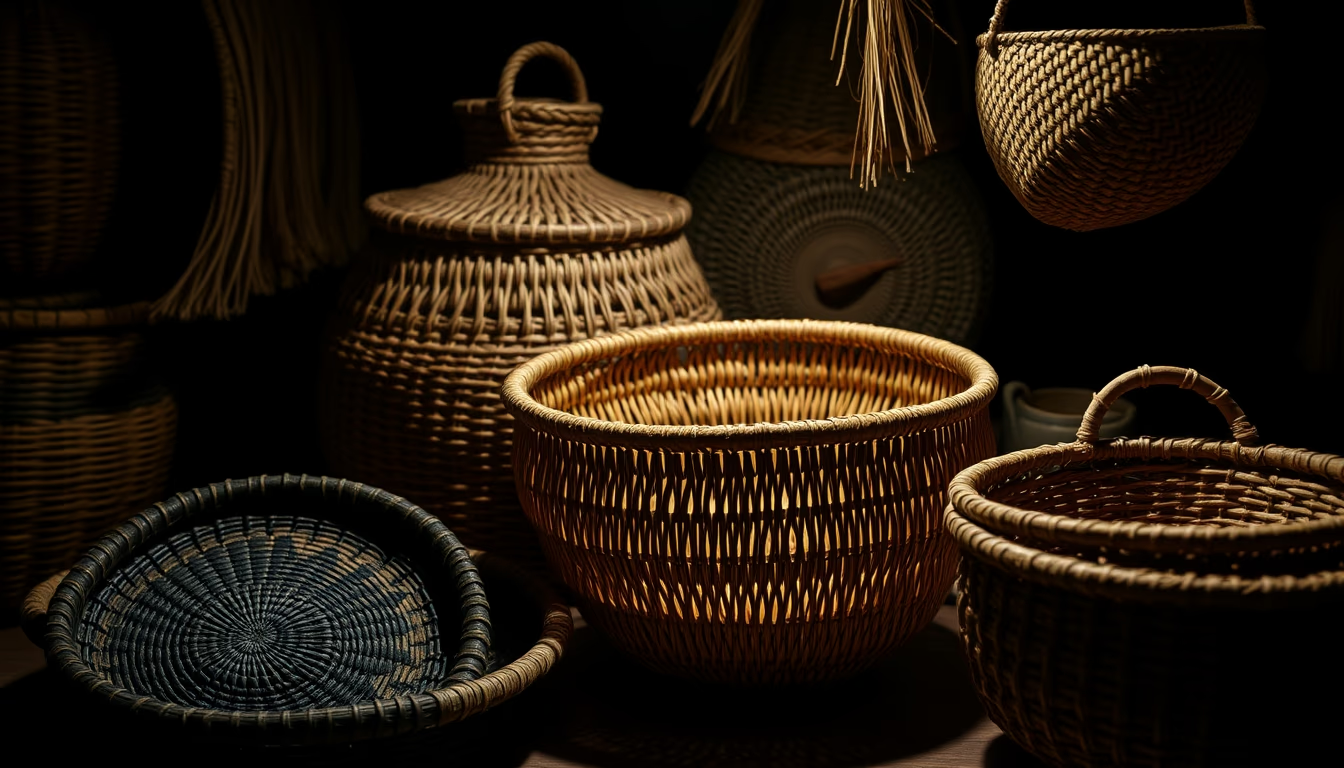
Amazonian basketry: ancient art of indigenous peoples in the rainforest.
About this subject
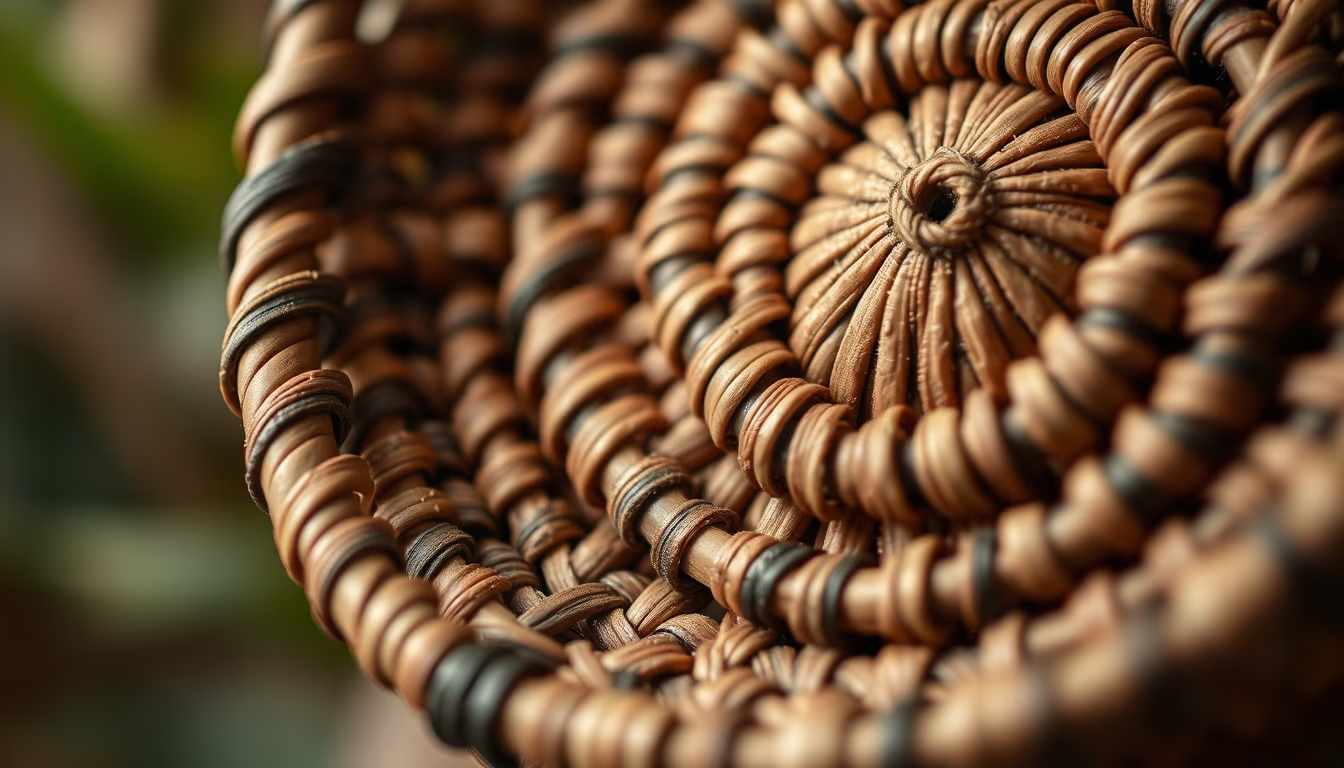
Amazonian basketry is one of the oldest and most sophisticated handicraft expressions of the indigenous peoples of South America. Using plant fibers such as arumã, tucum, buriti, and liana, artisans weave utilitarian and ceremonial pieces that reflect centuries of ecological and cultural knowledge. Each ethnic group developed specific techniques: the Yanomami use geometric patterns to represent forest spirits, while the Baniwa make baskets with designs that narrate creation myths. These pieces are not only used for storing food or carrying objects but also have ritual functions in festivals and passage rites.
Production varies by region and season. In the Brazilian Amazon, arumã (Ischnosiphon gracilis) is the most common fiber, harvested during the waxing moon to ensure flexibility. Women are usually the weavers, passing down patterns from generation to generation. Natural dyes are made from tree barks, seeds, and leaves, resulting in earthy tones, reds, and blacks. Each basket can take from a few days to weeks to complete, depending on complexity.
Despite pressure from modernity, Amazonian basketry remains alive thanks to cultural valorization projects and the indigenous art market. Museums such as the Museu do Índio (Rio de Janeiro) and the Museu Paraense Emílio Goeldi (Belém) hold representative collections. International recognition grew with artisans participation in fairs and exhibitions like the São Paulo Biennial and the Manaus Indigenous Crafts Fair. However, uncontrolled commercial exploitation threatens ecological balance, and predatory harvesting of fibers can lead to depletion of native species.
Today, basketry is also studied as a source of sustainable design. Architects and designers draw inspiration from weaves to create eco-friendly packaging and furniture. The combination of functionality and ancient aesthetics makes Amazonian basketry an intangible heritage that connects past and future, reminding us of the importance of preserving both the technique and the ecosystem that sustains it.
Frequently Asked Questions
What materials are used in Amazonian basketry?
The main materials are plant fibers such as arumã, tucum, buriti, liana, and straw. Arumã is the most common in the Brazilian Amazon. Natural dyes come from tree barks, seeds, and leaves.
What is the cultural importance of basketry for indigenous peoples?
Basketry has utilitarian functions (storing food, carrying objects) and ritual ones (ceremonies, festivals, rites of passage). Patterns and designs convey myths and ancestral knowledge, reinforcing cultural identity.
What is the current situation of Amazonian basketry?
It survives thanks to valorization projects and the art market, but faces threats like uncontrolled commercial exploitation and biodiversity loss. Museums and fairs help preserve and spread the technique.
Direct URL
https://pub-c7d6a6ea828543ac903a74a341ccb2e1.r2.dev/imagens/amazonian-basketry-fine-art-photography-fresh0.avifHow to credit
Include a visible link back to UtilizAí. Copy one of the snippets below:
<a href="https://xn--utiliza-eza.com/en/midia/imagens/amazonian-basketry-fine-art-photography-fresh0">Amazonian basketry</a> by <a href="https://xn--utiliza-eza.com">UtilizAí</a>, licensed under <a href="https://creativecommons.org/licenses/by/4.0/">CC BY 4.0</a>.
[Amazonian basketry](https://xn--utiliza-eza.com/en/midia/imagens/amazonian-basketry-fine-art-photography-fresh0) by [UtilizAí](https://xn--utiliza-eza.com), CC BY 4.0
License: CC-BY-4.0