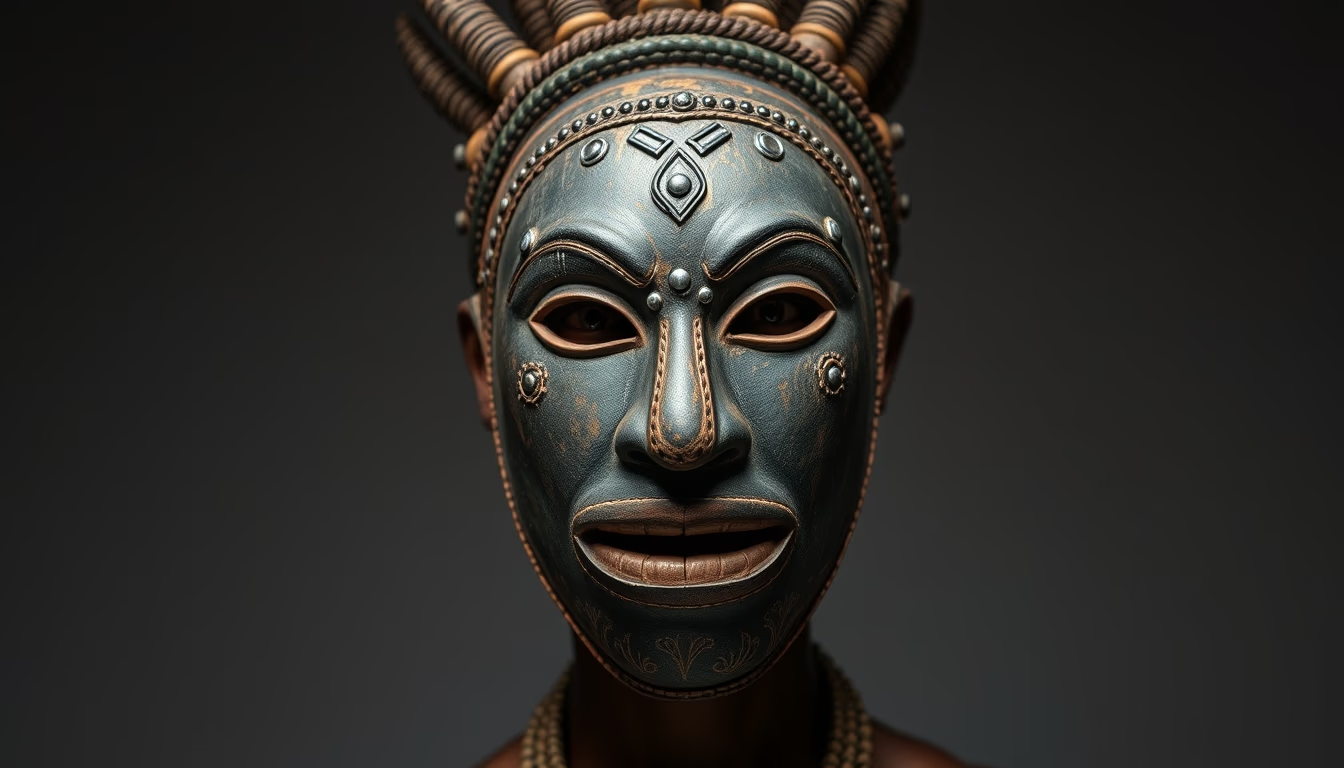
Aboriginal dot painting
1344×768 · AVIF · CC BY 4.0

Aboriginal dot painting is an ancient art form of Indigenous Australians, rich in symbolism and connection to the land.
About this subject
Aboriginal dot painting is an artistic technique developed by Indigenous peoples of Central Australia, particularly the Anangu, Pintupi, and Warlpiri groups. It emerged in the 1970s with the Papunya Tula art movement, where artists began using acrylic paint on canvas to depict stories from the Dreamtime, a central concept in Aboriginal cosmology that narrates the creation of the world and ancestral laws.
The dots are applied with thin brushes or sticks, creating geometric and abstract patterns. Each dot can represent elements of the landscape, such as water, fire, animals, or trails, but the exact meaning is often secret, revealed only to initiates. Colors like ochre, red, yellow, and white refer to natural pigments, while blue and green were later incorporated.
Dot painting gained international recognition in the 1980s and 1990s, with artists like Clifford Possum Tjapaltjarri and Emily Kame Kngwarreye. Their works are exhibited in museums such as the Museum of Contemporary Art in Sydney and the Musée du Quai Branly in Paris. The technique has also influenced contemporary design and fashion, but always raises questions about cultural appropriation and authenticity.
Today, Aboriginal communities manage art cooperatives to protect their traditional knowledge and ensure economic benefits. Dot painting is not just an aesthetic expression but a vehicle for cultural preservation and historical resistance against colonization.
Frequently Asked Questions
What is the origin of Aboriginal dot painting?
Aboriginal dot painting originated in the 1970s in the Papunya community in Central Australia, as part of the Papunya Tula art movement, which adapted traditional ground painting techniques onto canvas using acrylic paint.
What do the dots mean in Aboriginal art?
The dots can represent landscape elements like water, fire, or animals, and also tell Dreamtime stories. Many meanings are sacred and not publicly disclosed, known only to initiated community members.
How is dot painting protected against cultural appropriation?
Aboriginal communities have established art cooperatives that control the use of designs and ensure artists are properly credited and compensated. Copyright laws also protect individual works, but enforcement remains challenging.
Direct URL
https://pub-c7d6a6ea828543ac903a74a341ccb2e1.r2.dev/imagens/aboriginal-dot-painting-minimalist-composition-fresh5.avifHow to credit
Include a visible link back to UtilizAí. Copy one of the snippets below:
<a href="https://xn--utiliza-eza.com/en/midia/imagens/aboriginal-dot-painting-minimalist-composition-fresh5">Aboriginal dot painting</a> by <a href="https://xn--utiliza-eza.com">UtilizAí</a>, licensed under <a href="https://creativecommons.org/licenses/by/4.0/">CC BY 4.0</a>.
[Aboriginal dot painting](https://xn--utiliza-eza.com/en/midia/imagens/aboriginal-dot-painting-minimalist-composition-fresh5) by [UtilizAí](https://xn--utiliza-eza.com), CC BY 4.0
License: CC-BY-4.0