Aboriginal dot painting
1344×768 · AVIF · CC BY 4.0
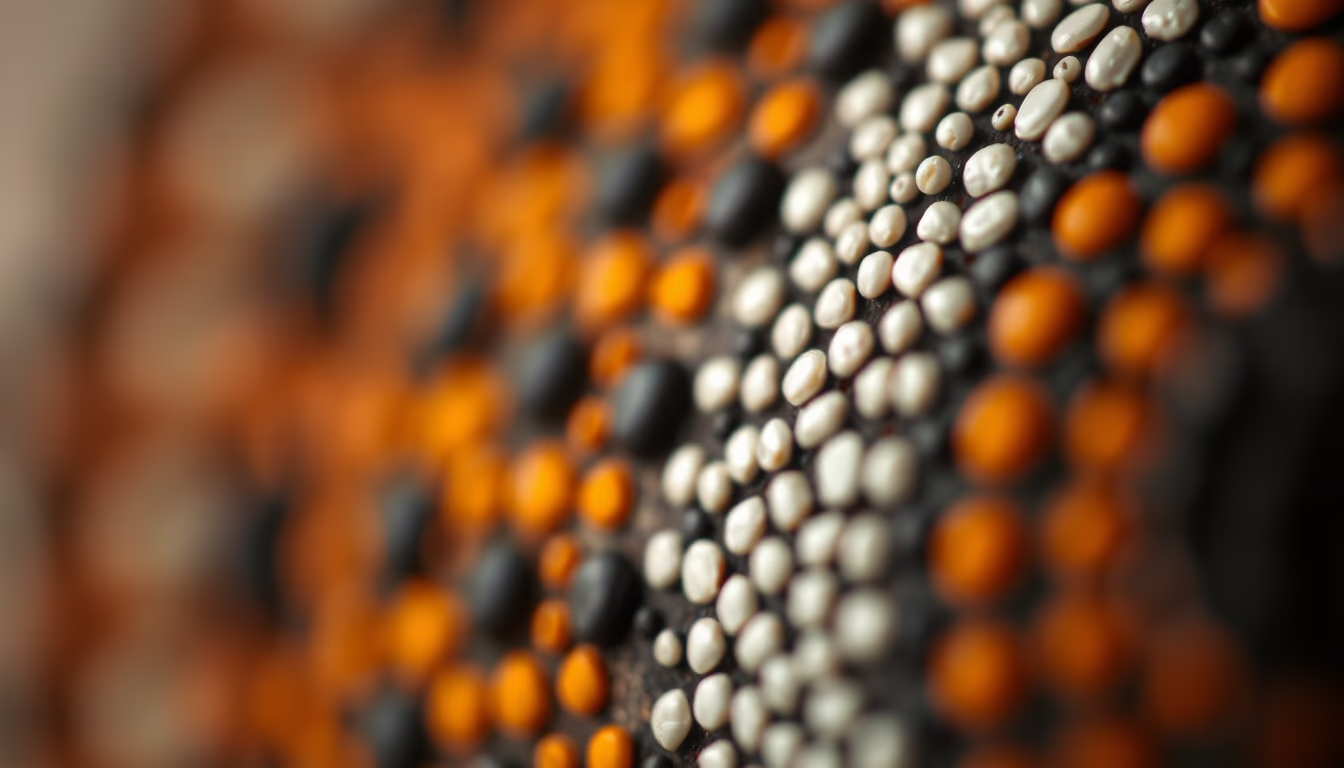
Aboriginal dot painting is one of the world's oldest continuous art forms, originating over 40,000 years ago in Australia.
About this subject
Aboriginal dot painting is a traditional art technique of Indigenous Australian peoples, using small colored dots to create complex patterns that depict stories from the Dreamtime, the creation era in Aboriginal cosmology. Each dot carries symbolic meaning, often representing natural elements like water, fire, stars, or animals. Colors are derived from natural pigments such as red, yellow, and white ochre, mixed with plant resins.
The modern dot painting movement emerged in the 1970s in Papunya, Northern Territory, Australia. Artists like Clifford Possum Tjapaltjarri and Johnny Warangkula Tjupurrula adapted sacred sand drawings onto acrylic canvases, creating an art style that gained international recognition. The paintings are typically created on horizontal surfaces, with the artist sitting or kneeling, applying dots using fine brushes, sticks, or even fingers.
Aboriginal art is not merely decorative but carries deep cultural and spiritual knowledge. Many works represent territorial maps, migration routes, or sacred sites, functioning as visual records passed down through generations. The precision of dots and symmetry of patterns reflect complex mathematical understanding. Due to sacred significance, some paintings can only be viewed by initiated members or in ceremonial contexts.
Today, dot painting is globally appreciated in galleries and museums, but faces challenges such as cultural appropriation and protection of artists' copyrights. Aboriginal communities strive to control the reproduction of their sacred symbols and ensure economic benefits return to creators. Authenticity is often verified by certificates of origin, linking the work to a specific artist or clan.
Frequently Asked Questions
What is the origin of Aboriginal dot painting?
The technique dates back thousands of years in Australia, initially in sand drawings and body art. The modern canvas form emerged in the 1970s in Papunya.
What do the dots in Aboriginal art mean?
Each dot can represent natural elements, animals, stars, or landscape features. Together, they form maps and tell Dreamtime stories.
How can I tell if a dot painting is authentic?
Authentic works should come with a certificate of origin identifying the artist or community. It's also wise to purchase from reputable galleries specializing in Indigenous art.
Direct URL
https://pub-c7d6a6ea828543ac903a74a341ccb2e1.r2.dev/imagens/aboriginal-dot-painting-macro-closeup-fresh4.avifHow to credit
Include a visible link back to UtilizAí. Copy one of the snippets below:
<a href="https://xn--utiliza-eza.com/en/midia/imagens/aboriginal-dot-painting-macro-closeup-fresh4">Aboriginal dot painting</a> by <a href="https://xn--utiliza-eza.com">UtilizAí</a>, licensed under <a href="https://creativecommons.org/licenses/by/4.0/">CC BY 4.0</a>.
[Aboriginal dot painting](https://xn--utiliza-eza.com/en/midia/imagens/aboriginal-dot-painting-macro-closeup-fresh4) by [UtilizAí](https://xn--utiliza-eza.com), CC BY 4.0
License: CC-BY-4.0