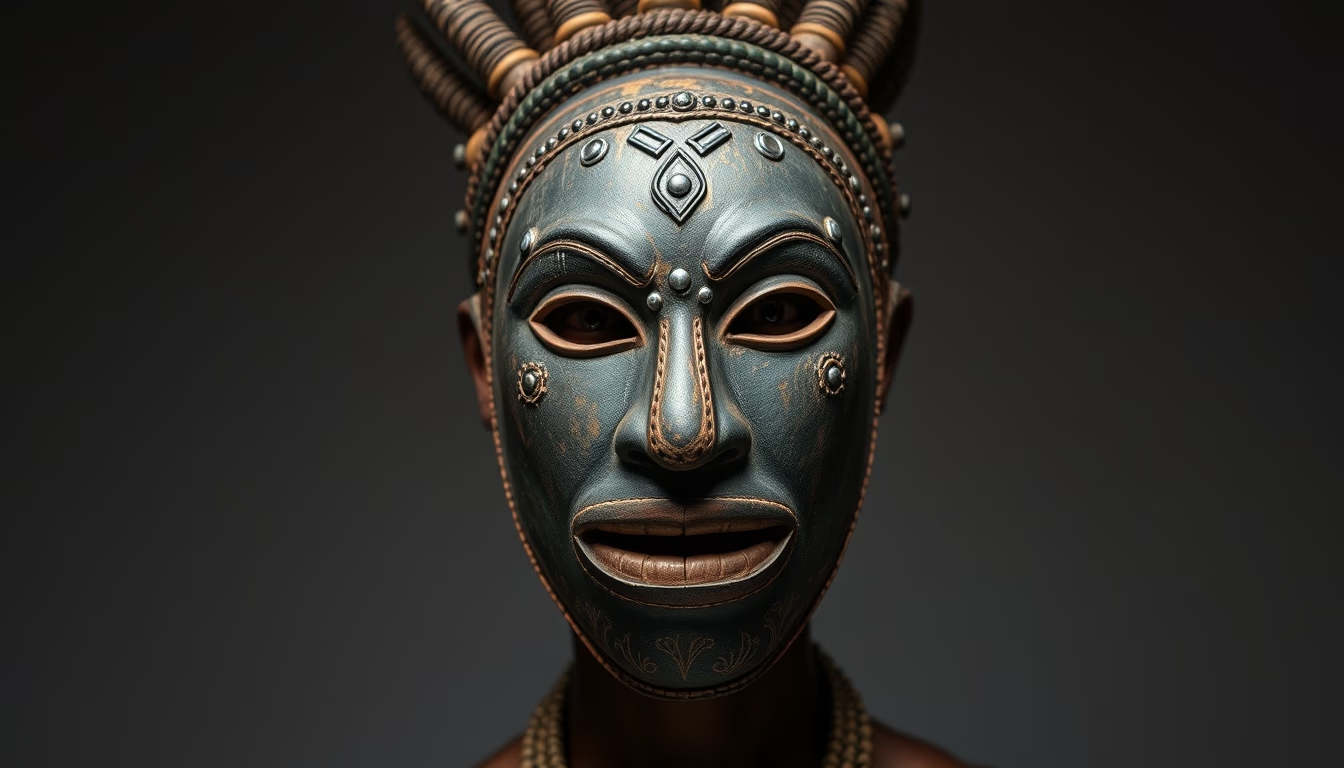
Aboriginal dot painting
1344×768 · AVIF · CC BY 4.0

Aboriginal dot painting is an ancient Australian art form using dot patterns to narrate myths and stories from the Dreamtime.
About this subject
Aboriginal dot painting emerged in the early 1970s in the Papunya community, in Australia’s Central Desert. The Papunya Tula movement, led by artists such as Clifford Possum Tjapaltjarri and Kaapa Tjampitjinpa, developed this technique to preserve and transmit sacred knowledge of the Dreamtime, the Aboriginal cosmology explaining world creation. The paintings were initially made on the ground with colored sand, later adapted to canvas with acrylic paint.
Dot patterns carry complex, multilayered meanings. Each dot can represent a landscape element: a hill, a waterhole, or an animal track. Specific colors refer to places and stories: red ochre for earth, white for clouds or bones, yellow for the sun. Compositions often depict territorial maps, migration routes, or ceremonies. The arrangement of dots can indicate the topography of a sacred site or the sequence of events in a mythical narrative.
The technique is culturally restricted: many patterns and stories can only be painted by authorized members of specific clans, under elder supervision. Renowned artists like Emily Kame Kngwarreye (who used thick brushes instead of fine dots) and Kathleen Petyarre expanded the visual language. Today, dot painting is globally recognized as one of the most authentic expressions of Indigenous Australian art, blending contemporary aesthetics with profound ecological and spiritual knowledge.
Frequently Asked Questions
How did Aboriginal dot painting originate?
It originated in the 1970s in the Papunya community, Australia, as part of the Papunya Tula movement. Artists adapted ceremonial ground drawings to canvas with acrylic paint, creating a globally recognized style.
What do the dot patterns mean?
Dots represent landscape features such as hills, rivers, waterholes, and animal tracks, as well as Dreamtime stories. Each color has symbolic meaning, and the arrangement can narrate a mythological story or indicate sacred sites.
Who are some famous artists of this technique?
Notable artists include Clifford Possum Tjapaltjarri, Emily Kame Kngwarreye, Kathleen Petyarre, and contemporary figures like Gloria Petyarre and Minnie Pwerle, whose works are exhibited in international museums.
Direct URL
https://pub-c7d6a6ea828543ac903a74a341ccb2e1.r2.dev/imagens/aboriginal-dot-painting-documentary-photography-fresh0.avifHow to credit
Include a visible link back to UtilizAí. Copy one of the snippets below:
<a href="https://xn--utiliza-eza.com/en/midia/imagens/aboriginal-dot-painting-documentary-photography-fresh0">Aboriginal dot painting</a> by <a href="https://xn--utiliza-eza.com">UtilizAí</a>, licensed under <a href="https://creativecommons.org/licenses/by/4.0/">CC BY 4.0</a>.
[Aboriginal dot painting](https://xn--utiliza-eza.com/en/midia/imagens/aboriginal-dot-painting-documentary-photography-fresh0) by [UtilizAí](https://xn--utiliza-eza.com), CC BY 4.0
License: CC-BY-4.0