Wood grain macro
1344×768 · AVIF · CC BY 4.0
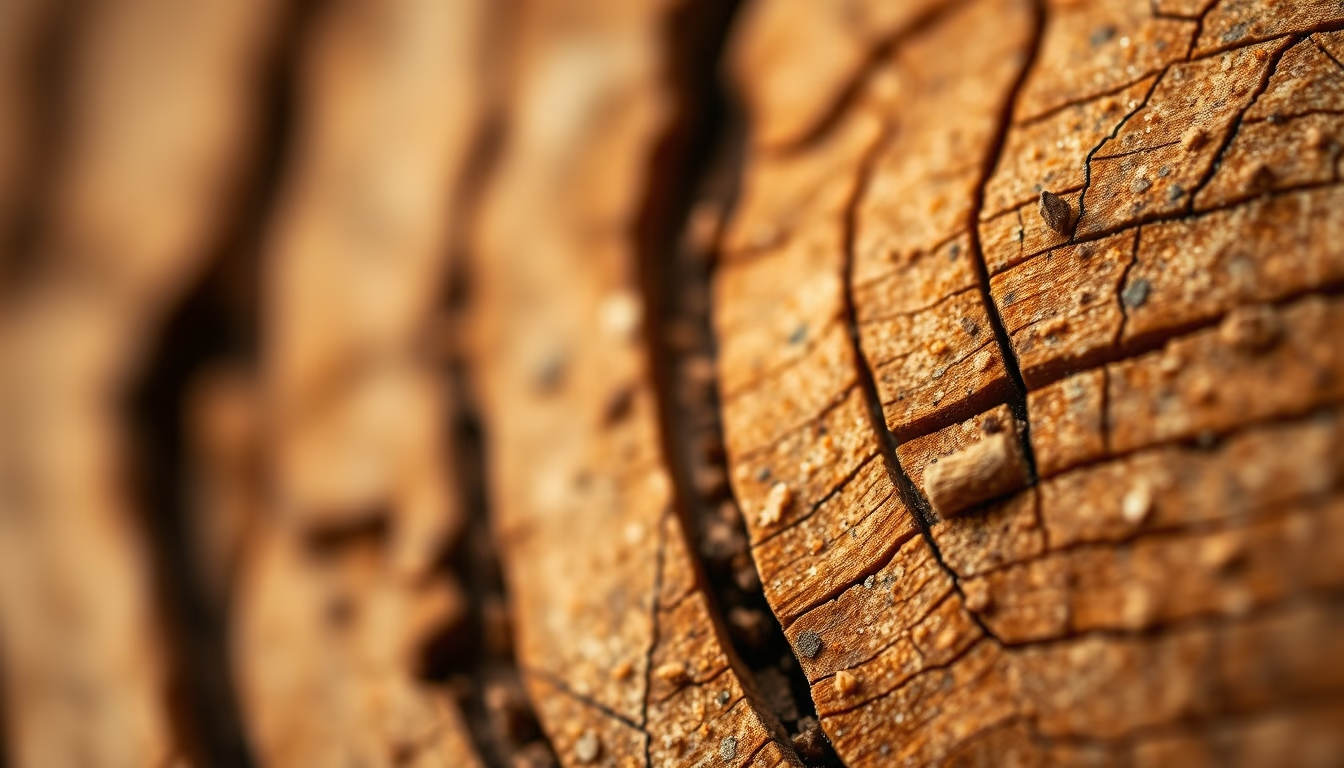
Macro photography of wood grain reveals unique natural patterns resulting from annual tree growth and fiber arrangement.
About this subject
Wood grain is formed by the concentric growth of trees, producing annual rings that vary in thickness depending on seasonal and climate conditions. Each tree species has a characteristic pattern: conifers show straight and uniform grains, while hardwoods display more complex designs, such as the famous veins of mahogany and oak. This diversity results from the arrangement of cellulose fibers, which can be straight, wavy, or interlocked.
In fine art photography, extreme close-ups of grain transform microscopic details into abstract compositions. Photographers like Edward Weston established wood as a subject, exploring textures that resemble landscapes or natural watermarks. The contrast between light bands (earlywood) and dark bands (latewood) creates visual depth, enhanced by raking light.
Beyond aesthetics, the study of grain is essential for woodworking. Fiber orientation determines strength and workability, influencing everything from musical instrument manufacturing to shipbuilding. In species like pine, knots and twisted fibers create patterns called "bird's eye," highly valued in luxury furniture.
Culturally, wood grain is associated with longevity and the cyclical nature of life. In many traditions, knotted wood symbolizes wisdom. Macro photography, by magnifying these details, invites viewers to contemplate the hidden beauty in everyday objects, transforming an ordinary log into art.
Frequently Asked Questions
What causes different wood grain patterns?
Patterns are determined by fiber arrangement, influenced by species, age, growing conditions, and genetics. For example, wavy grains occur in trees that grow on sloped terrain.
What is the difference between straight grain and spiral grain?
Straight grain has fibers running parallel to the trunk axis, common in conifers. Spiral grain has fibers twisting in a helix, offering greater strength but making mechanical processing more difficult.
Why does walnut wood have such striking grain?
Walnut (Juglans spp.) features dark, contrasting veins due to high concentrations of tannins and extractives. Its slow growth produces fine, dense rings, creating a visually rich pattern highly valued in fine woodworking.
Direct URL
https://pub-c7d6a6ea828543ac903a74a341ccb2e1.r2.dev/imagens/wood-grain-macro-fine-art-photography-p3.avifHow to credit
Include a visible link back to UtilizAí. Copy one of the snippets below:
<a href="https://xn--utiliza-eza.com/en/midia/imagens/wood-grain-macro-fine-art-photography-p3">Wood grain macro</a> by <a href="https://xn--utiliza-eza.com">UtilizAí</a>, licensed under <a href="https://creativecommons.org/licenses/by/4.0/">CC BY 4.0</a>.
[Wood grain macro](https://xn--utiliza-eza.com/en/midia/imagens/wood-grain-macro-fine-art-photography-p3) by [UtilizAí](https://xn--utiliza-eza.com), CC BY 4.0
License: CC-BY-4.0