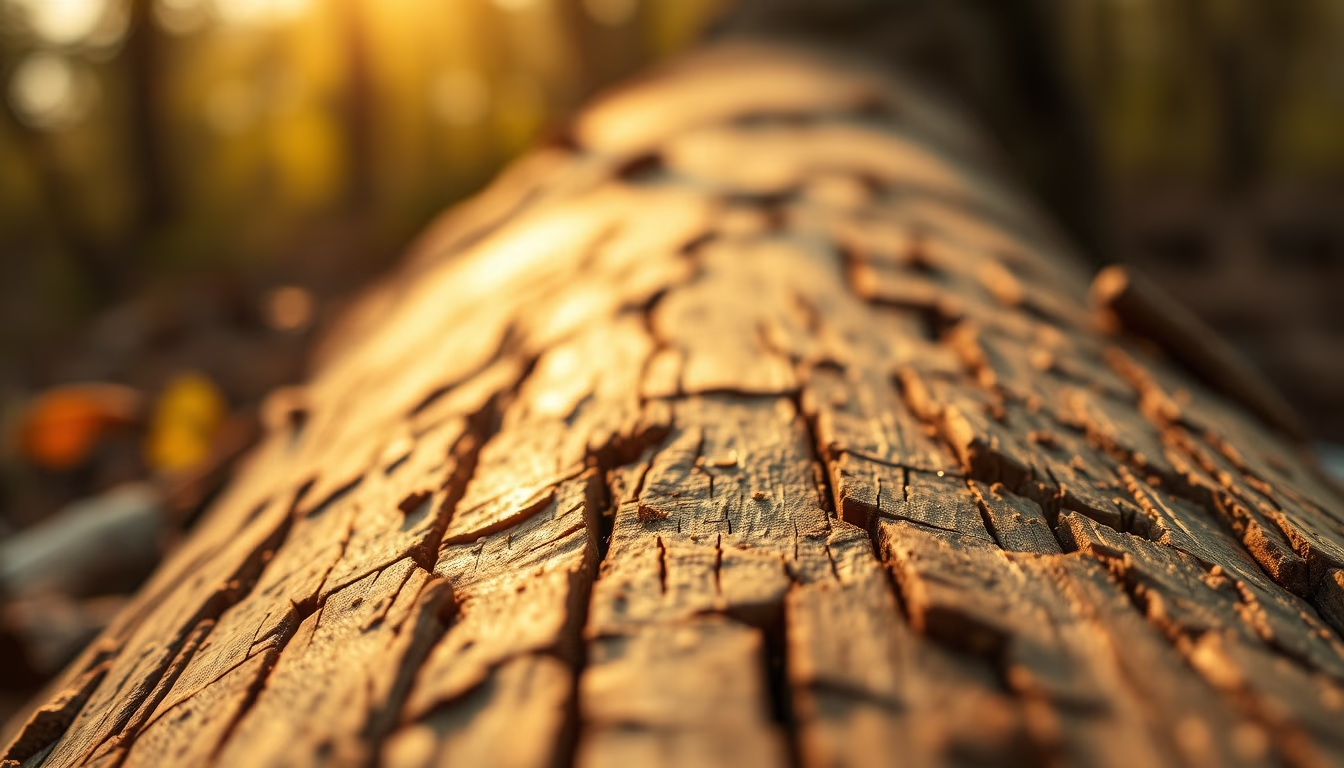
Tree bark texture
1344×768 · AVIF · CC BY 4.0

Tree bark texture as inspiration for textile patterns and fashion design, merging natural elements with high couture.
About this subject
Tree bark, the outermost protective layer of woody plants, serves as both a biological shield and an aesthetic reference. Its texture, from the deep furrows of oak to the peeling sheets of birch, is determined by the cork cambium and the accumulation of dead cells rich in suberin and tannins. This natural surface has been a recurring motif in fashion since the 1960s, when designers began experimenting with organic textures through weaving, embossing, and digital printing. In editorial high fashion, bark textures are often used as backgrounds or structural elements in garments, creating a dialogue between raw nature and haute couture. The trending-2026 macro trend points towards a growing demand for biomimetic fabrics that replicate bark's functional benefits: durability, water resistance, and breathability. Brands like Stella McCartney have explored cork-based vegan leather, while Brazilian designers incorporate native tree species such as pau-brasil and jequitibá into prints. The global shift toward sustainability has also elevated tree bark as a zero-waste resource: in Portugal, cork bark is harvested without felling trees, and in Japan, the art of kawari (using bark as textile) dates back centuries. For editorial shoots, the high-contrast pattern of bark adds visual depth and a tactile illusion, often photographed under dramatic lighting to exaggerate ridges and crevices.
Frequently Asked Questions
Why is tree bark texture used in fashion editorials?
Its organic, irregular pattern adds visual depth and contrasts with smooth fabrics, creating a refined natural aesthetic. Sustainability trends also favor biomimetic and natural materials.
Which tree species have the most striking bark textures?
Oak (deep furrows), birch (peeling papery layers), cork oak (corky, spongy), and jequitibá-rosa (large fissured plates). These are often macro-photographed for textile design.
How does tree bark inspire tech fabrics?
Scientists mimic bark's cellular structure to develop breathable, water-resistant, or insulating textiles. For example, 3D-printed fabrics replicate exact ridge patterns, and cork bark provides natural vegan leather.
Direct URL
https://pub-c7d6a6ea828543ac903a74a341ccb2e1.r2.dev/imagens/tree-bark-texture-high-fashion-editorial-p6.avifHow to credit
Include a visible link back to UtilizAí. Copy one of the snippets below:
<a href="https://xn--utiliza-eza.com/en/midia/imagens/tree-bark-texture-high-fashion-editorial-p6">Tree bark texture</a> by <a href="https://xn--utiliza-eza.com">UtilizAí</a>, licensed under <a href="https://creativecommons.org/licenses/by/4.0/">CC BY 4.0</a>.
[Tree bark texture](https://xn--utiliza-eza.com/en/midia/imagens/tree-bark-texture-high-fashion-editorial-p6) by [UtilizAí](https://xn--utiliza-eza.com), CC BY 4.0
License: CC-BY-4.0