Hydroponic vertical farm
1344×768 · AVIF · CC BY 4.0
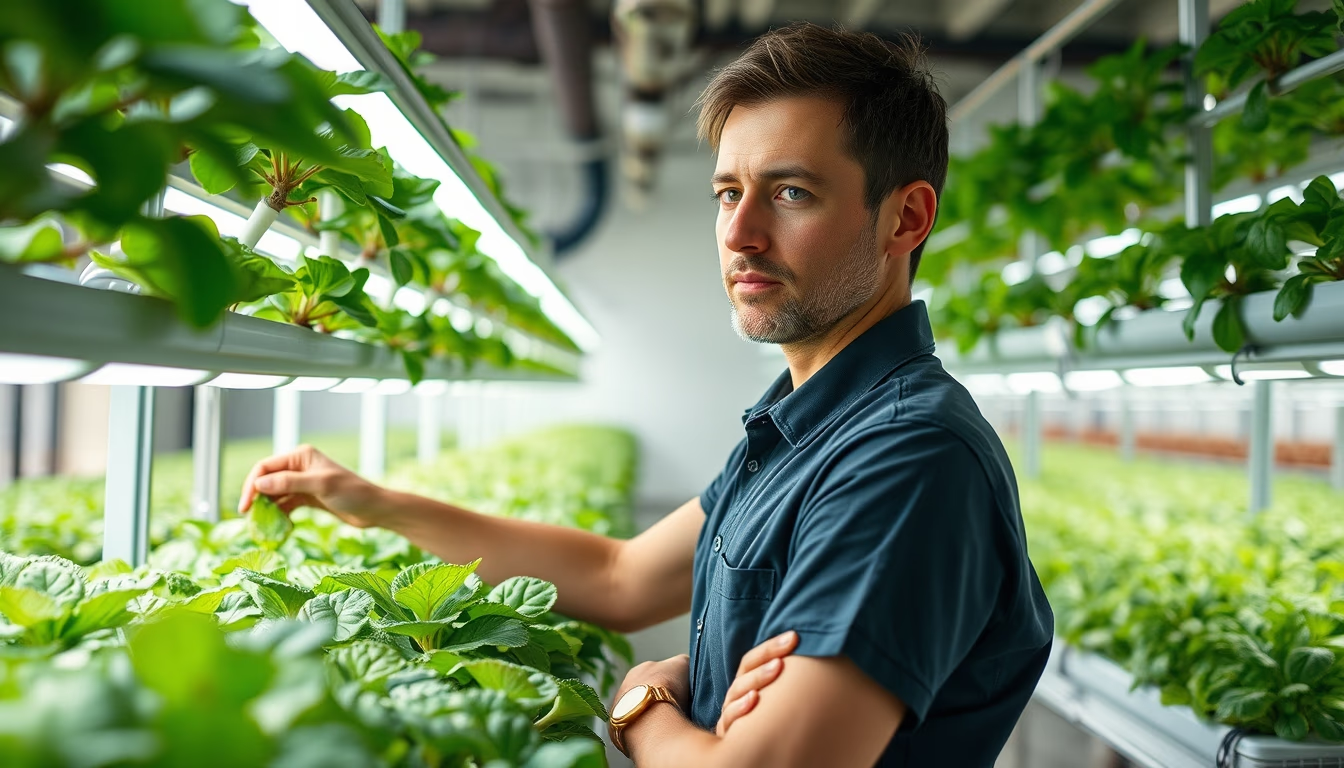
Hydroponic vertical farm combines soilless cultivation with vertical stacking, enabling intensive food production in urban areas with water efficiency exceeding 90%.
About this subject
A hydroponic vertical farm is an agricultural production system that uses stacked layers to grow plants in nutrient-rich water solutions instead of soil. Each level features adjustable spectrum LED lighting, automated temperature and humidity control, and water recirculation systems. This technology enables the cultivation of vegetables, herbs, and microgreens in controlled environments, independent of external weather conditions.
A key advantage is water efficiency: while conventional agriculture consumes about 70% of global freshwater, hydroponic vertical farming uses up to 95% less water, as it is continuously recycled. Additionally, pesticide-free production and year-round harvesting make vertical farms a promising solution for urban food security. Companies like AeroFarms in the US and Infarm in Europe operate large facilities, while Brazilian startups such as Pink Farms and 100%Livre are also adopting the model.
In Brazil, adoption remains limited due to high electricity costs for artificial lighting and significant upfront investments. However, cities like São Paulo and Rio de Janeiro have seen small vertical farms emerge in repurposed warehouses, supplying fresh leafy greens to local restaurants and markets. The global trend suggests that with declining LED prices and advances in automation, economic viability will improve.
The technology also addresses environmental challenges by reducing the carbon footprint associated with food transport (food miles). By locating production near consumption, hydroponic vertical farms minimize long-distance logistics and enhance urban food resilience. Future developments are expected to integrate renewable energy sources like solar panels and to cultivate higher-value crops such as medicinal plants and ornamentals.
Frequently Asked Questions
How does a hydroponic vertical farm work?
Plants grow in vertical layers inside a controlled environment. Instead of soil, roots are submerged or exposed to a thin film of nutrient-rich water. LED lights replace sunlight, and sensors monitor temperature, humidity, and pH to optimize growth.
What are the main advantages of this system?
Water savings of up to 95%, pesticide-free production, year-round harvesting, and reduced distance between production and consumption, lowering transport emissions. It also enables cultivation in urban areas with limited space.
Is this technology viable in Brazil?
It still faces challenges such as high electricity costs and initial investment, but successful examples exist in São Paulo and Rio de Janeiro. With declining LED prices and incentives for urban agriculture, viability is expected to increase.
Direct URL
https://pub-c7d6a6ea828543ac903a74a341ccb2e1.r2.dev/imagens/hydroponic-vertical-farm-documentary-photography-p6.avifHow to credit
Include a visible link back to UtilizAí. Copy one of the snippets below:
<a href="https://xn--utiliza-eza.com/en/midia/imagens/hydroponic-vertical-farm-documentary-photography-p6">Hydroponic vertical farm</a> by <a href="https://xn--utiliza-eza.com">UtilizAí</a>, licensed under <a href="https://creativecommons.org/licenses/by/4.0/">CC BY 4.0</a>.
[Hydroponic vertical farm](https://xn--utiliza-eza.com/en/midia/imagens/hydroponic-vertical-farm-documentary-photography-p6) by [UtilizAí](https://xn--utiliza-eza.com), CC BY 4.0
License: CC-BY-4.0