Water droplet on leaf
1344×768 · AVIF · CC BY 4.0
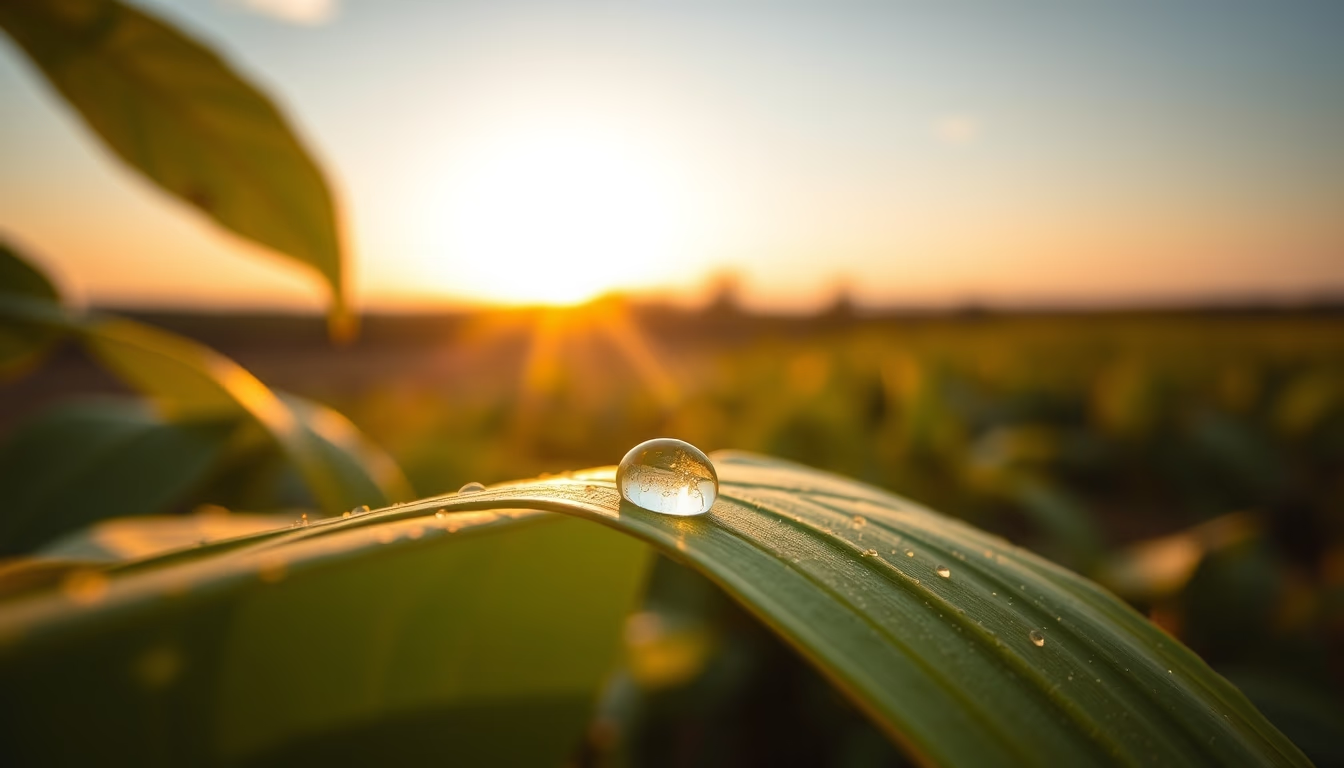
A water droplet on a leaf reveals phenomena of surface tension, capillarity, and light refraction in nature.
About this subject
The formation of water droplets on leaves is a microscopic spectacle combining physics, botany, and aesthetics. When water contacts a leaf surface, two forces come into play: cohesion between water molecules and adhesion between water and the leaf surface. On hydrophobic leaves, such as those of lotus and many tropical plants, adhesion is low, causing water to form nearly perfect spheres. This phenomenon, known as the lotus effect, also gives leaves self-cleaning properties, as droplets roll off and carry dust particles. On hydrophilic leaves, water spreads into thin films, facilitating absorption. Droplets act as tiny lenses: the curvature of the water surface refracts light, potentially magnifying underlying cellular structures or even causing burns on sunny days if the droplet acts as a magnifying glass. In agriculture, understanding how water interacts with leaves aids in developing more effective agrochemicals and sustainable irrigation. Additionally, morning dew, formed by condensation, is vital for many plants in arid ecosystems, providing essential moisture before the heat of the day. Macro photographers explore these droplets to capture reflections of the environment, such as an inverted landscape, due to the spherical surface that inverts the image. In 2024, biomimetic studies inspired by hydrophobic leaf surfaces advanced the creation of self-cleaning materials and atmospheric water collection.
Frequently Asked Questions
Why do water droplets form spherical shapes on leaves?
Due to surface tension and the hydrophobicity of many leaves, water minimizes its surface area, forming spheres. The leaf surface has waxes or microstructures that repel water, increasing the contact angle.
How can a water droplet act as a lens?
The curvature of the droplet acts as a convex lens, refracting light and focusing it at a point. This can magnify tiny details or, under intense sunlight, cause burn damage to the leaf.
What is the lotus effect and why is it important?
The lotus effect is the ability of hydrophobic surfaces to cause water to form droplets that roll off, carrying dirt away. It is important for plant self-cleaning and has inspired technologies like waterproof paints and self-cleaning surfaces.
Direct URL
https://pub-c7d6a6ea828543ac903a74a341ccb2e1.r2.dev/imagens/water-droplet-on-leaf-travel-photography-p5.avifHow to credit
Include a visible link back to UtilizAí. Copy one of the snippets below:
<a href="https://xn--utiliza-eza.com/en/midia/imagens/water-droplet-on-leaf-travel-photography-p5">Water droplet on leaf</a> by <a href="https://xn--utiliza-eza.com">UtilizAí</a>, licensed under <a href="https://creativecommons.org/licenses/by/4.0/">CC BY 4.0</a>.
[Water droplet on leaf](https://xn--utiliza-eza.com/en/midia/imagens/water-droplet-on-leaf-travel-photography-p5) by [UtilizAí](https://xn--utiliza-eza.com), CC BY 4.0
License: CC-BY-4.0