Water droplet on leaf
1344×768 · AVIF · CC BY 4.0
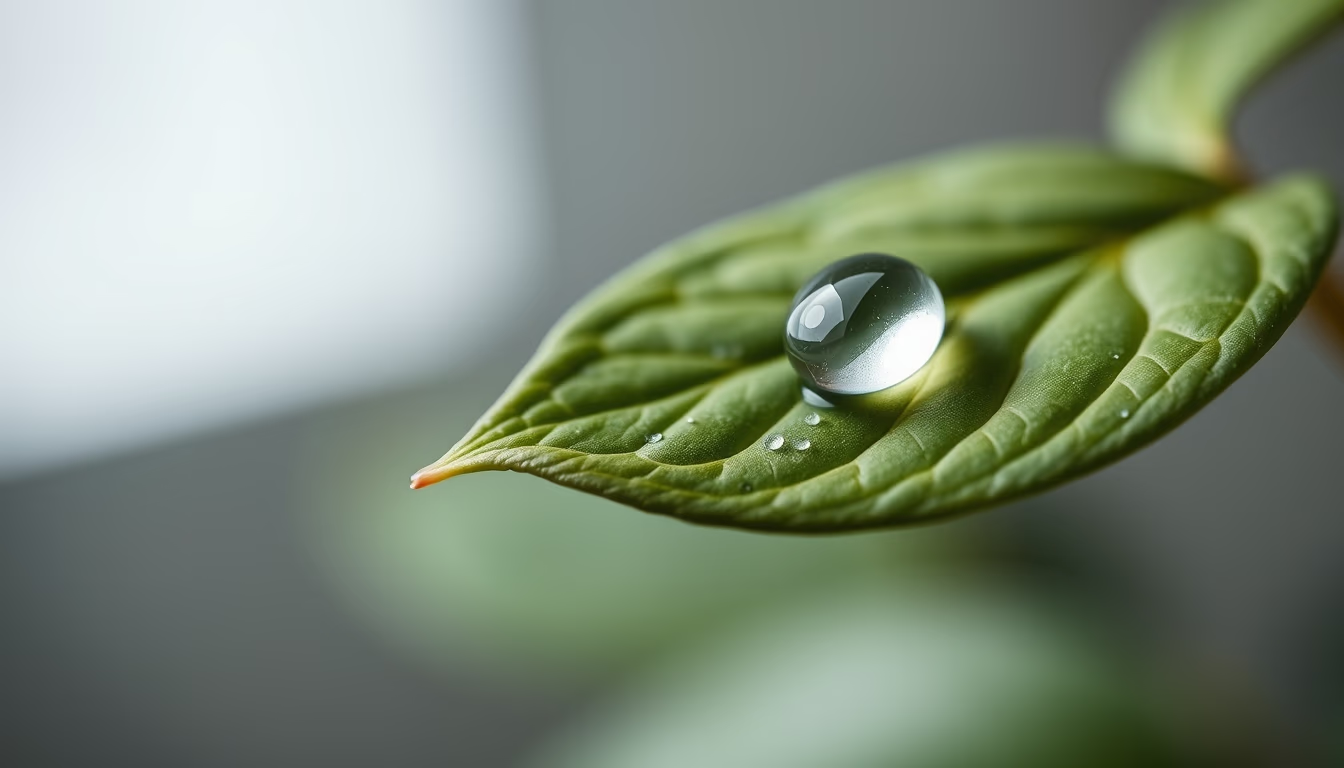
Water droplets on leaves reveal physical and biological phenomena, from surface tension to guttation, in a balance between plant and environment.
About this subject
Water droplets on leaves form through two main processes: condensation of atmospheric water vapor, creating dew, or guttation, the exudation of xylem sap from leaf tips. While dew is common on cold, humid mornings, guttation occurs in plants with high nocturnal transpiration, such as grasses and some herbs, often when soil is moist and air humidity is high.
The spherical shape of droplets results from water's surface tension, which minimizes surface area. This tension is influenced by waxes and cuticles on the leaf surface. On hydrophobic leaves, like lotus, droplets roll off easily, carrying dust particles, the lotus effect. Hydrophilic leaves allow the droplet to spread into a thin film.
Ecologically, droplets on leaves are vital for epiphytic plants like bromeliads, which absorb water directly through their foliage. In macro photography, droplets act as natural lenses, magnifying textures and creating reflections. The 2026 trend of minimalist compositions highlights the subtle beauty of these elements, valuing simplicity and nature's precision.
Interestingly, droplets may contain dissolved nutrients or fungal pathogens, affecting plant health. Scientists study their dynamics to understand disease spread and develop self-cleaning surfaces. In art, the combination of water and leaf inspires from Japanese haiku to contemporary installations.
Frequently Asked Questions
Why are water droplets on leaves spherical?
Droplets become spherical due to water's surface tension, which minimizes surface area. The waxy leaf coating also influences, either repelling or spreading the droplet.
What is the difference between dew and guttation?
Dew forms by condensation of atmospheric moisture on cool surfaces. Guttation is the exudation of liquid water from leaves through specialized pores (hydathodes), occurring when the plant absorbs more water than it transpires.
How to photograph water droplets on leaves with a minimalist composition?
Use a macro lens, neutral background, and side lighting. Focus on the droplet and leaf texture. Utilize reflections and droplets as natural lenses. Simple framing enhances the contrast between water and foliage.
Direct URL
https://pub-c7d6a6ea828543ac903a74a341ccb2e1.r2.dev/imagens/water-droplet-on-leaf-minimalist-composition-p1.avifHow to credit
Include a visible link back to UtilizAí. Copy one of the snippets below:
<a href="https://xn--utiliza-eza.com/en/midia/imagens/water-droplet-on-leaf-minimalist-composition-p1">Water droplet on leaf</a> by <a href="https://xn--utiliza-eza.com">UtilizAí</a>, licensed under <a href="https://creativecommons.org/licenses/by/4.0/">CC BY 4.0</a>.
[Water droplet on leaf](https://xn--utiliza-eza.com/en/midia/imagens/water-droplet-on-leaf-minimalist-composition-p1) by [UtilizAí](https://xn--utiliza-eza.com), CC BY 4.0
License: CC-BY-4.0