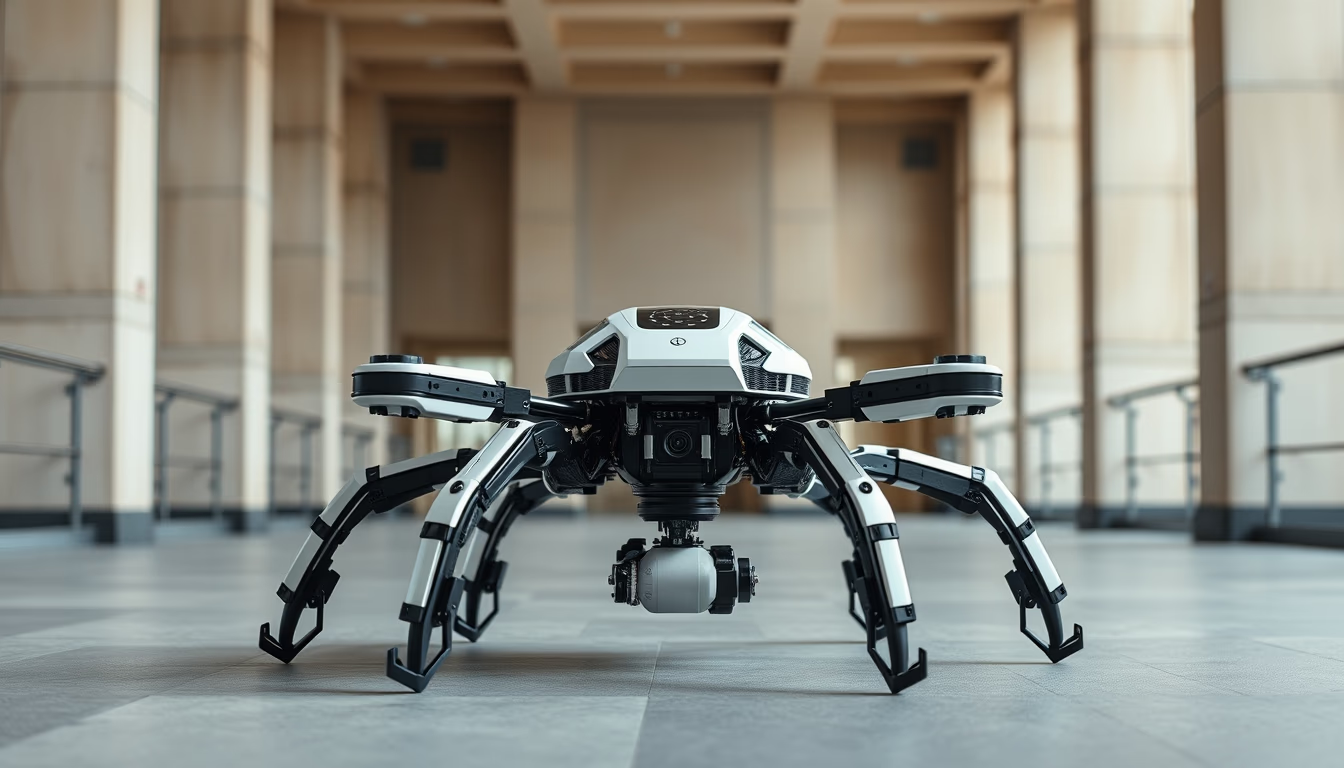
Warehouse robot agv
1344×768 · AVIF · CC BY 4.0

O AGV (veículo guiado automatizado) é um robô móvel usado para transportar materiais em armazéns e fábricas, otimizando a logística.
Sobre o tema
O AGV, sigla para Automated Guided Vehicle (veículo guiado automatizado), é um robô móvel projetado para transportar cargas em ambientes industriais e de armazenagem. Diferente de robôs autônomos mais avançados, os AGVs seguem caminhos pré-definidos, utilizando marcações no chão, fios magnéticos, lasers ou sensores de visão para navegar. Eles são amplamente utilizados em centros de distribuição, fábricas automotivas e almoxarifados para mover paletes, caixas e outros materiais pesados, reduzindo custos com mão de obra e aumentando a eficiência.
A origem dos AGVs remonta à década de 1950, quando o primeiro sistema foi desenvolvido para transportar mercadorias em uma fábrica de geleias nos Estados Unidos. Desde então, a tecnologia evoluiu significativamente. Modelos modernos podem carregar cargas de até várias toneladas, operar 24 horas por dia e integrar-se a sistemas de gestão de armazéns (WMS). Empresas como Amazon, Alibaba e DHL usam milhares de AGVs em seus centros logísticos para acelerar a separação e o transporte de pacotes.
A navegação dos AGVs pode ser baseada em fitas adesivas refletoras, marcadores magnéticos ou, em versões mais recentes, SLAM (Simultaneous Localization and Mapping) usando LIDAR e câmeras. Essa última tecnologia permite maior flexibilidade, pois o robô constrói um mapa dinâmico do ambiente e desvia de obstáculos. No Brasil, grandes varejistas e montadoras têm adotado AGVs para modernizar operações, especialmente em setores como automotivo e alimentos.
Curiosamente, os AGVs não devem ser confundidos com os AMRs (Autonomous Mobile Robots), que não precisam de guias fixas e tomam decisões autônomas. Enquanto os AGVs são mais econômicos e determinísticos, os AMRs são mais adaptáveis. Ambos fazem parte da chamada Indústria 4.0, transformando a logística com automação e inteligência artificial.
Perguntas frequentes
Qual a diferença entre AGV e AMR?
O AGV segue rotas fixas determinadas por marcações físicas (fios, fitas, etc.), enquanto o AMR é autônomo, navega usando mapas dinâmicos e sensores, e pode desviar de obstáculos sem intervenção.
Quais setores mais utilizam AGVs?
Os setores mais comuns são logística (centros de distribuição), automotivo (transporte de peças em linhas de montagem), alimentos e bebidas, farmacêutico e eletrônicos.
Um AGV pode operar sem supervisão humana?
Sim, a maioria dos AGVs opera de forma autônoma após configurada a rota, mas ainda requer manutenção periódica e monitoramento remoto para garantir segurança e eficiência.
URL direta
https://pub-c7d6a6ea828543ac903a74a341ccb2e1.r2.dev/imagens/warehouse-robot-agv-studio-editorial-portrait-p7.avifComo creditar
Inclua um link visível de volta pro UtilizAí. Copie um dos snippets abaixo:
<a href="https://xn--utiliza-eza.com/midia/imagens/warehouse-robot-agv-studio-editorial-portrait-p7">Warehouse robot agv</a> by <a href="https://xn--utiliza-eza.com">UtilizAí</a>, licensed under <a href="https://creativecommons.org/licenses/by/4.0/">CC BY 4.0</a>.
[Warehouse robot agv](https://xn--utiliza-eza.com/midia/imagens/warehouse-robot-agv-studio-editorial-portrait-p7) by [UtilizAí](https://xn--utiliza-eza.com), CC BY 4.0
Licença: CC-BY-4.0