Bipedal robot walking
1344×768 · AVIF · CC BY 4.0
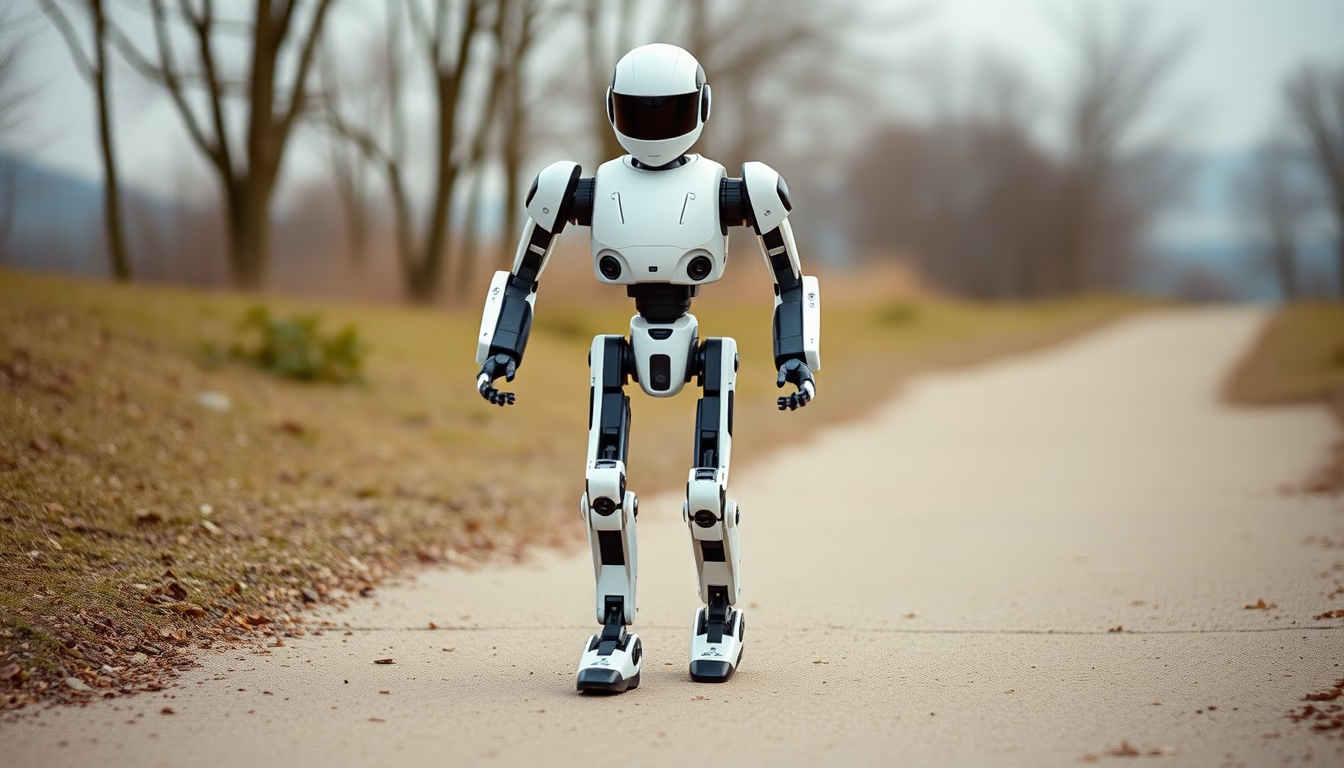
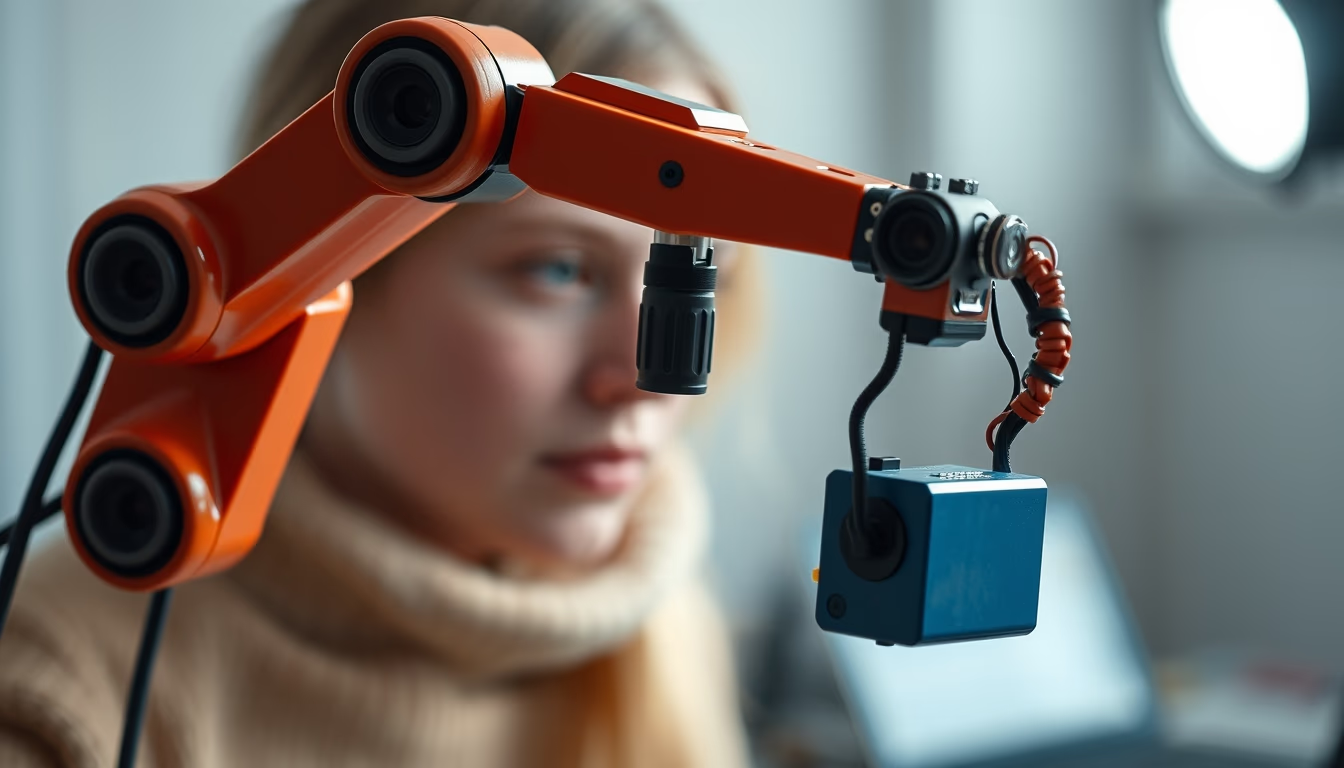
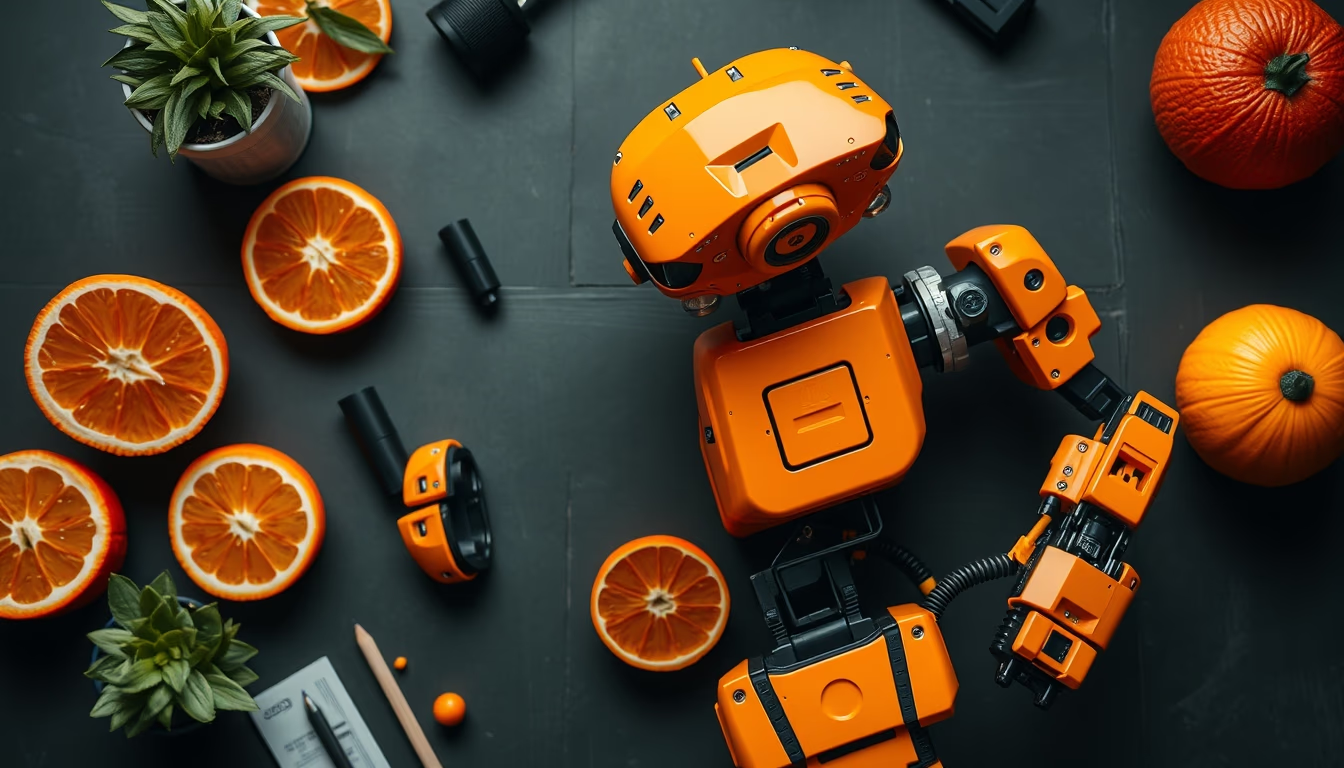
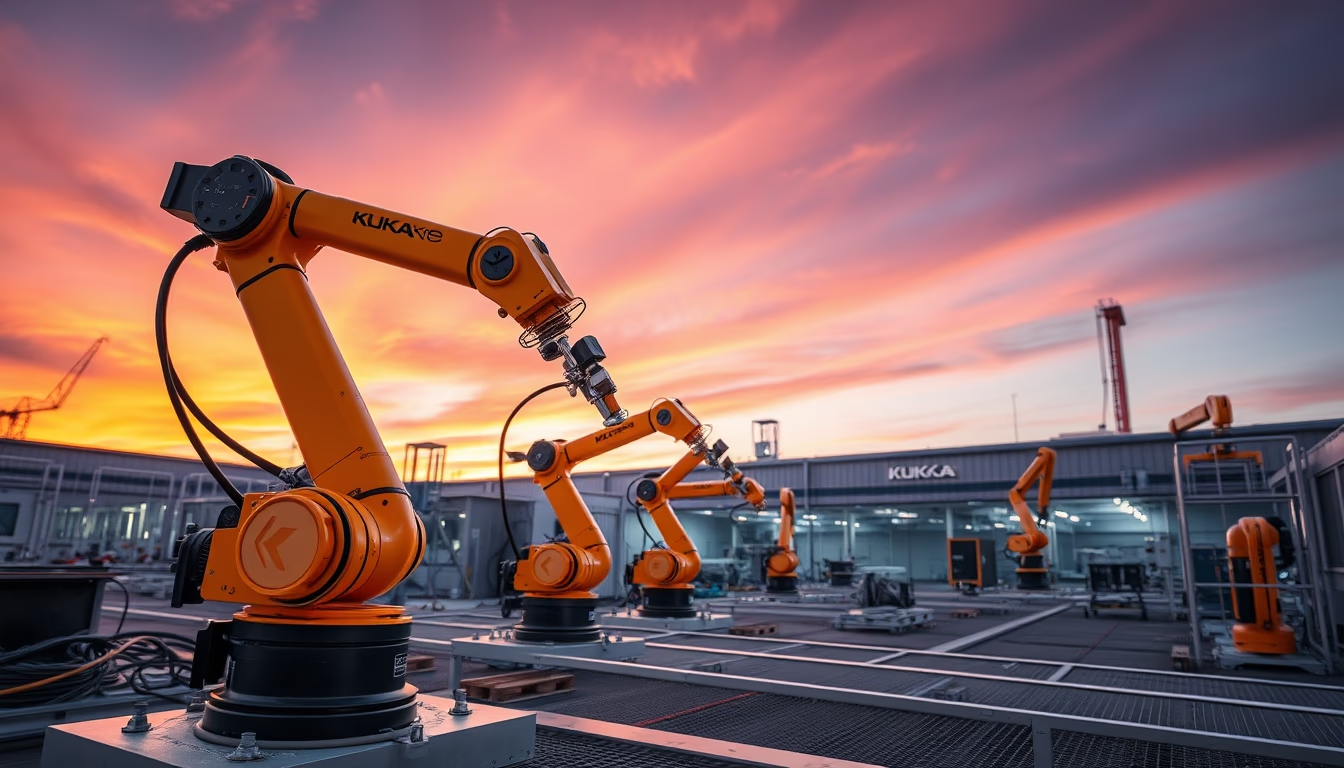
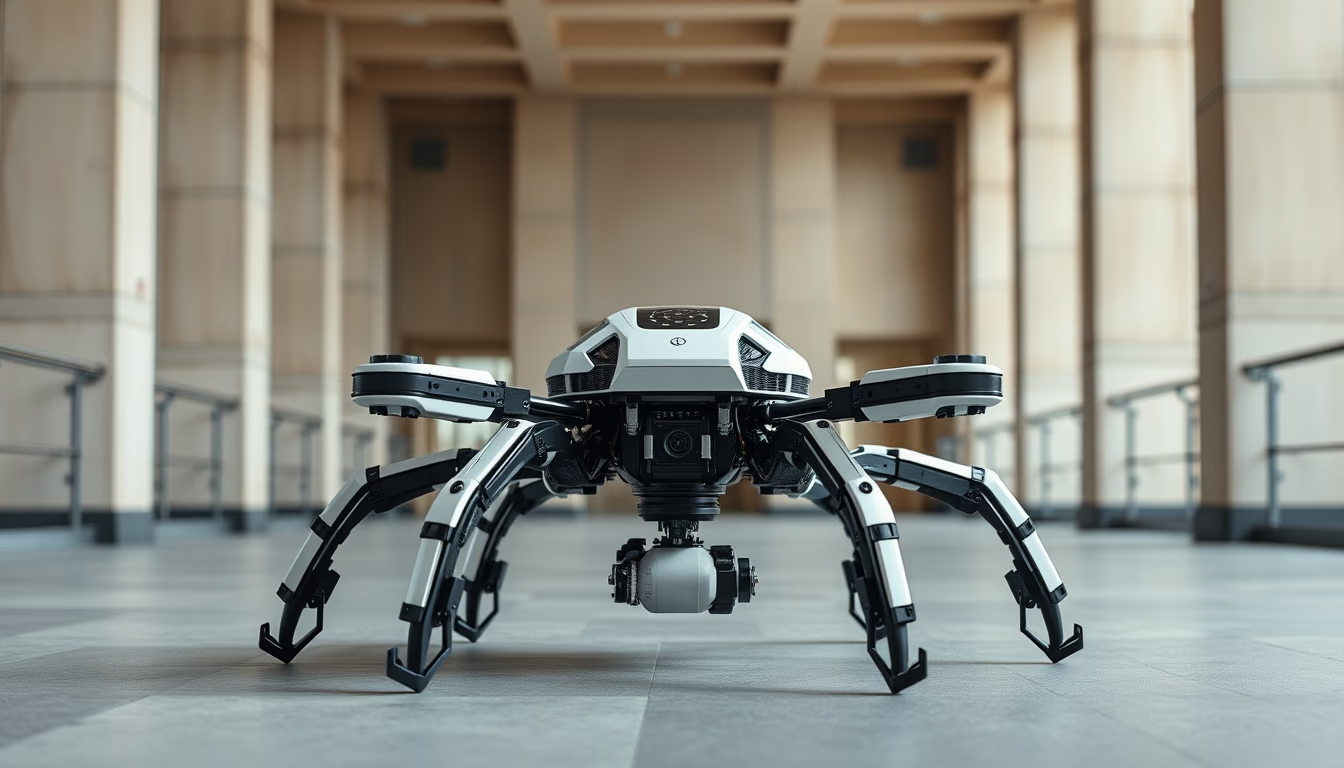
Bipedal robots mimic human locomotion, combining actuators, sensors, and real-time control to maintain balance.
About this subject
Bipedal locomotion is one of robotics' greatest challenges. Unlike wheeled or tracked robots, a bipedal robot must maintain dynamic balance while shifting its center of mass with each step. Early prototypes emerged in the 1980s, notably Honda's ASIMO, launched in 2000, which could walk, climb stairs, and even run. Today, companies like Boston Dynamics (Atlas) and universities such as ETH Zurich (ANYmal) advance with reinforcement learning algorithms and predictive models. Controlling a bipedal robot involves inertial measurement units (IMUs), joint encoders, and cameras for terrain mapping. Electric or hydraulic actuators generate precise torque. A critical challenge is the gait's single-support and double-support phases, requiring continuous torque adjustments. Beyond flat terrain, bipedal robots must handle obstacles, slopes, and uneven surfaces. Recent research uses virtual environment simulations to train control policies before transferring them to real hardware. Applications include rough-terrain exploration, domestic assistance, and smart prosthetics. Interestingly, an advanced bipedal robot like Atlas costs over US$1 million, while simpler versions like Nao (Aldebaran Robotics) cost around US$10,000. Energy efficiency remains low: a human uses about 100 W while walking, whereas a bipedal robot may consume 300 W to 1 kW.
Frequently Asked Questions
What was the first bipedal robot to walk stably?
The first bipedal robot to demonstrate stable walking was the WL-10RD, developed at Waseda University in Japan in 1984. It used hydraulic actuators and force sensors in the feet.
How long does it take to program a bipedal robot to walk?
Time varies greatly. With simulated reinforcement learning, a robot can learn to walk in a few hours of computer simulation. On real hardware, fine-tuning may take weeks.
Can bipedal robots fall? How do they protect themselves?
Yes, falls are common. Modern robots use fall recovery algorithms and protective motions, such as bending knees or extending arms to cushion impact. Some have airbags.
Direct URL
https://pub-c7d6a6ea828543ac903a74a341ccb2e1.r2.dev/imagens/bipedal-robot-walking-film-grain-authentic-p12.avifHow to credit
Include a visible link back to UtilizAí. Copy one of the snippets below:
<a href="https://xn--utiliza-eza.com/en/midia/imagens/bipedal-robot-walking-film-grain-authentic-p12">Bipedal robot walking</a> by <a href="https://xn--utiliza-eza.com">UtilizAí</a>, licensed under <a href="https://creativecommons.org/licenses/by/4.0/">CC BY 4.0</a>.
[Bipedal robot walking](https://xn--utiliza-eza.com/en/midia/imagens/bipedal-robot-walking-film-grain-authentic-p12) by [UtilizAí](https://xn--utiliza-eza.com), CC BY 4.0
License: CC-BY-4.0