Robot arm 3d printer
1344×768 · AVIF · CC BY 4.0
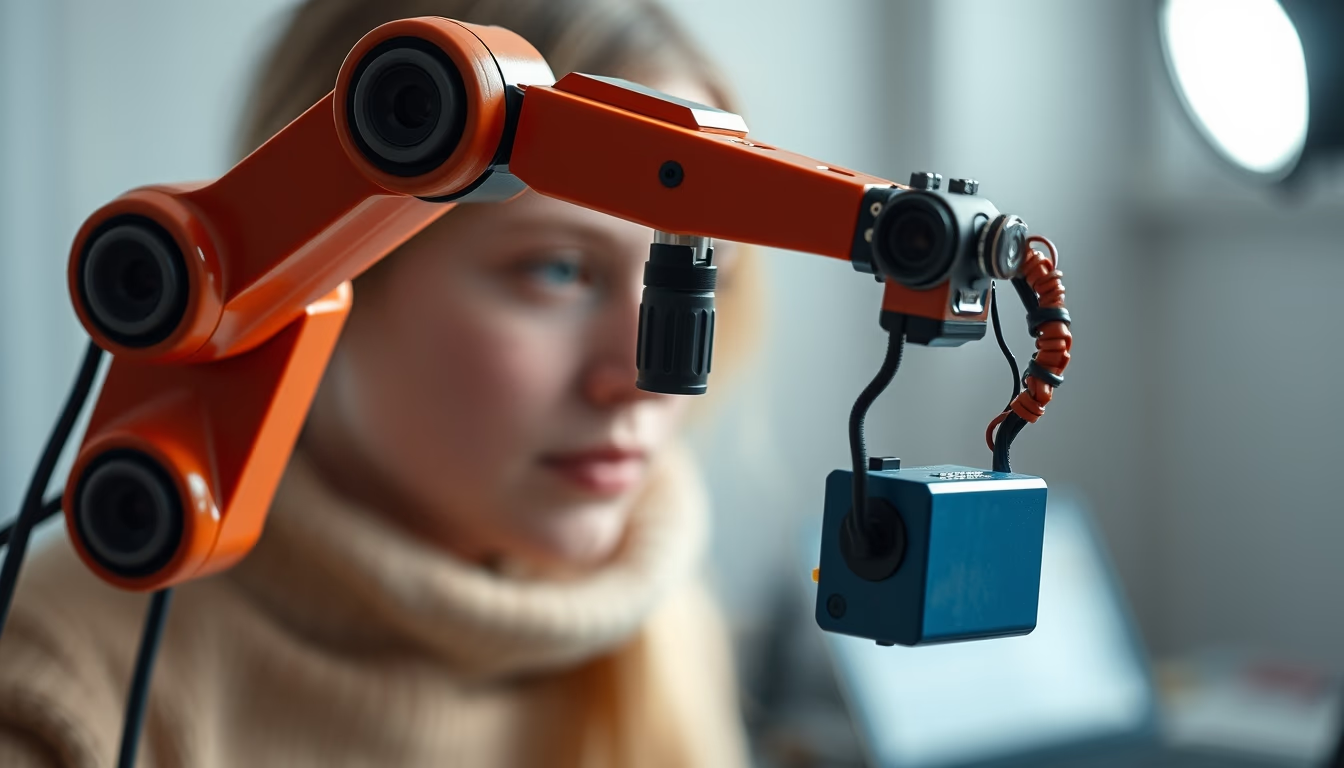
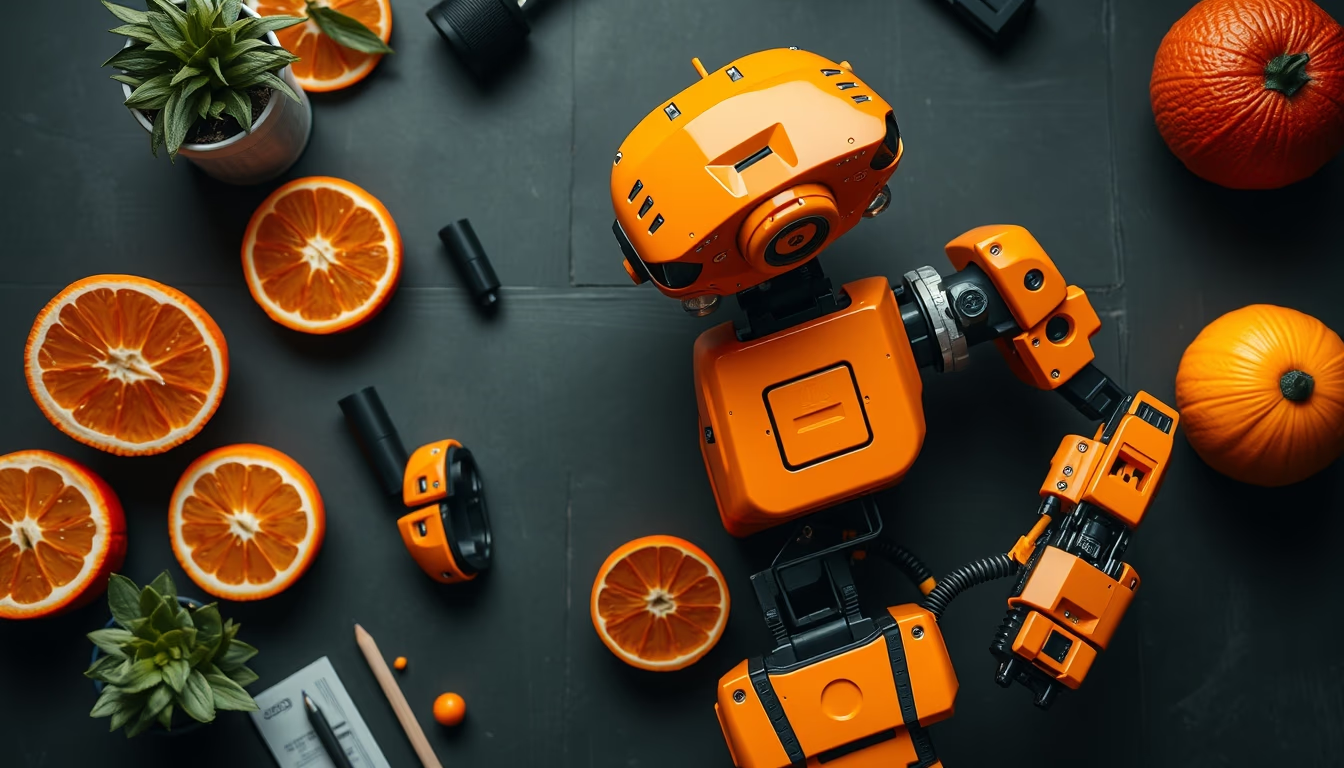
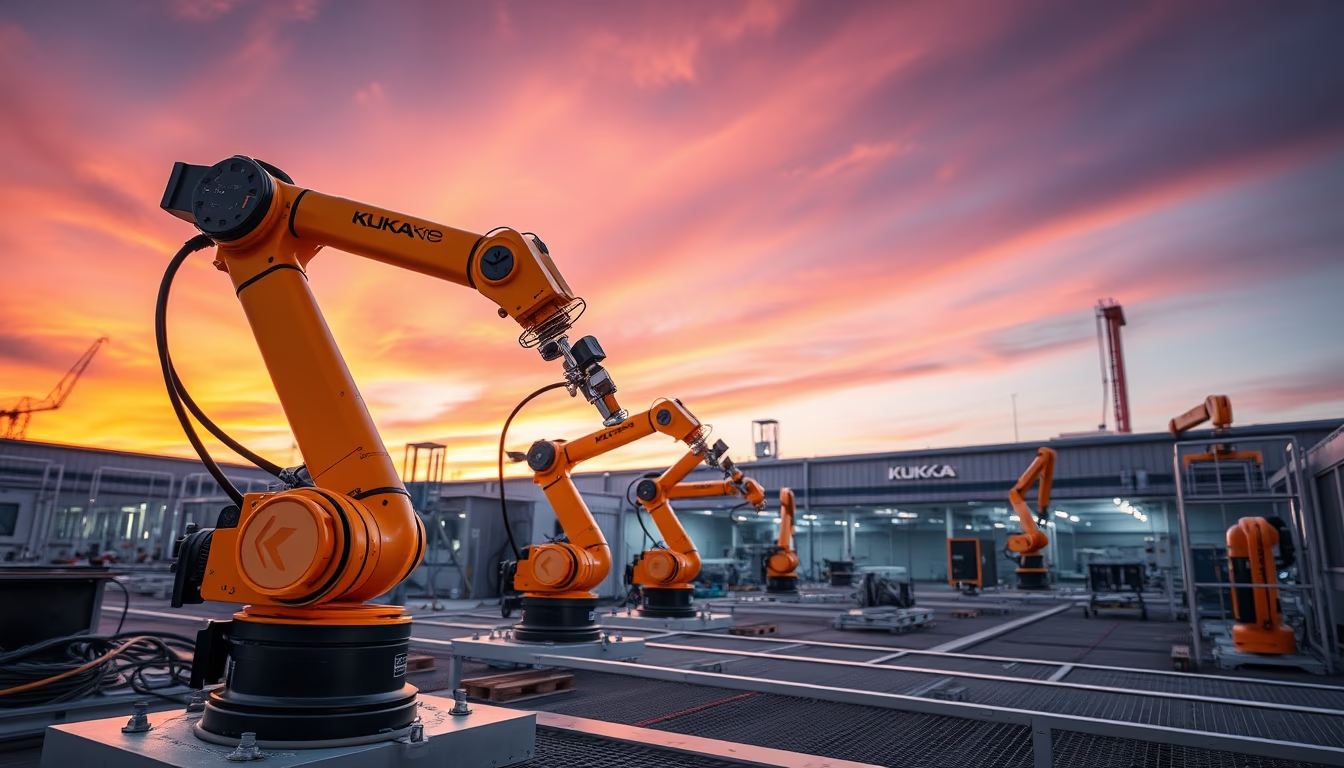
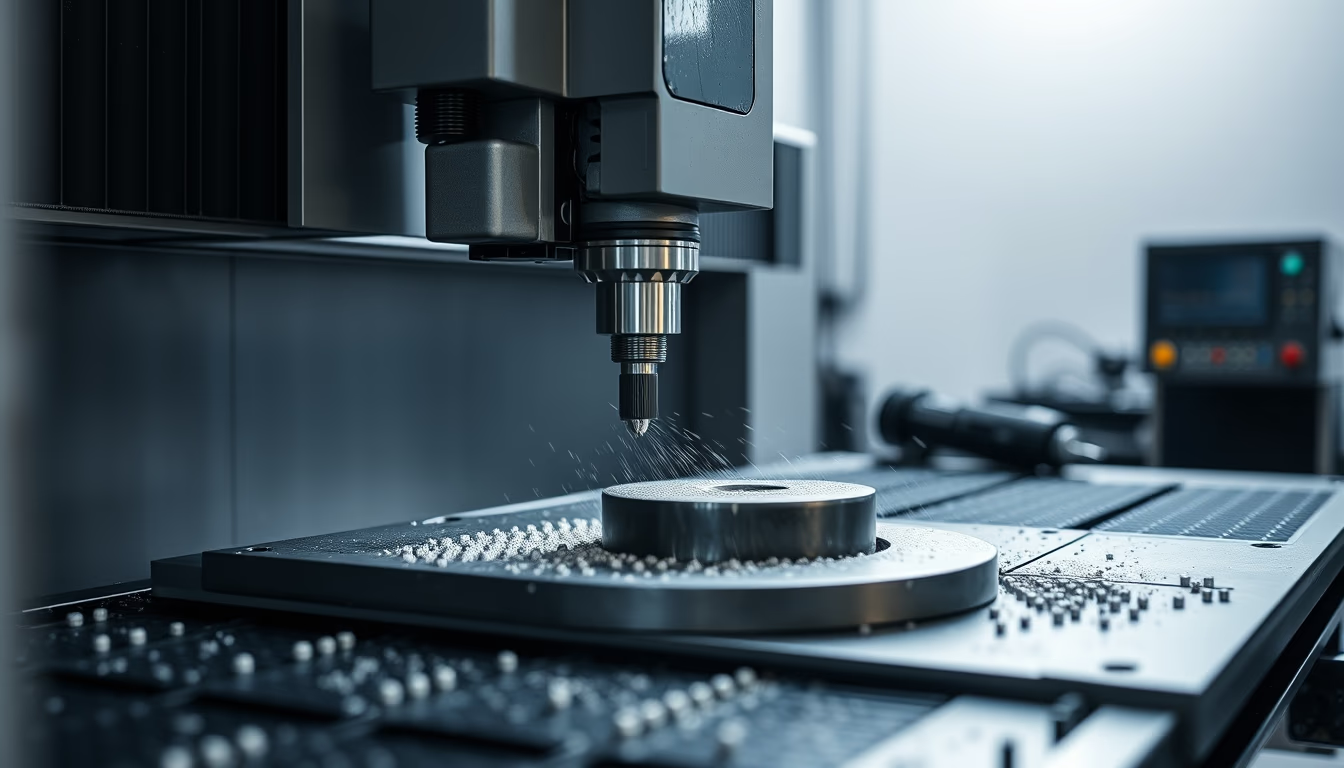
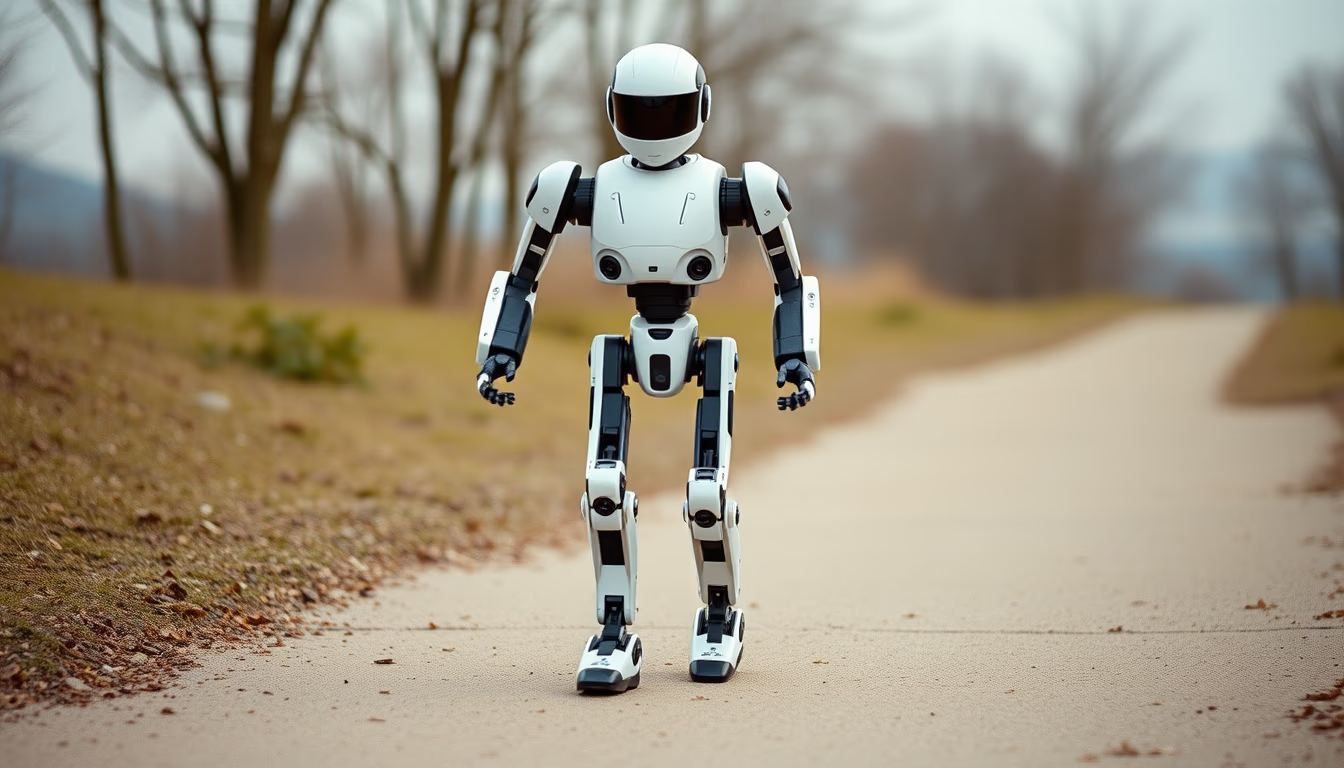
Robotic arms in 3D printing enable additive manufacturing of large structures with six-axis freedom, overcoming limitations of traditional Cartesian machines.
About this subject
Robotic arm 3D printers represent a significant evolution in additive manufacturing. Unlike conventional Cartesian printers that move along X, Y, and Z axes, articulated robots offer six degrees of freedom. This allows material deposition at any angle, building complex geometries without heavy supports, and even printing on curved or vertical surfaces. The technology is widely adopted in aerospace, automotive, and construction industries, where large-scale or organic-shaped parts are common.
Companies like KUKA, ABB, and Universal Robots supply arms that are adapted with extruders for plastic, concrete, or metal. In construction, robots such as the MX3D have printed stainless steel bridges. In the automotive industry, robotic arms produce full-scale molds and prototypes. A key advantage is the ability to print objects larger than the robot itself by combining arm movement with rail systems or mobile bases.
The process requires precise calibration and real-time trajectory control, often using specialized CAM software. Deposition rates can be slower than traditional methods, but reduced waste and the ability to print composite or recycled materials offset this. Recent research explores collaborative printing with multiple robots, further increasing scale and efficiency.
Frequently Asked Questions
How does a robotic arm improve 3D printing compared to Cartesian printers?
Robotic arms offer six axes of movement, enabling printing at various angles and complex geometries with less support, and building objects larger than the machine itself.
What materials can be used with robotic arm 3D printers?
Plastics like PLA and ABS, concrete, metals such as stainless steel and aluminum, as well as composites and recycled materials, depending on the extruder attached.
What are the main limitations of this technology?
High robot cost and complex calibration requirements. Printing speed tends to be slower, and control software demands expertise in robotic programming.
Direct URL
https://pub-c7d6a6ea828543ac903a74a341ccb2e1.r2.dev/imagens/robot-arm-3d-printer-lo-fi-disposable-camera-p12.avifHow to credit
Include a visible link back to UtilizAí. Copy one of the snippets below:
<a href="https://xn--utiliza-eza.com/en/midia/imagens/robot-arm-3d-printer-lo-fi-disposable-camera-p12">Robot arm 3d printer</a> by <a href="https://xn--utiliza-eza.com">UtilizAí</a>, licensed under <a href="https://creativecommons.org/licenses/by/4.0/">CC BY 4.0</a>.
[Robot arm 3d printer](https://xn--utiliza-eza.com/en/midia/imagens/robot-arm-3d-printer-lo-fi-disposable-camera-p12) by [UtilizAí](https://xn--utiliza-eza.com), CC BY 4.0
License: CC-BY-4.0