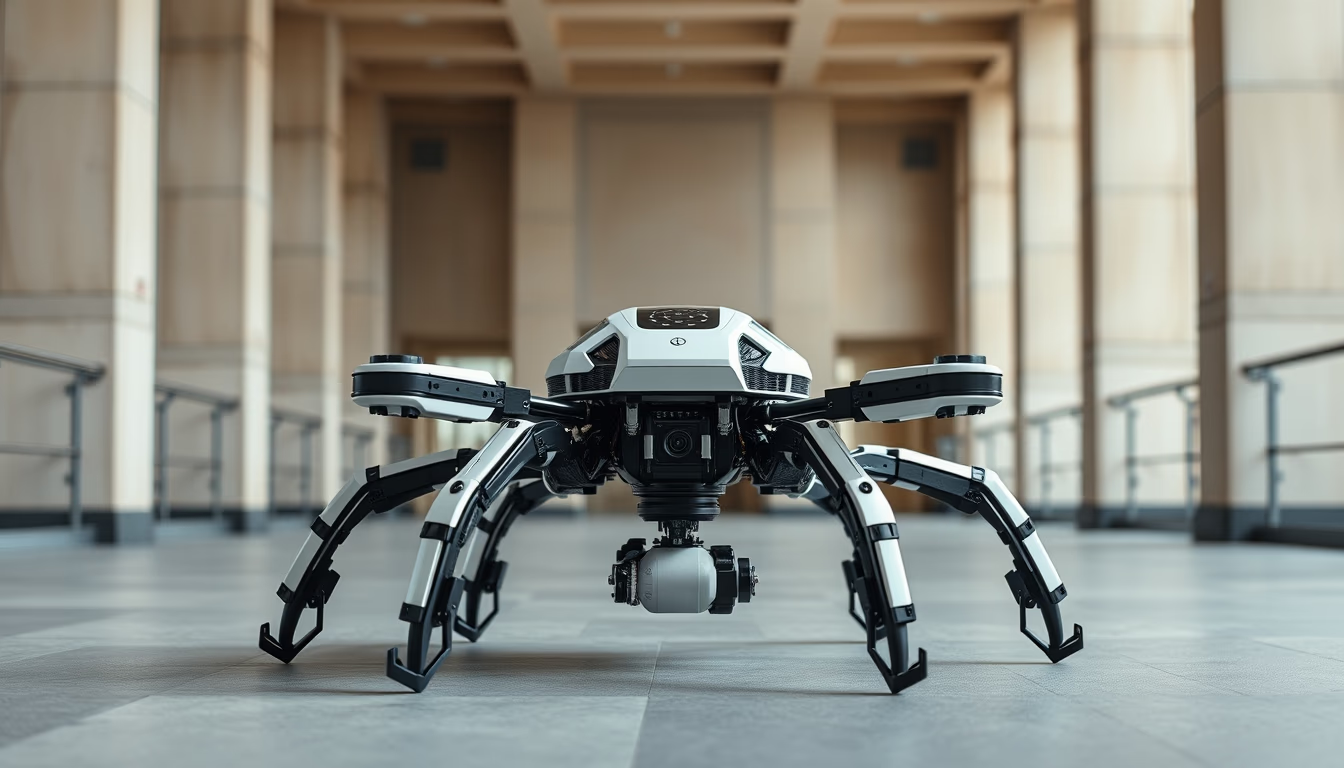
Warehouse robot agv
1344×768 · AVIF · CC BY 4.0

Automated Guided Vehicles (AGVs) are warehouse robots that autonomously transport materials, boosting logistics efficiency.
About this subject
Automated Guided Vehicles (AGVs) are mobile robots designed to transport loads in industrial environments and warehouses without direct human intervention. Unlike manual forklifts, they follow predefined routes using sensors and navigation systems such as magnetic markers, buried wires, lasers, or computer vision. The AGV technology dates back to the 1950s in the United States, when Barrett Electronics created the first prototype for moving materials along production lines. Since then, systems have evolved significantly, incorporating artificial intelligence and IoT connectivity.
Modern AGVs use LiDAR sensors for 3D mapping, cameras for obstacle recognition, and SLAM (Simultaneous Localization and Mapping) algorithms. They can operate 24-hour shifts, automatically recharging their batteries at designated stations. Companies like Amazon Robotics (formerly Kiva Systems) popularized AGVs in distribution centers, with thousands of robots moving entire shelves of products to employees, reducing order picking time by up to 50%. Other manufacturers such as Fetch Robotics, Seegrid, and Omron offer modular solutions adaptable to different warehouse layouts.
AGV applications extend beyond logistics. In the automotive industry, they transport parts between assembly lines. In hospitals, they deliver medications and linens. In ports, they move containers. Key benefits include reduced operational costs (less labor), increased accuracy (avoids misplacements), and safety (sensors prevent collisions). A curiosity: in Brazil, large logistics operators like Magazine Luiza and Mercado Livre use AGVs in their distribution centers to meet e-commerce demand.
The future of AGVs points to greater autonomy with artificial intelligence, enabling navigation in dynamic environments without fixed infrastructure. Additionally, integration with Warehouse Management Systems (WMS) optimizes routes in real time. The global AGV market is expected to surpass $10 billion by 2027, driven by industrial automation and e-commerce growth.
Frequently Asked Questions
How does an AGV navigate without a driver?
AGVs use navigation systems such as magnetic markers, guide wires, lasers, or computer vision. LiDAR sensors and cameras detect obstacles, and SLAM algorithms enable real-time mapping.
What are the main benefits of using AGVs in warehouses?
Reduced labor costs, increased productivity (24-hour operation), higher accuracy in material transport, and enhanced safety with anti-collision sensors.
Where are AGVs most commonly used in Brazil?
Large e-commerce distribution centers, such as those of Magazine Luiza and Mercado Livre, as well as automotive industries and ports requiring continuous material movement.
Direct URL
https://pub-c7d6a6ea828543ac903a74a341ccb2e1.r2.dev/imagens/warehouse-robot-agv-macro-closeup-p9.avifHow to credit
Include a visible link back to UtilizAí. Copy one of the snippets below:
<a href="https://xn--utiliza-eza.com/en/midia/imagens/warehouse-robot-agv-macro-closeup-p9">Warehouse robot agv</a> by <a href="https://xn--utiliza-eza.com">UtilizAí</a>, licensed under <a href="https://creativecommons.org/licenses/by/4.0/">CC BY 4.0</a>.
[Warehouse robot agv](https://xn--utiliza-eza.com/en/midia/imagens/warehouse-robot-agv-macro-closeup-p9) by [UtilizAí](https://xn--utiliza-eza.com), CC BY 4.0
License: CC-BY-4.0