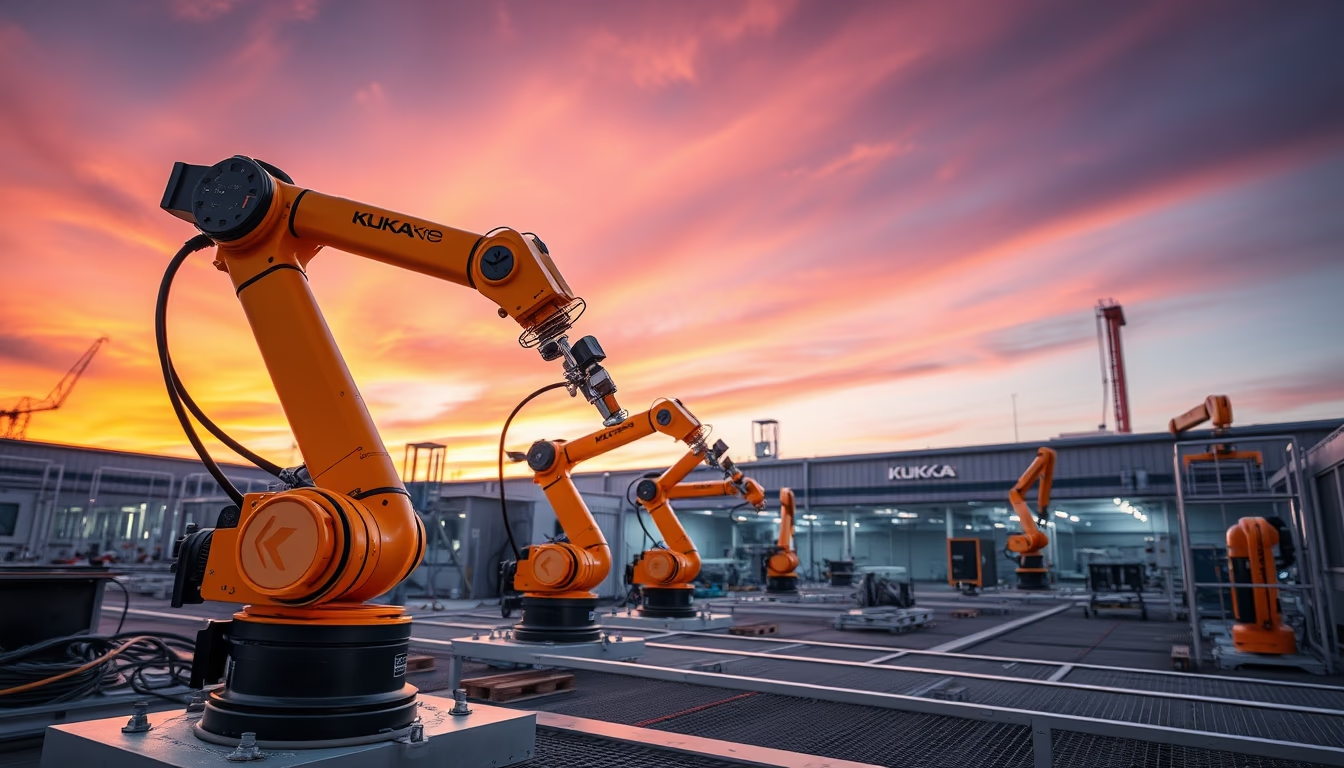
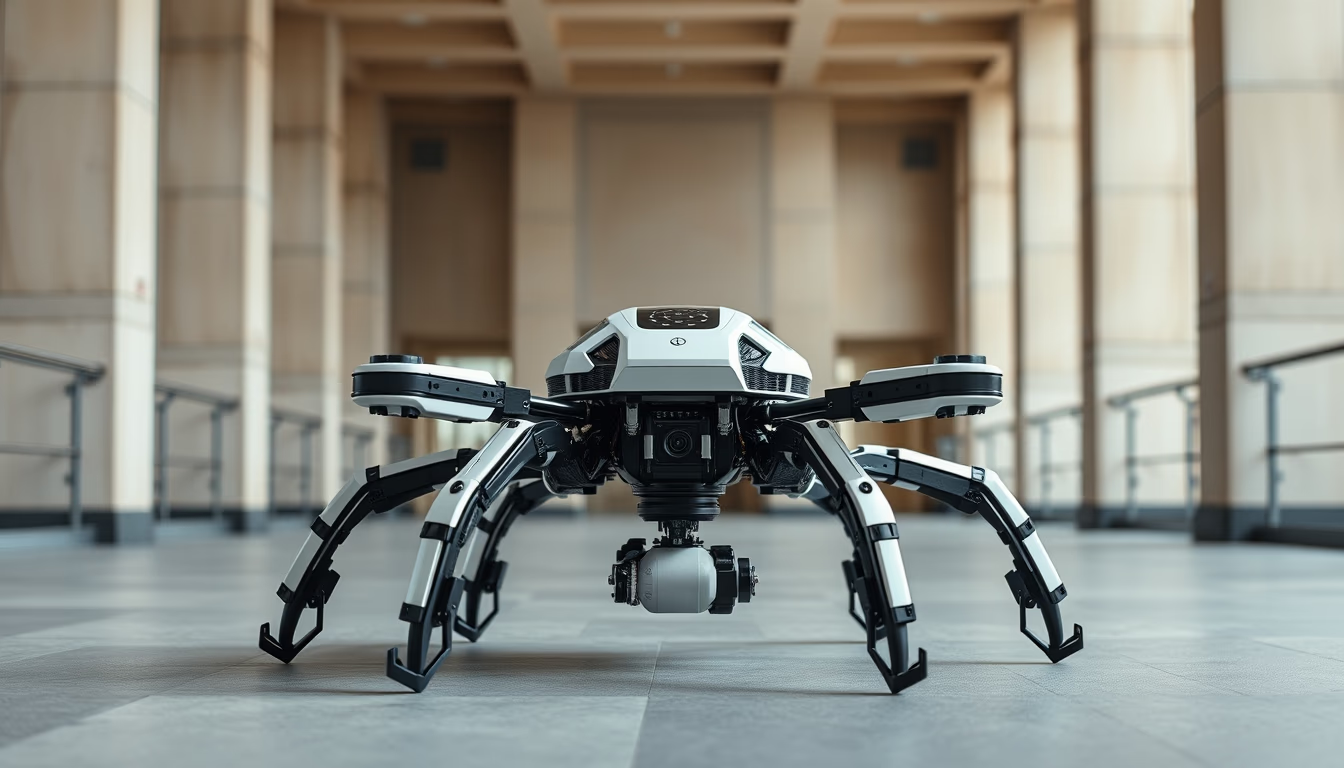
Warehouse robot agv
1344×768 · AVIF · CC BY 4.0

AGVs (Automated Guided Vehicles) are autonomous vehicles that transport goods in warehouses, optimizing logistics and reducing operational costs.
About this subject
AGVs are mobile robots that follow predefined paths in warehouses and distribution centers without human intervention. They use technologies such as magnetic tape, laser, or computer vision to navigate accurately. Types include tuggers for heavy loads, automated forklifts, and pallet transporters. Amazon, for example, employs over 200,000 AGVs in its global operations, drastically reducing order processing time.
These robots are integrated with warehouse management systems (WMS) that coordinate their routes to avoid collisions and maximize efficiency. In many cases, AGVs replace manual forklifts, eliminating accident risks and enabling continuous 24/7 operation. Communication occurs via Wi-Fi or radio frequency, and batteries are recharged automatically at dedicated stations.
The use of AGVs brings significant benefits: increased productivity, reduced errors, better space utilization, and lower labor costs for repetitive tasks. They are also flexible: they can be reconfigured for new warehouse layouts with simple reprogramming. Companies like DHL and Walmart have already adopted AGVs on a large scale.
The global trend is integration with artificial intelligence and the Internet of Things, allowing AGVs to learn optimized routes in real time. The AGV market is expected to grow at a compound annual rate of about 12%, driven by e-commerce and Industry 4.0. In Brazil, major retailers and logistics operators are also investing in this technology to gain competitiveness.
Frequently Asked Questions
What distinguishes an AGV from a traditional industrial robot?
While industrial robots are fixed and perform repetitive tasks in one location, AGVs are mobile and transport materials between different points in a warehouse, replacing forklifts and manual carts.
Who are the main AGV manufacturers?
Major manufacturers include Kion (Dematic), Toyota, Daifuku, Schaefer, and Swisslog. Technology companies like Amazon Robotics and China's Geek+ are also leaders in the segment.
How do AGVs communicate with the warehouse management system?
They connect via Wi-Fi or private cellular network to the WMS, which sends tasks, monitors status, and adjusts routes in real time to avoid congestion and optimize flows.
Direct URL
https://pub-c7d6a6ea828543ac903a74a341ccb2e1.r2.dev/imagens/warehouse-robot-agv-fine-art-photography-p11.avifHow to credit
Include a visible link back to UtilizAí. Copy one of the snippets below:
<a href="https://xn--utiliza-eza.com/en/midia/imagens/warehouse-robot-agv-fine-art-photography-p11">Warehouse robot agv</a> by <a href="https://xn--utiliza-eza.com">UtilizAí</a>, licensed under <a href="https://creativecommons.org/licenses/by/4.0/">CC BY 4.0</a>.
[Warehouse robot agv](https://xn--utiliza-eza.com/en/midia/imagens/warehouse-robot-agv-fine-art-photography-p11) by [UtilizAí](https://xn--utiliza-eza.com), CC BY 4.0
License: CC-BY-4.0