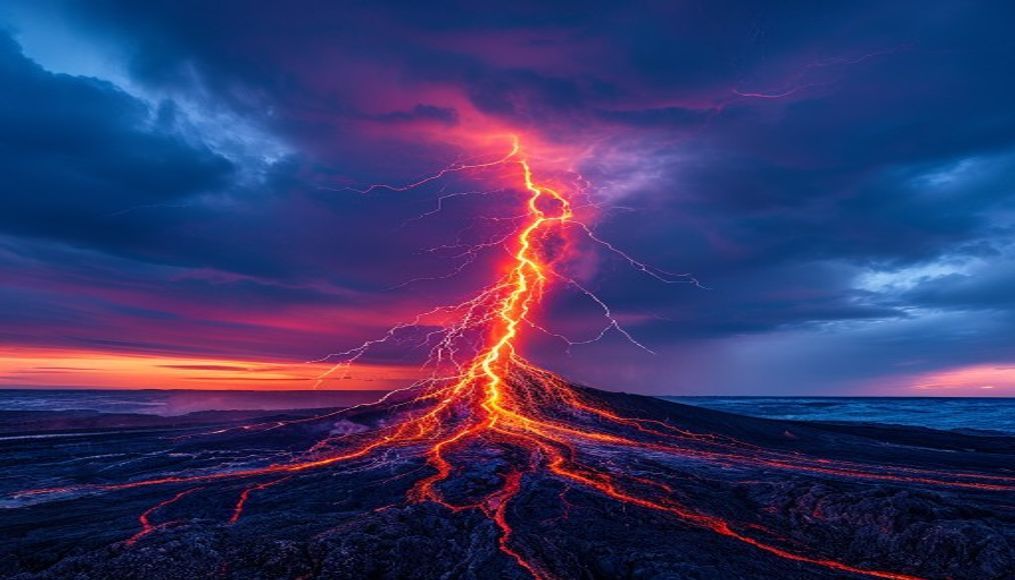
Volcanic lightning ash
1344×768 · AVIF · CC BY 4.0
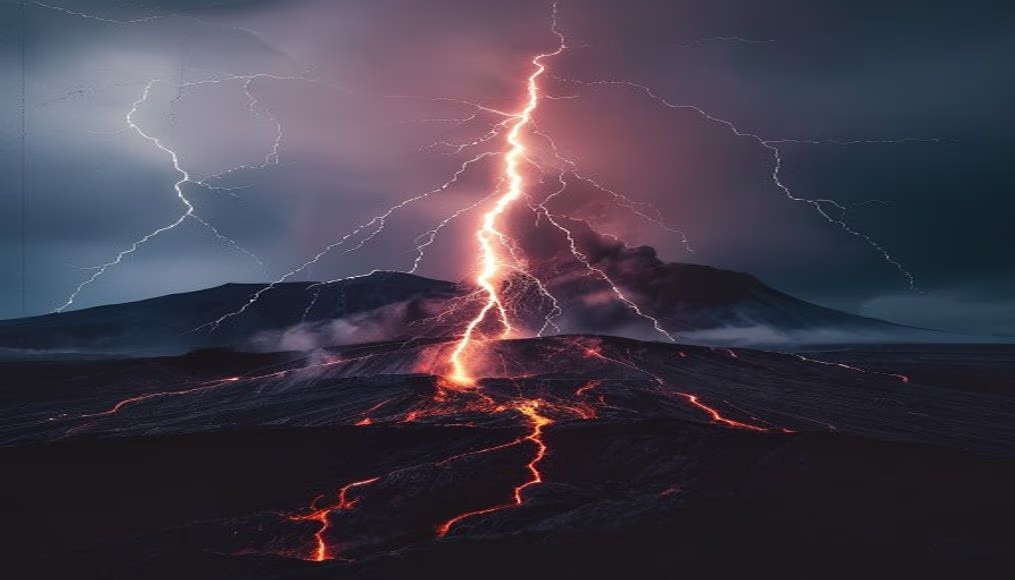
Volcanic lightning, a rare and dramatic phenomenon, occurs when ash and rock particles collide during eruptions, generating electricity.
About this subject
Volcanic lightning, also known as dirty thunderstorms, are electrical discharges that occur within the ash plume of an eruption. Unlike ordinary lightning, which forms in rain clouds, these bolts arise from friction between ash, rock, and ice particles ejected at high speeds. The process is similar to what happens in dust storms or avalanches, but on a much larger scale: electrical charges separate, create intense fields, and produce spectacular lightning.
The first historical records of volcanic lightning come from eruptions like Mount Vesuvius in 79 AD, described by Pliny the Younger. However, only in the 20th century did scientists begin to understand the mechanism. The 1980 eruption of Mount St. Helens and, more recently, the 2010 eruption of Eyjafjallajökull in Iceland, which paralyzed European air traffic, were extensively studied. In 2018, the Anak Krakatoa volcano in Indonesia produced lightning visible for miles.
Culturally, these phenomena inspire both awe and fear. In mythologies, volcanic lightning was seen as the wrath of gods: for Hawaiians, Pele, the fire goddess, used lightning to show power. In modern science, studying this lightning helps monitor eruptions: electrical activity indicates plume strength and ash concentration, aiding in risk prediction for aviation and nearby communities.
Fun facts: volcanic lightning can reach up to 30 km in height and lasts fractions of a second. It does not occur in all eruptions; it depends on ash composition, humidity, and plume dynamics. Subglacial volcanoes, like those in Iceland, produce especially bright lightning due to the presence of ice. Despite the beauty, the electrically charged ash cloud poses a danger to aircraft, as it can damage electrical systems.
Frequently Asked Questions
What causes volcanic lightning?
Volcanic lightning is caused by friction between ash, rock, and ice particles inside an eruption plume. This friction generates electrical charges that separate, creating intense electric fields that discharge as lightning.
Is volcanic lightning dangerous for aircraft?
Yes, the electrically charged ash cloud can damage aircraft electrical systems and compromise engines. Therefore, areas with active eruptions are closed to flights.
Does every erupting volcano produce lightning?
No. The occurrence depends on factors such as ash composition, presence of water/ice, and plume dynamics. Only large eruptions with suitable particles generate this phenomenon.
Direct URL
https://pub-c7d6a6ea828543ac903a74a341ccb2e1.r2.dev/imagens/volcanic-lightning-ash-architectural-photography-p0.avifHow to credit
Include a visible link back to UtilizAí. Copy one of the snippets below:
<a href="https://xn--utiliza-eza.com/en/midia/imagens/volcanic-lightning-ash-architectural-photography-p0">Volcanic lightning ash</a> by <a href="https://xn--utiliza-eza.com">UtilizAí</a>, licensed under <a href="https://creativecommons.org/licenses/by/4.0/">CC BY 4.0</a>.
[Volcanic lightning ash](https://xn--utiliza-eza.com/en/midia/imagens/volcanic-lightning-ash-architectural-photography-p0) by [UtilizAí](https://xn--utiliza-eza.com), CC BY 4.0
License: CC-BY-4.0