Volcanic lightning ash
1344×768 · JPG · CC BY 4.0
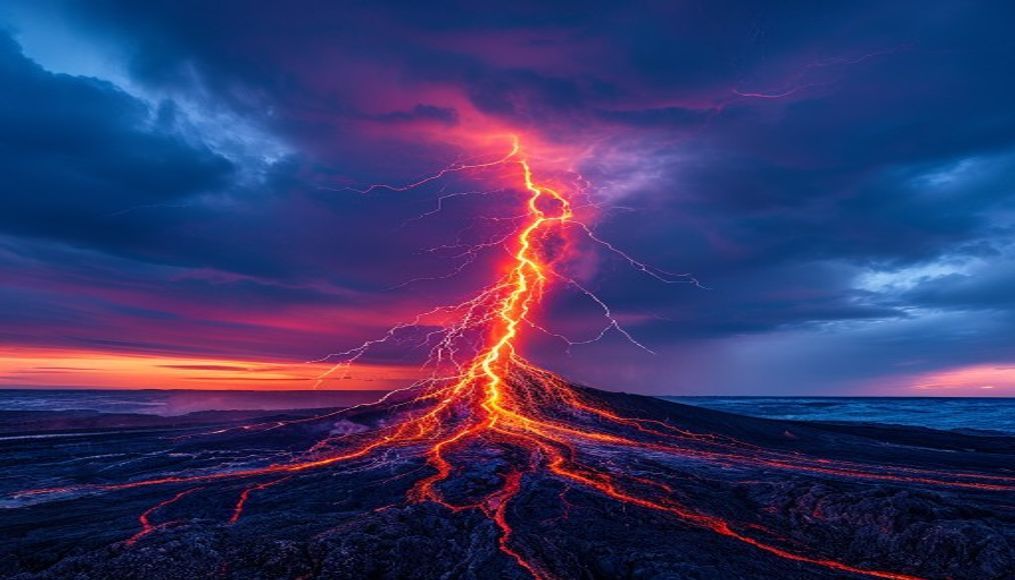
Volcanic lightning is an electrical discharge within ash plumes during eruptions, a rare and powerful phenomenon.
About this subject
Volcanic lightning, or dirty thunderstorms, forms when ash, ice, and rock fragments collide inside an eruption column, generating static charges that discharge as lightning. Unlike regular thunderstorms that rely on ice crystals, volcanic lightning is primarily driven by the triboelectric charging of ash particles. The process is complex and varies with eruption intensity and composition.
Notable eruptions with intense lightning include the 1980 Mount St. Helens explosion, the 2010 Eyjafjallajökull eruption in Iceland, and the 2014 Mount Sinabung eruption in Indonesia. High-speed cameras have captured the rapid development of volcanic lightning, revealing that multiple strokes can occur in a single flash. Scientists use lightning detection networks to monitor eruptions remotely, as changes in lightning activity often correlate with shifts in eruptive behavior.
The composition of the ash plays a crucial role: silica-rich ash produces less charge than ash containing metallic oxides. Water vapor and ice within the plume can enhance electrification, especially in eruptions that inject material into the upper troposphere. Despite ongoing research, many aspects remain mysterious, such as why some eruptions produce abundant lightning while others produce none.
Long-exposure photography of volcanic lightning requires precise timing and a dark environment. Iconic images from the 2011 Puyehue-Cordón Caulle eruption in Chile show lightning bolts illuminating the ash cloud, providing both aesthetic beauty and scientific data. These images help communicate the power of volcanic processes to the public and inspire further study.
Frequently Asked Questions
Why does volcanic lightning occur?
Volcanic lightning occurs due to collisions between ash, ice, and rock fragments inside the eruption column, creating opposing electrical charges that discharge as lightning.
Is volcanic lightning dangerous?
Yes, it can pose risks to aircraft and people near the eruption, though it typically occurs within the plume away from the ground. Lightning strikes may ignite fires in dry areas.
How do scientists study this phenomenon?
They use high-speed cameras, lightning detectors, and electric field sensors placed near active volcanoes. Satellite data also helps monitor electrical activity during remote eruptions.
Direct URL
https://pub-c7d6a6ea828543ac903a74a341ccb2e1.r2.dev/imagens/volcanic-lightning-ash-long-exposure-p4.jpgHow to credit
Include a visible link back to UtilizAí. Copy one of the snippets below:
<a href="https://xn--utiliza-eza.com/en/midia/imagens/volcanic-lightning-ash-long-exposure-p4">Volcanic lightning ash</a> by <a href="https://xn--utiliza-eza.com">UtilizAí</a>, licensed under <a href="https://creativecommons.org/licenses/by/4.0/">CC BY 4.0</a>.
[Volcanic lightning ash](https://xn--utiliza-eza.com/en/midia/imagens/volcanic-lightning-ash-long-exposure-p4) by [UtilizAí](https://xn--utiliza-eza.com), CC BY 4.0
License: CC-BY-4.0