Underwater robot submersible
1344×768 · AVIF · CC BY 4.0
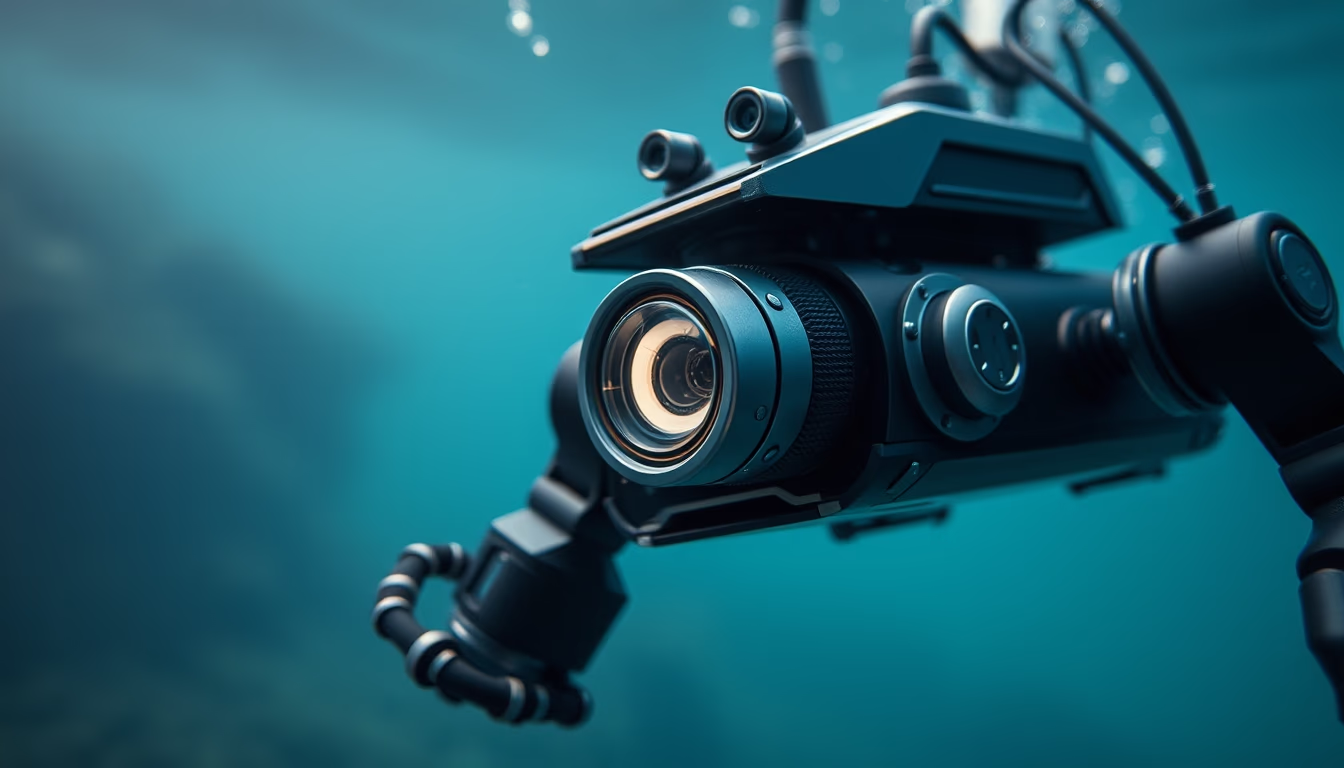
Robôs submersíveis exploram oceanos em profundidades onde humanos não alcançam, coletando dados e realizando manutenção em estruturas subaquáticas.
Sobre o tema
Os robôs submersíveis, também conhecidos como veículos subaquáticos operados remotamente (ROVs) ou veículos autônomos subaquáticos (AUVs), são equipamentos essenciais para a exploração oceânica profunda. Diferentemente dos submarinos tripulados, esses robôs não possuem restrições fisiológicas humanas, podendo operar em profundidades superiores a 6.000 metros. O primeiro ROV moderno, o CURV, foi desenvolvido pela Marinha dos Estados Unidos na década de 1960 para recuperação de torpedos, enquanto os AUVs ganharam destaque com o avanço da computação embarcada nos anos 1990.
Na indústria de petróleo e gás offshore, os ROVs são usados rotineiramente para inspeção de dutos, manuseio de válvulas e manutenção de plataformas. No Brasil, a Petrobras emprega uma frota de mais de 40 ROVs em suas operações no pré-sal. Já os AUVs são amplamente utilizados para mapeamento do fundo do mar, estudo de correntes marinhas e monitoramento ambiental. O veículo Sentry, do Instituto Oceanográfico Woods Hole, pode mergulhar a 4.500 metros por até 24 horas.
Uma curiosidade tecnológica: os robôs submersíveis frequentemente usam sistemas de navegação inercial combinados com sensores acústicos (sonares) para se localizar, já que o GPS não funciona submerso. A comunicação com a superfície é feita por modems acústicos, com taxas de transmissão muito baixas (kilobits por segundo). Inovações recentes, como o uso de inteligência artificial para tomada de decisões autônomas, permitem que AUVs ajustem suas rotas em tempo real para evitar obstáculos ou seguir correntes favoráveis.
Além das aplicações industriais, esses robôs têm papel fundamental na pesquisa científica. Em 2019, o AUV Nereid Under Ice explorou sob as plataformas de gelo na Antártida, revelando ecossistemas desconhecidos. Projetos como o Ocean Discovery League visam democratizar o acesso a robôs submersíveis de baixo custo para países em desenvolvimento, ampliando a capacidade de monitoramento oceânico globalmente.
Perguntas frequentes
Qual é a diferença entre ROV e AUV?
ROV (Remote Operated Vehicle) é controlado por um operador na superfície via um cabo umbilical, ideal para tarefas precisas como manipulação. AUV (Autonomous Underwater Vehicle) opera de forma independente, seguindo uma programação pré-definida, sem cabo, sendo usado para mapeamento e coleta de dados de longo alcance.
Até que profundidade os robôs submersíveis podem operar?
Os modelos comerciais típicos alcançam de 3.000 a 6.000 metros. Veículos especiais, como o Nereus (agora desaparecido), chegaram a 11.000 metros na Fossa das Marianas. A profundidade máxima depende da resistência estrutural do casco e da eletrônica.
Como os robôs submersíveis se comunicam com a superfície?
Utilizam modems acústicos que transmitem ondas sonoras na água. Essa comunicação é lenta (em torno de 1 a 100 kbps) e sujeita a interferências. Por isso, muitos AUVs armazenam dados internamente para download após o retorno.
URL direta
https://pub-c7d6a6ea828543ac903a74a341ccb2e1.r2.dev/imagens/underwater-robot-submersible-macro-closeup-p8.avifComo creditar
Inclua um link visível de volta pro UtilizAí. Copie um dos snippets abaixo:
<a href="https://xn--utiliza-eza.com/midia/imagens/underwater-robot-submersible-macro-closeup-p8">Underwater robot submersible</a> by <a href="https://xn--utiliza-eza.com">UtilizAí</a>, licensed under <a href="https://creativecommons.org/licenses/by/4.0/">CC BY 4.0</a>.
[Underwater robot submersible](https://xn--utiliza-eza.com/midia/imagens/underwater-robot-submersible-macro-closeup-p8) by [UtilizAí](https://xn--utiliza-eza.com), CC BY 4.0
Licença: CC-BY-4.0