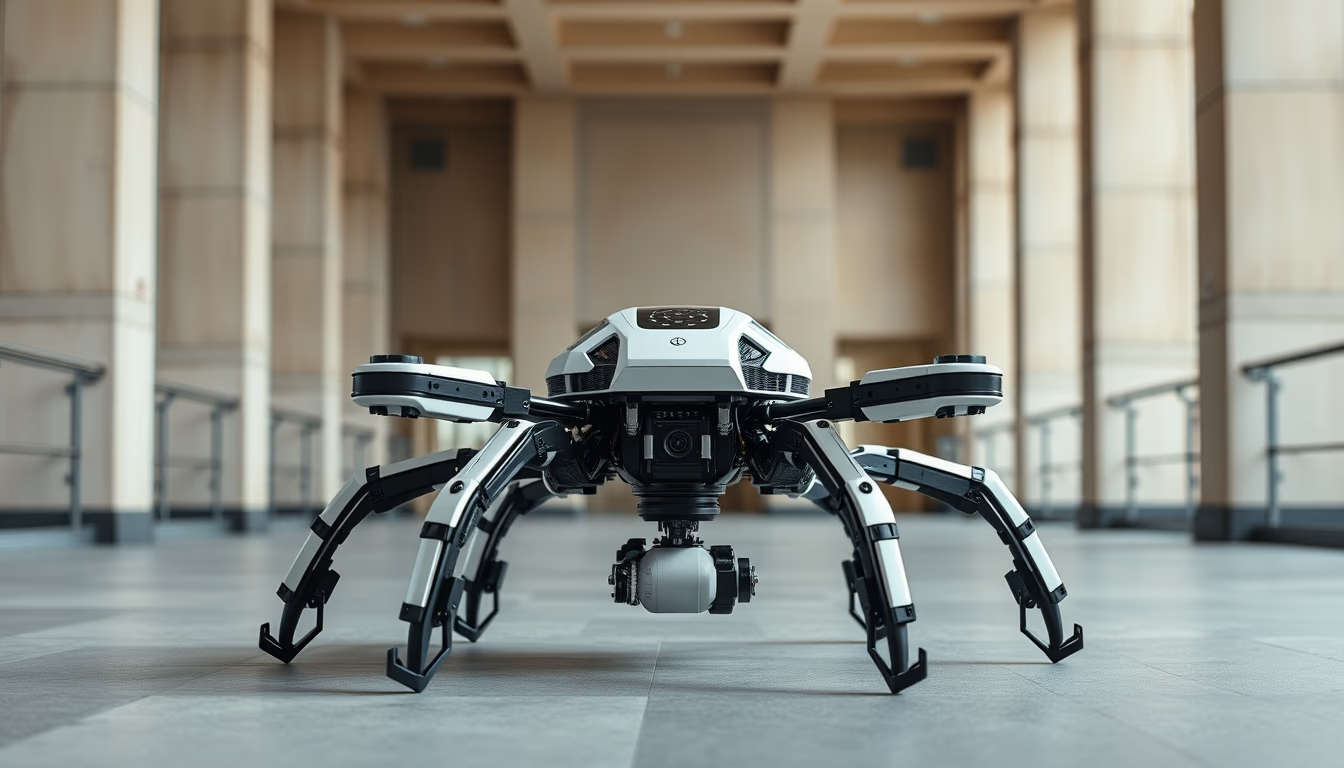
Underwater robot submersible
1344×768 · AVIF · CC BY 4.0
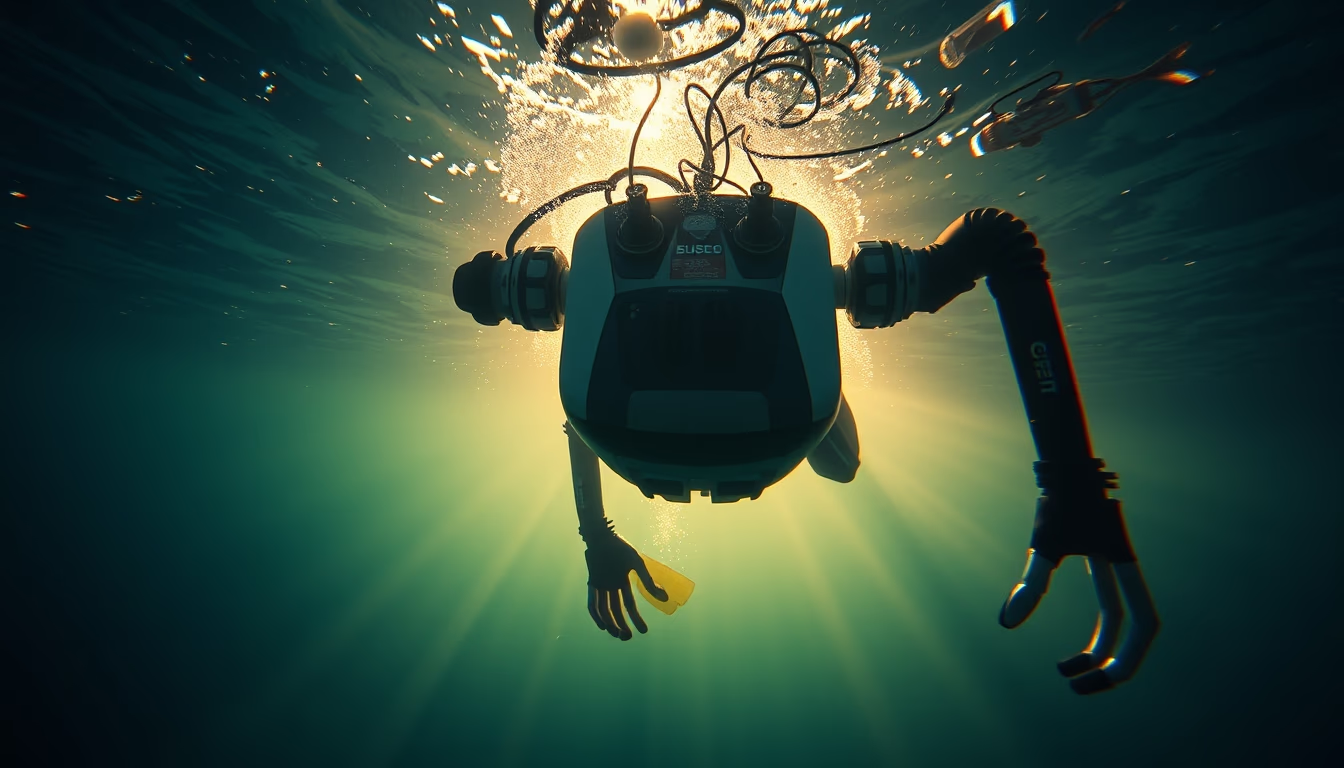
Underwater robots, such as ROVs and AUVs, are unmanned vehicles used for ocean exploration, offshore industry, scientific research, and military operations in deep waters.
About this subject
Underwater robots include remotely operated vehicles (ROVs) and autonomous underwater vehicles (AUVs) designed to perform tasks in hostile subsea environments where humans cannot safely go. They are equipped with cameras, sensors, manipulator arms, and propulsion systems, enabling inspection, maintenance, and data collection at depths exceeding 6000 meters. ROVs are widely used in the oil and gas industry for pipeline and platform monitoring, while AUVs map the seafloor for geological and environmental studies.
The development of these devices began in the 1950s with the Poodle, one of the first ROVs, and advanced rapidly with military applications during the Cold War. Today, the most famous autonomous underwater vehicle is Nereus, which reached the Mariana Trench in 2009. In Brazil, Petrobras operates ROVs for inspecting platforms in the Santos Basin, and institutions such as the University of São Paulo and the Brazilian Navy develop AUVs for research of the Blue Amazon.
The main advantage of underwater robots is their ability to operate in extreme conditions: crushing pressures, low temperatures, and total darkness. They can also remain submerged for days or months depending on their power source. Challenges include cable-based communication (for ROVs) or acoustic links (for AUVs), which limit bandwidth and autonomy. Advances in artificial intelligence and batteries are expanding their capabilities, enabling longer and more complex missions such as exploring hydrothermal vents and historic shipwrecks.
Frequently Asked Questions
What is the difference between a ROV and an AUV?
A Remotely Operated Vehicle (ROV) is controlled by an operator via a tether, ideal for real-time intervention tasks. An Autonomous Underwater Vehicle (AUV) operates independently following a pre-programmed mission, without a physical cable.
How deep can underwater robots go?
The most advanced robots can reach depths over 11,000 meters, such as the Nereus which explored the Mariana Trench. Common commercial models operate up to 3,000 meters.
How are underwater robots used in Brazil?
In Brazil, they are used by Petrobras for pipeline and platform inspection, and by universities and the Navy for seafloor mapping and biodiversity studies in the Blue Amazon region.
Direct URL
https://pub-c7d6a6ea828543ac903a74a341ccb2e1.r2.dev/imagens/underwater-robot-submersible-cinematic-wide-shot-p5.avifHow to credit
Include a visible link back to UtilizAí. Copy one of the snippets below:
<a href="https://xn--utiliza-eza.com/en/midia/imagens/underwater-robot-submersible-cinematic-wide-shot-p5">Underwater robot submersible</a> by <a href="https://xn--utiliza-eza.com">UtilizAí</a>, licensed under <a href="https://creativecommons.org/licenses/by/4.0/">CC BY 4.0</a>.
[Underwater robot submersible](https://xn--utiliza-eza.com/en/midia/imagens/underwater-robot-submersible-cinematic-wide-shot-p5) by [UtilizAí](https://xn--utiliza-eza.com), CC BY 4.0
License: CC-BY-4.0