Tree bark texture
1344×768 · AVIF · CC BY 4.0
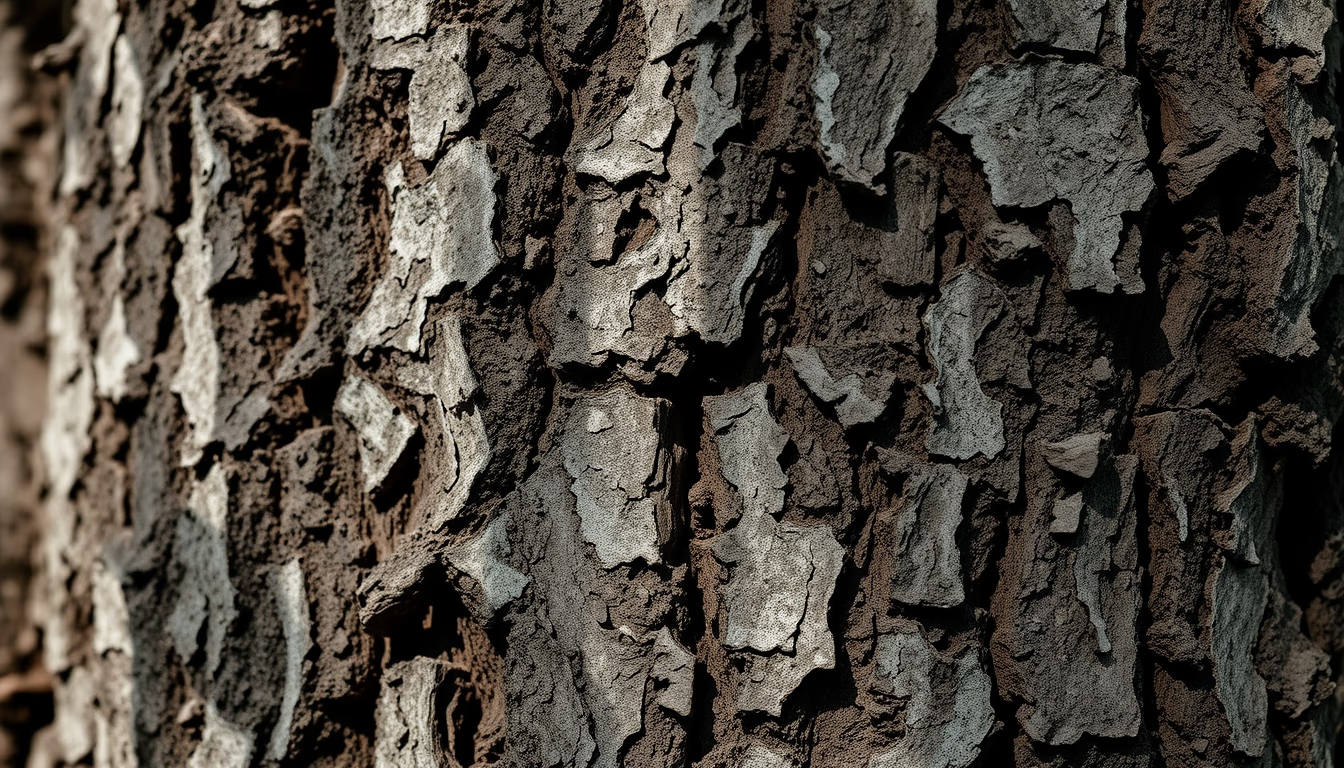
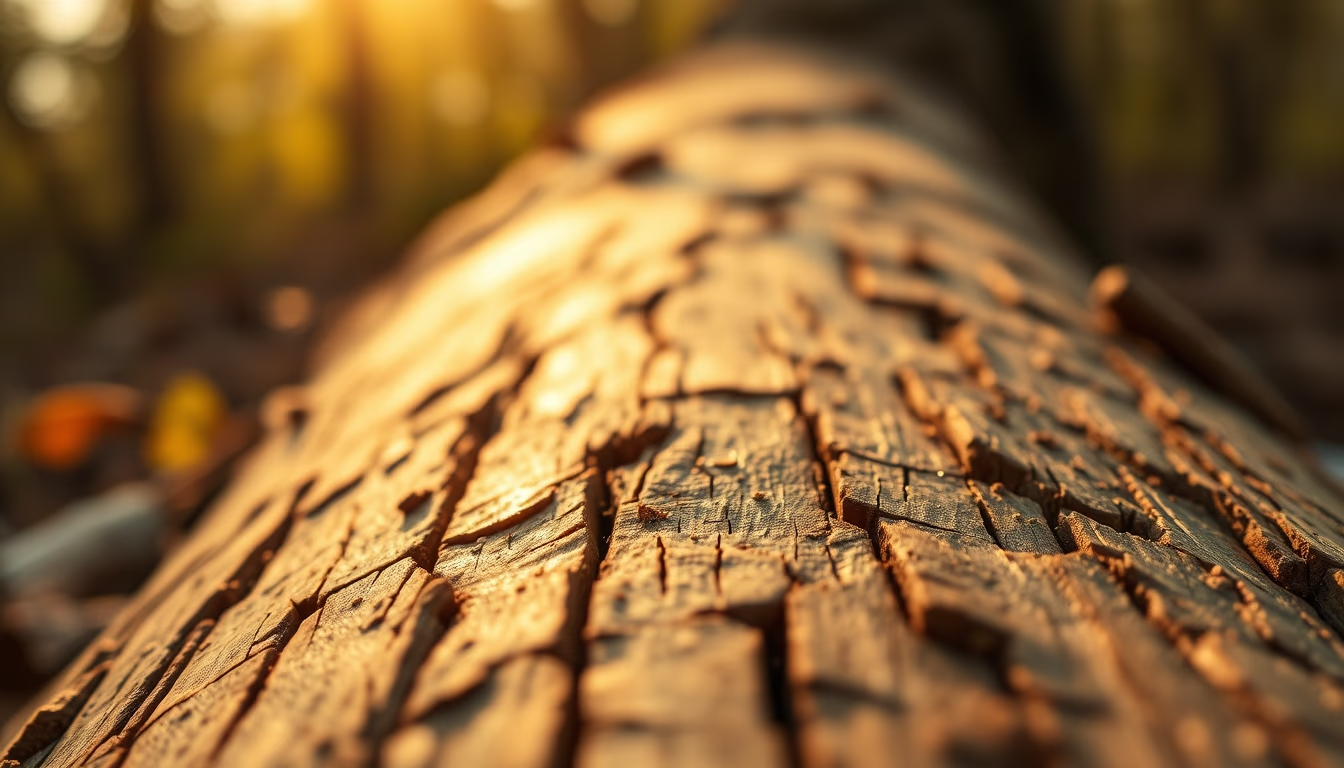
Tree bark texture reveals essential evolutionary adaptations for protection, gas exchange and survival across different biomes.
About this subject
Tree bark is a complex tissue far beyond simple mechanical protection. Composed of phellem (cork), phellogen and phelloderm, its texture varies depending on species and environment. In the Brazilian Cerrado, for example, the ipê-roxo (Handroanthus heptaphyllus) develops thick, furrowed bark to resist periodic fires. In the Amazon, the Brazil nut tree (Bertholletia excelsa) has smooth, thin bark, adapted to constant humidity and competition for light.
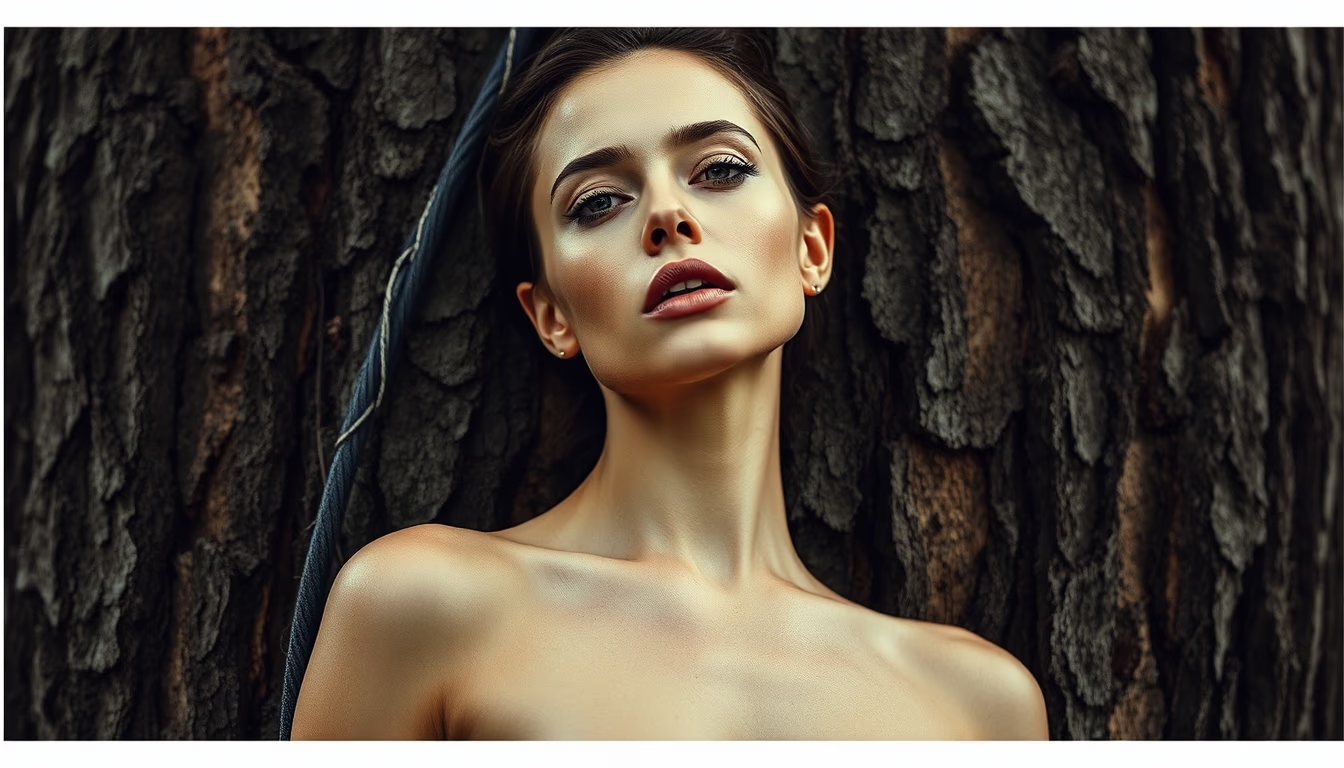
Texture directly influences local ecology. Rough bark provides microhabitats for lichens, mosses and insects, while smooth bark hinders predator climbing. Additionally, bark color and thickness regulate internal temperature and water loss. In species like the jequitibá (Cariniana legalis), bark can reach over 30 cm thick, acting as thermal insulation.
Economically, barks of certain trees are valuable. Cork from the cork oak (Quercus suber) is widely used in stoppers and insulation. In Brazil, angico (Anadenanthera colubrina) provides tannins for leather tanning. Texture also guides botanical field identification: the trunk of pau-brasil (Paubrasilia echinata) has prickles, while the silk floss tree (Ceiba speciosa) displays conical spines.
Interestingly, bark texture can indicate tree health. Deep cracks or excessive peeling signal water stress or pest attack. Recent studies show that roughness influences the absorption capacity of atmospheric pollutants, making texture a relevant environmental indicator.
Frequently Asked Questions
Why are some tree barks smooth and others rough?
Smooth bark is common in humid forests, where competition for light favors straight, smooth trunks. Rough bark evolved in fire-prone or dry environments as protection against heat and water loss.
What is the function of thick bark in Cerrado trees?
Thick, corky bark insulates the tree from heat of frequent Cerrado wildfires, stores water and reduces transpiration during the dry season.
Does bark texture change as a tree ages?
Yes. Many young trees have smooth bark that becomes furrowed or scaly with age, due to phellem growth and rhytidome (dead bark) formation.
Direct URL
https://pub-c7d6a6ea828543ac903a74a341ccb2e1.r2.dev/imagens/tree-bark-texture-magazine-editorial-p2.avifHow to credit
Include a visible link back to UtilizAí. Copy one of the snippets below:
<a href="https://xn--utiliza-eza.com/en/midia/imagens/tree-bark-texture-magazine-editorial-p2">Tree bark texture</a> by <a href="https://xn--utiliza-eza.com">UtilizAí</a>, licensed under <a href="https://creativecommons.org/licenses/by/4.0/">CC BY 4.0</a>.
[Tree bark texture](https://xn--utiliza-eza.com/en/midia/imagens/tree-bark-texture-magazine-editorial-p2) by [UtilizAí](https://xn--utiliza-eza.com), CC BY 4.0
License: CC-BY-4.0