Surgical robot da vinci
1344×768 · AVIF · CC BY 4.0
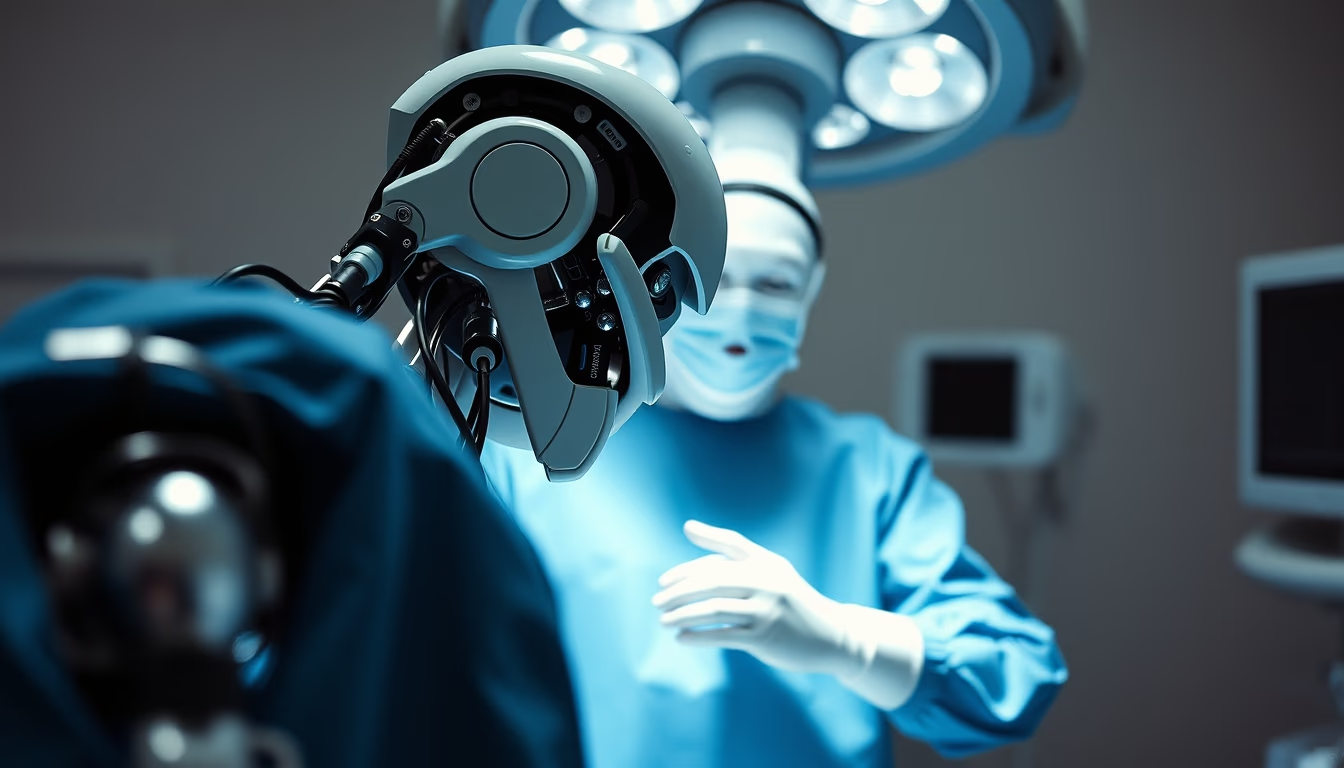
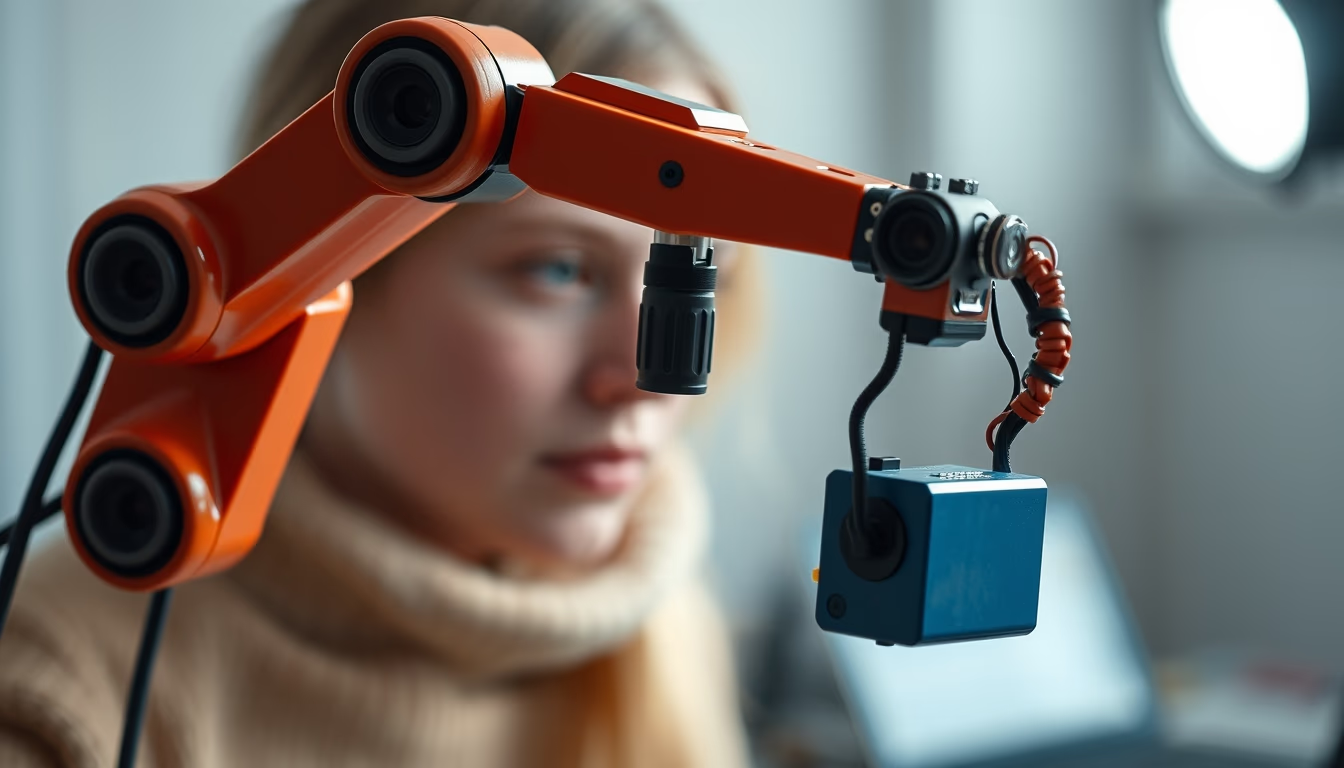
The da Vinci surgical robot is a minimally invasive robotic system that enhances surgeon precision in complex procedures.
About this subject
The da Vinci surgical system, developed by Intuitive Surgical, revolutionized minimally invasive surgery since its FDA approval in 2000. Comprising a surgeon console, a patient cart with robotic arms, and a high-definition 3D vision cart, it enables precise, articulated movements in confined anatomical spaces. The technology translates the surgeon's hand motions into commands for instruments that mimic the human wrist's rotation with greater range of motion.
Key applications include prostatectomies, cardiac, gynecologic, and colorectal surgeries. Benefits include less postoperative pain, reduced blood loss, faster recovery, and shorter hospital stays. However, high costs and specialized training requirements limit widespread adoption. In Brazil, the system is available in private and some public hospitals, notably Hospital Sírio-Libanês and Albert Einstein.
A notable fact is that the name "da Vinci" honors Leonardo da Vinci, who designed the first humanoid robot. The system uses artificial intelligence to filter tremors and scale movements, but the surgeon retains full control. Studies show robotic surgery reduces complications by up to 30% compared to traditional laparoscopy for certain procedures. Ongoing advancements include more compact systems and augmented reality integration.
Frequently Asked Questions
How does the da Vinci surgical robot work?
The surgeon sits at a console with a 3D view and moves manual controls. The movements are transmitted in real time to robotic arms holding surgical instruments. The system filters tremors and scales movements for enhanced precision.
What are the advantages of robotic surgery with da Vinci?
Key advantages include smaller incisions, less pain and bleeding, lower infection risk, faster recovery, and earlier return to normal activities. It also allows nerve preservation in procedures like prostatectomies.
Does the da Vinci robot operate autonomously or need a surgeon?
The robot does not operate alone. It is entirely controlled by the surgeon, who performs every movement. The system is a tool that enhances human capabilities, not a replacement for the professional.
Direct URL
https://pub-c7d6a6ea828543ac903a74a341ccb2e1.r2.dev/imagens/surgical-robot-da-vinci-film-grain-authentic-p3.avifHow to credit
Include a visible link back to UtilizAí. Copy one of the snippets below:
<a href="https://xn--utiliza-eza.com/en/midia/imagens/surgical-robot-da-vinci-film-grain-authentic-p3">Surgical robot da vinci</a> by <a href="https://xn--utiliza-eza.com">UtilizAí</a>, licensed under <a href="https://creativecommons.org/licenses/by/4.0/">CC BY 4.0</a>.
[Surgical robot da vinci](https://xn--utiliza-eza.com/en/midia/imagens/surgical-robot-da-vinci-film-grain-authentic-p3) by [UtilizAí](https://xn--utiliza-eza.com), CC BY 4.0
License: CC-BY-4.0