Sugar crystals macro
1344×768 · AVIF · CC BY 4.0
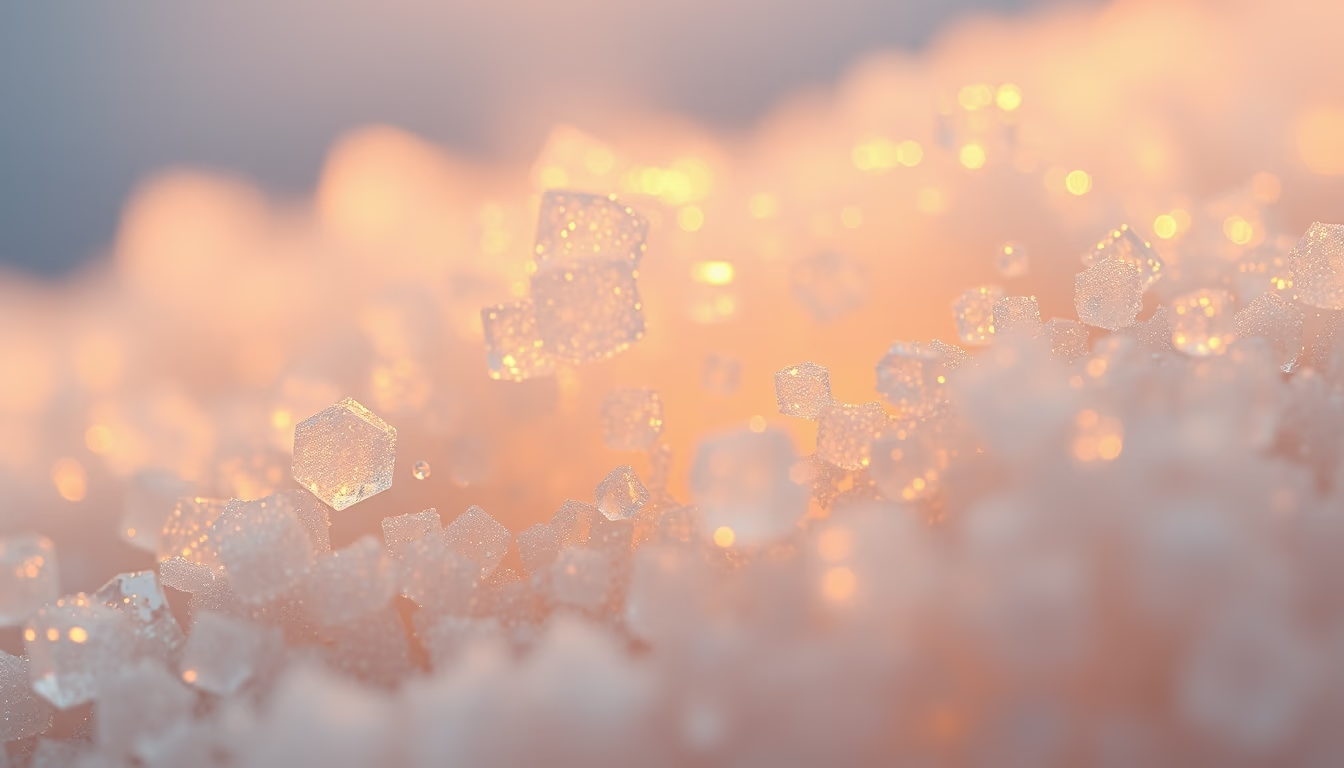
Macro sugar crystals reveal distinctive geometric shapes and shine. Explore sugar's structure, formation, and uses.
About this subject
Common table sugar, or sucrose, forms monoclinic crystals when crystallized from a supersaturated solution. At macro scale, these crystals exhibit flat faces and defined angles, with sizes ranging from fractions of a millimeter to several millimeters, depending on the refining process. Sucrose is a disaccharide composed of glucose and fructose, extracted mainly from sugarcane (Saccharum officinarum) or sugar beet (Beta vulgaris). Crystallization occurs in controlled vacuum evaporators, where the concentrated solution forms nuclei that grow slowly. Purity, temperature, and agitation influence the final shape: purer crystals tend to be more regular and translucent, while impurities may produce irregular shapes or yellowish color. Refined sugar undergoes washing, centrifugation, and drying to obtain white, uniform crystals. Brown sugar retains molasses, resulting in smaller, moister crystals. Macrophotography of these crystals highlights their natural beauty, with light reflections resembling tiny diamonds. Beyond culinary use as a sweetener, sugar has applications in the pharmaceutical industry (tablets), food preservation, and alcoholic fermentation. Interestingly, the crystalline structure of sugar is responsible for its crunchy texture in caramels and the fine sandy feel in icings. In nature, sucrose is the main form of carbon transport in plants, stored in stems and roots.
Frequently Asked Questions
How do sugar crystals form?
Sugar crystals form by crystallization from a supersaturated sucrose solution. The process takes place in vacuum evaporators, where controlled concentration and cooling induce the formation of crystal nuclei that gradually grow.
What is the difference between refined and brown sugar in terms of crystals?
Refined sugar undergoes purification processes that result in white, uniform, dry crystals. Brown sugar retains molasses, making the crystals smaller, moister, and brownish in color, with a more intense flavor.
Why do sugar crystals shine in macro photos?
The shine comes from light reflection on the flat faces and edges of the crystals. Sugar's monoclinic crystalline structure allows specular reflection, creating bright points that resemble tiny diamonds.
Direct URL
https://pub-c7d6a6ea828543ac903a74a341ccb2e1.r2.dev/imagens/sugar-crystals-macro-cinematic-wide-shot-p2.avifHow to credit
Include a visible link back to UtilizAí. Copy one of the snippets below:
<a href="https://xn--utiliza-eza.com/en/midia/imagens/sugar-crystals-macro-cinematic-wide-shot-p2">Sugar crystals macro</a> by <a href="https://xn--utiliza-eza.com">UtilizAí</a>, licensed under <a href="https://creativecommons.org/licenses/by/4.0/">CC BY 4.0</a>.
[Sugar crystals macro](https://xn--utiliza-eza.com/en/midia/imagens/sugar-crystals-macro-cinematic-wide-shot-p2) by [UtilizAí](https://xn--utiliza-eza.com), CC BY 4.0
License: CC-BY-4.0