Spider web morning dew
1344×768 · AVIF · CC BY 4.0
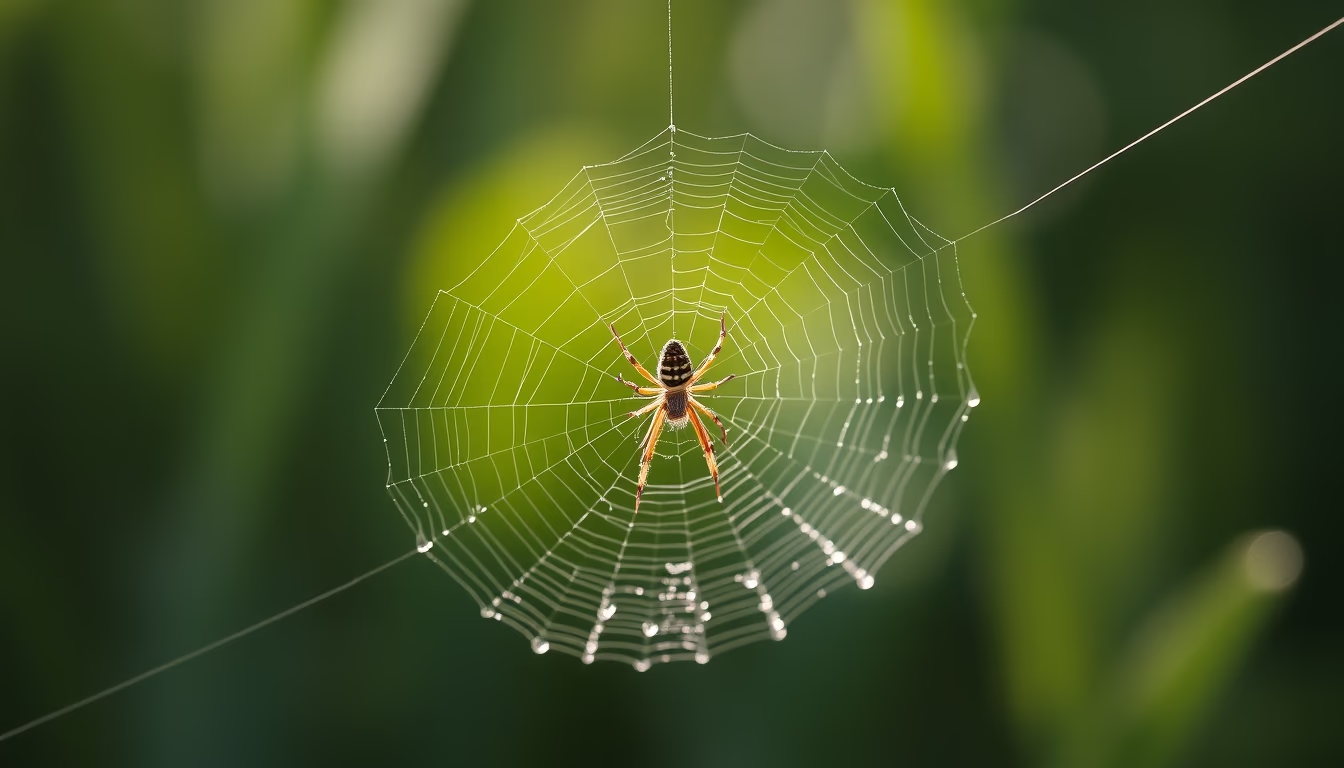
A spider web covered in morning dew drops is a natural phenomenon showcasing biological engineering and ephemeral beauty.
About this subject
Spider webs are silk structures produced by specialized glands in the arachnid's abdomen. Silk is composed of fibrous proteins, mainly fibroin, which solidify upon contact with air. Depending on the species, spiders can weave different web types, from classic orb webs to irregular sheets. The primary function is to capture prey, but webs also serve as shelter and mating sites.
Morning dew forms when air humidity condenses on cold surfaces, such as the fine fibers of a web. During the night, temperature drops and water vapor condenses into droplets visible at dawn. This phenomenon is more common in humid seasons and in areas with low grass. Dew drops not only beautify the web but also reveal its three‑dimensional structure, highlighting radial and spiral threads.
Spider silk's strength is remarkable: it can be up to five times stronger than steel by weight, and it is extremely elastic. Scientists study biomimicry of this fiber to develop synthetic materials, such as bulletproof vests and surgical sutures. A dew‑covered spider web also holds aesthetic and symbolic appeal in macro photography, representing the balance between fragility and resilience in nature.
Culturally, the spider web appears in mythologies and proverbs. In Brazil, “teia de aranha” is used metaphorically to describe something complex and interconnected. The morning image of dew droplets on a web invites contemplation of biodiversity and natural processes that occur daily, often unnoticed.
Frequently Asked Questions
Why do spider webs become covered with morning dew?
Dew forms when air humidity condenses on cold surfaces, such as the fine silk threads of the web. During the early morning, temperature drops and water vapor turns into droplets, adhering to the web until the sun evaporates them.
Is spider silk really stronger than steel?
Yes, by weight, spider silk can be up to five times stronger than steel and is also highly elastic. This combination of strength and flexibility makes it a material of interest for biomimicry research.
How do spiders produce silk to weave the web?
Spiders have silk glands in their abdomen that produce liquid proteins. As these are secreted through spinnerets (specialized structures), the proteins solidify upon contact with air, forming threads that the spider manipulates with its legs to build the web.
Direct URL
https://pub-c7d6a6ea828543ac903a74a341ccb2e1.r2.dev/imagens/spider-web-morning-dew-minimalist-composition-p0.avifHow to credit
Include a visible link back to UtilizAí. Copy one of the snippets below:
<a href="https://xn--utiliza-eza.com/en/midia/imagens/spider-web-morning-dew-minimalist-composition-p0">Spider web morning dew</a> by <a href="https://xn--utiliza-eza.com">UtilizAí</a>, licensed under <a href="https://creativecommons.org/licenses/by/4.0/">CC BY 4.0</a>.
[Spider web morning dew](https://xn--utiliza-eza.com/en/midia/imagens/spider-web-morning-dew-minimalist-composition-p0) by [UtilizAí](https://xn--utiliza-eza.com), CC BY 4.0
License: CC-BY-4.0